
Review

By Story Mode
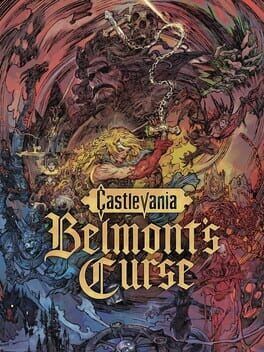
Image: IGDB
Store links: Castlevania: Belmont's Curse on Steam
A long-awaited 2D return with a high bar attached
Castlevania: Belmont's Curse arrives carrying two pressures at once: it is the first new 2D Castlevania game in a long stretch, and its PS5 Trophy list is already asking completionists for everything. Push Square identifies Evil Empire's game as the first new 2D entry in the series since 2008's Order of Ecclesia, while Siliconera reports that Konami tapped the Dead Cells: Return to Castlevania studio for a project timed around Castlevania's 40th anniversary. That pairing makes sense on paper. Evil Empire has already handled the iconography, the monsters, and the whip-snap theatrics. Belmont's Curse now has to prove it can carry a full castle of its own.
The sharper tension for returning fans comes from how much the game asks players to endure on the way to mastery. Push Square's pre-launch Trophy report, sourced to a PSNProfiles list, says the Castlevania platinum trophy requires 100% completion. Based on the other listed Trophies, that means gathering every weapon, filling Rose's tarot deck, and finding all health and mana upgrades. Another Trophy asks players to beat the game in under four hours. In a series where backtracking, secret-hunting, and route knowledge are part of the pleasure, that sounds fair in theory. In Belmont's Curse, where several reviews cite limited or late fast travel, cryptic navigation, punishing checkpoints, and stiff handling, the road to a full clear looks more abrasive.
As a new Castlevania game review, the honest answer is mixed but positive. Belmont's Curse captures a lot of the series' action-platforming appeal: readable enemy archetypes, distinct weapons, gothic staging, traversal built around the whip, and boss fights that expect patience instead of panic. It also inherits modern Metroidvania habits without always making them feel seamless. The result is a confident comeback with rough edges, closer to a strong foundation for a renewed Castlevania era than a clean restoration of the old throne.
Rose Belmont gives the hunt a sharper front line
The broad setup is consistent across the supplied reviews: Paris is overrun by monsters, Trevor Belmont is involved, and his daughter Rose becomes the playable hunter at the center of the invasion. Push Square and PCMag Middle East place the opening in Paris in 1499, before the adventure pushes toward Dracula's castle. IGN describes Rose as Trevor Belmont and Sypha Belnades' daughter, a new Belmont trying to prove herself while confronting Dracula's return. Siliconera adds that the story is designed to fit within both the original series canon and the Netflix series' version of the tale, with some voice actors from the show reprising roles.
There is one continuity wrinkle worth flagging rather than smoothing over. Siliconera describes Belmont's Curse as being set 20 years after Castlevania: Curse of Darkness, while IGN frames it as taking place roughly 23 years after the events of Castlevania III: Dracula's Curse. Those are different reference points, and the provided material does not include a direct Konami timeline statement to settle the discrepancy. The safest confirmed reading from the reviews is that Belmont's Curse uses Trevor, Sypha's legacy, Rose, Paris, and Dracula's return to bridge familiar Castlevania mythology with a new lead.
Rose is the best argument for that approach. IGN ranks her highly among Belmont protagonists, emphasizing her strength, impatience, vulnerability, and refusal to be reduced to someone waiting for rescue. TheGamer goes further, calling her one of the series' most interesting characters and praising the personal stakes created by Dracula's curse and her need to control her emotions. Siliconera is cooler on the writing, calling the story decent adventure fodder but too wordy at times. That spread tracks with the game itself: Belmont's Curse wants its gothic drama to breathe, sometimes elegantly, sometimes with a little too much dialogue standing between the player and the next room full of teeth.
For a series that has often treated Dracula's resurrection as enough plot to get the gates open, this is still a worthwhile shift. Rose gives the hunt a human center. The castle is not merely a landmark on the map; it becomes a test of inheritance, control, and whether a new Belmont can carry a name that has become heavier than the whip.
Combat clicks when movement, weapons, and magic overlap
Belmont's Curse works best when Rose is moving with intent. Push Square says she can wield seven weapon types, including a heavy greatsword and a sword-and-shield option that can defend against frontal attacks. That same review notes that the Vampire Killer is used mostly as a traversal tool, with Rose grappling to fixed points, swinging through spaces, and pulling herself toward enemies, although there is also a whip weapon type whose damage is strongest at full reach. Siliconera also highlights the whip's usefulness for staying mobile and keeping pressure on enemies.
That split between weapon and movement tool is one of Belmont's Curse's smarter choices. It preserves the whip as Castlevania's signature silhouette without forcing every fight to revolve around a single animation. Rose can instead shift between loadout logic, spacing, and magic. Siliconera reports that her Tarot cards, inherited from Sypha, grant access to spells. PCMag Middle East credits the game's weapons, Arcana, and Relics with providing meaningful variety, while Push Square describes arcanas as mana-driven magical attacks that work well for crowd control.
The combat is not frictionless. Push Square points out that Rose has a backstep, dodge roll, and parry, but says those options can be hard to judge when multiple enemies attack at once, especially early on when health is limited. Siliconera notes that enemies can seem faster than Rose, making clean hits without taking damage something players have to learn. PCMag Middle East praises the challenge but says movement, dodging, and combat handling can feel stiff. Those criticisms matter because Castlevania combat lives or dies by rhythm. When the game gives Rose room to read a monster, close the gap, cast, evade, and punish, it has that old side-scrolling electricity. When a crowded room overwhelms the defensive timing or a checkpoint forces too much repetition, the spell cracks.
Enemy variety helps. Push Square cites skeleton soldiers, suits of armor, bats, Medusa heads, and other familiar threats, and says the range of foes keeps frequent combat from becoming too repetitive. Bosses also appear to land well across the reviews. PCMag Middle East calls them demanding fights that encourage thoughtful approaches, and TheGamer describes the full game as surprisingly brutal. Belmont's Curse earns its action platformer review credentials by making success feel learned. It frustrates when the controls feel a half-step behind the threat, but it rarely feels thoughtless.
Exploration rewards curiosity, then tests patience
Structurally, Belmont's Curse is a Metroidvania-style 2D action-adventure. Siliconera lays out the familiar framework: a large interconnected map, blocked paths that open after finding abilities or items, save rooms, boss fights, stat upgrades, hidden wall meat, and a growing set of weapons. Push Square describes the opening Paris area as almost a mini-Metroidvania before Dracula's castle becomes the main space. PCMag Middle East similarly says the route moves through streets and underground areas of Paris before leading toward the castle, with the world opening further as abilities expand.
The best exploration sounds satisfyingly old-fashioned. GamesRadar+ says Belmont's Curse pushed the reviewer to take pen-and-paper notes because of cryptic clues, patterns, characters, and key items. PCMag Middle East says the map can be confusing at first, but that its uncertainty becomes enjoyable once the layout starts to make sense. That is a valuable Castlevania feeling: the moment a dead end becomes a promise, or a room you crossed an hour ago turns into the shortest path to a secret.
The unevenness comes from pacing and convenience. Siliconera says fast travel unlocks later than it should, making traversal a hassle before then. GamesRadar+ lists limited fast travel and difficulty locating bosses among its reasons to hesitate. PCMag Middle East praises useful shortcuts and early traversal options, but also criticizes checkpoints that make repeat attempts more punishing than necessary. Siliconera also argues that some modern systems feel like superficial concessions, citing healing flasks that refill at save points but can also be replenished by enemy and candle drops, plus monster respawns that are explicitly tied to save points despite resembling older screen-reset behavior.
Those details become more important because of the 100% completion demand on PS5. A map that is cryptic in a standard playthrough can be delicious. A map that is cryptic when the platinum asks for every weapon, tarot card, health upgrade, and mana upgrade can become a ledger. Belmont's Curse seems to understand the pleasure of secrets, but it also risks turning thorough play into administrative cleanup, especially for players who want the Castlevania platinum trophy rather than a single credits roll.
The gothic stage is vivid, even when the music lags behind
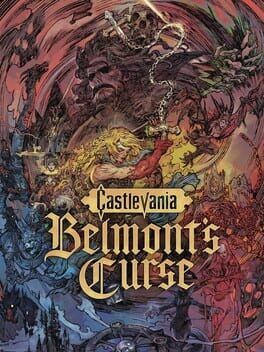
The presentation is one of the clearer wins. Push Square says the visuals are immediately striking, with a wonderful art style, strong animation, exaggerated color, and detailed backdrops that make areas feel distinct. GamesRadar+ calls the game gorgeous and praises its gothic world. PCMag Middle East credits the art direction and atmosphere as strengths. TheGamer notes that the painterly, bright style may not satisfy everyone, but says it worked for that reviewer.
That last caveat is important for returning fans. Castlevania has carried several visual identities across decades, from stern NES horror to Symphony of the Night's lush melancholy to the sharper anime influence of later handheld entries and Netflix-era recognition. Belmont's Curse appears to lean into a more vivid, painterly look rather than simply recreating the gloom of the PlayStation and DS classics. Based on the review material, that choice gives Paris and the castle their own identity, but it may also explain why some series loyalists are likely to bounce off the aesthetic before the combat has time to win them over.
Audio receives a more restrained response. GamesRadar+ lists an underwhelming soundtrack as a drawback. TheGamer says the music does not quite match the classics, though it still describes the soundtrack as solid overall. None of the supplied reviews frame the score as a disaster, but Castlevania carries unusually heavy musical expectations. A decent soundtrack can still feel diminished when it sits under a name associated with some of action gaming's most memorable themes.
The net effect is that Belmont's Curse looks more assured than it sounds. Its rooms, enemies, and animations appear to carry the drama of the return, while the soundtrack supports the adventure without consistently elevating it to series-defining status. For a cinematic action game, that matters. The best Castlevania set-pieces are remembered as much by tempo as by architecture, and Belmont's Curse seems strongest when the visual staging and combat rhythm do the lifting together.
PS5 looks safer than Switch 2, but platform details remain incomplete
The clearest platform evidence in the supplied material centers on PlayStation 5, PS5 Pro, and Switch 2. Push Square reviewed the Castlevania Belmont's Curse PS5 version and separately reported the PS5 Trophy list through PSNProfiles. PCMag Middle East says it spent around 15 hours with Belmont's Curse on PS5 Pro, using default gameplay modifiers, and encountered no technical issues. Siliconera, by contrast, reports performance issues at times on Switch 2, though the provided excerpt cuts off before detailing their frequency or severity.
That creates practical guidance without overclaiming. Based on the available review material, PS5 and especially PS5 Pro look like the safer console options for players sensitive to performance. Switch 2 buyers should wait for fuller platform-specific testing if frame consistency is a priority. The source packet does not include a price, Steam listing, Xbox availability, upgrade path, physical edition details, or final PC performance data, so those remain outside this review's confirmed buying advice.
Accessibility and difficulty flexibility are more encouraging. Siliconera says Belmont's Curse is fairly challenging by default but offers granular options to tweak difficulty. GamesRadar+ cites dynamic accessibility options among its positives. That matters because Belmont's Curse sounds demanding even before trophies enter the conversation. Players who want the atmosphere, exploration, and weapon experimentation without being stonewalled by boss damage or defensive timing may have tools to shape the experience. Players who want the default challenge can leave those settings untouched, as PCMag Middle East did for its PS5 Pro playthrough.
The Trophy list changes the audience calculus. If you play Castlevania for a single, moody campaign, Belmont's Curse looks like an easy recommendation with caveats about stiffness and navigation. If you play for platinum completion, you should expect a stricter contract: full map mastery, collectible discipline, and a sub-four-hour run. That speedrun requirement, highlighted by Push Square, may be the hardest ask for players who enjoy slow exploration but dislike routing pressure.
Verdict: a worthy hunt with rough stone underfoot
Castlevania: Belmont's Curse succeeds where it most needed to succeed. It makes the Belmont name feel active again in 2D, gives Rose enough personality to stand apart from family legacy, and builds combat around movement, weapon choice, and magic rather than pure nostalgia. The whip traversal appears to be the star: a kinetic bridge between old iconography and modern action-platformer pacing. The art direction gives Paris and Dracula's domain their own stage presence, and the best fights reward the kind of disciplined aggression that Castlevania fans understand instinctively.
The weaknesses are real. Several reviews point to stiffness, harsh checkpoints, limited or late fast travel, and navigation that can cross from mysterious into inconvenient. The story is more ambitious than many older entries, but Siliconera's criticism of wordiness suggests that ambition sometimes slows the hunt. The soundtrack, while not dismissed outright, does not appear to reach the series' highest musical bar. On Switch 2, Siliconera's reported performance issues warrant caution, while PS5 Pro impressions from PCMag Middle East are cleaner.
Belmont's Curse is therefore a strong recommendation for players who want a challenging gothic Metroidvania and are comfortable with a little abrasion. It is a more conditional recommendation for trophy hunters, because the PS5 platinum's 100% completion and sub-four-hour demands press directly on the game's most uneven systems. Returning fans should not expect a museum-piece revival of early-2000s Castlevania. They should expect a faster, sometimes harsher successor that has learned from the genre Castlevania helped define, even when those lessons fit imperfectly.
GameLoop score: 7.5 out of 10. Belmont's Curse is a stylish, substantial, and often thrilling return for 2D Castlevania, held back by uneven traversal pacing, stiffness, and completion requirements that may turn its secrets into chores for the most dedicated hunters.
Final Verdict
A solid gaming experience that delivers on its promises and provides hours of entertainment.