
Review

By Apex
Cast n Chill arrives on Nintendo’s hybrid systems as an unapologetically mellow fishing game, and on Switch 2 it quietly doubles as one of the best showcases yet for how high frame rates can matter even in “slow” genres. This is not Dredge’s haunted seas or Dave the Diver’s sprawling management sim. It is a focused, almost meditative loop of casting, waiting, and listening to nature, with the option to let the entire thing play itself while you do something else.
What keeps it from feeling like a glorified screensaver is how smartly it layers systems on top of that chilled foundation, particularly on Switch 2 where 120 FPS and sharper visuals subtly reshape the experience.
A Cozy Fishing Game That Actually Respects Your Time
On both Switch and Switch 2, Cast n Chill is built around two intertwined modes. Active play is what you expect from a traditional fishing game. You pick a spot, cast your line, watch the bobber drift and twitch, then react when a fish bites. There is tension in the timing and a satisfying little tug‑of‑war as you reel in heavier catches without snapping your line.
Parallel to that is Idle Mode. Here, the game more or less runs itself. Your boat drifts, your line casts on a timer, fish bite and are reeled in automatically, and your cash balance ticks upward while you answer emails or binge a show. It sounds like a recipe for an empty, frictionless grind, but in practice it feels like a clever acknowledgment that cozy games are often background companions as much as foreground obsessions.
The progression structure ties both styles together. Money from your catches feeds into better rods, stronger lines, different lures, and boat upgrades that unlock new regions. The design is gentle but constant about rewarding you. A short active session before bed might unlock a lure that makes tomorrow’s idle run more productive, which in turn opens access to deeper waters where manual play gets interesting again.
There is no looming fail state, no aggressive checklist shouting at you to do five more things. Cast n Chill is content to be your quiet second screen, yet it always slides one more upgrade or new fish type across the table to keep you nibbling.
How 120 FPS Changes “Cozy” Fishing
On paper, a high frame rate sounds almost wasted on a game where most of your time is spent watching ripples in still water. In practice, Switch 2’s 120 FPS mode is transformative precisely because so much of Cast n Chill’s appeal is rooted in micro‑movement and nuance.
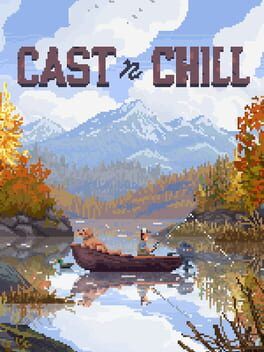
At 30 FPS on the original Switch, the game still looks lovely. The chunky pixel art sells scale with clever lighting, and the day‑night cycle bathes your fishing holes in warm golds, cool blues, and dusky purples. The bobber dips, reeds sway, ducks paddle past, and you get a believable sense of a living lake.
On Switch 2, that same scene feels nearly alive. The extra frames smooth out every tiny motion. The bobber’s vertical bounce becomes easier to read, especially when you have multiple lines in the water. Reflections of clouds and trees on the lake surface shimmer with a glassy, almost hypnotic continuity. The wake from your boat curves through the water without judder, making every lazy reposition feel more tactile even though the controls are as minimal as ever.
This matters moment to moment. Fishing in Cast n Chill is about reading small tells, then deciding when to react. At 120 FPS, those tells are cleaner, and your inputs feel that bit more immediate. There is no sweaty twitch factor here, but subtlety is the whole game. When a rare fish skulks near the bottom in dusk light, the combination of higher frame rate and sharper lighting on Switch 2 makes it easier to track its path and time your hook.
The result is that “relaxing” does not mean mushy. You still get a languid pace, but the feel of playing is crisp and responsive. Think of it like listening to ambient music through high‑end speakers. The tempo is chill, yet the clarity enhances the vibe.
Does 120 FPS make or break the game? No. This is not suddenly unplayable on the original Switch, where a steady lower frame rate still supports relaxed play. But on Switch 2 the mode is more than a bullet point. It meaningfully reinforces the core fantasy of being out on a quiet lake, tuned into the tiniest movements of line and water.
Visual Upgrades and Atmosphere on Switch 2
The higher frame rate arrives alongside visual upgrades on Switch 2, and together they turn Cast n Chill into one of the most inviting pixel art showcases on Nintendo hardware.
The base art direction is already strong. Environments avoid busy clutter in favor of big gradients of color and smart highlights. Sunsets smear the horizon in rose and orange. Night fishing replaces detail with silhouettes and strategically placed lamps on your boat. Weather rolls in with soft rain that dappled the lake and mellow fog banks that lightly veil distant trees.
On Switch 2, you get that same direction with a sharper presentation. Water reflections are noticeably more defined. Color banding is reduced, so those big skyscapes look more like painted vistas than compressed gradients. The game appears to run at a higher internal resolution, so tiny details like distant birds or the sparkle of fireflies read more clearly without losing the chunky charm.
Importantly, the Switch 2 version seems very conscious of not overloading the scene. This is not a “remaster” that piles on particle effects to prove a point. Instead, the enhancements support the tone. When you dock the system and play on a big screen, the lake becomes a genuine mood piece, the sort of thing you might leave running simply because it is nice to look at.
On handheld Switch, some of that subtlety is lost, and the lower frame rate makes the water feel a little thicker. The core look is intact, just less striking. If you are primarily a portable player, you still get a pretty and calm experience. If you have a Switch 2 and a TV, though, this is one of those games where you will probably start playing “just for ten minutes” and realize you have had a serene digital aquarium looping in your living room for two hours.
The Fishing Systems: Deeper Than They First Appear
Under all that gentle surface, Cast n Chill has more going on than you might expect from a game happy to fish for you while you work. That depth does not come from complexity for its own sake. Instead, it leans into mastery of a few simple systems.
Fish are not just palette swaps with different sell prices. They occupy different depths, favor different lures, and behave differently when hooked. Heavier species can yank your line toward snapping, forcing you to manage tension and angle. Faster fish dart erratically, turning what could have been a simple tug into a small dance between analog stick and trigger.
Lures change more than your odds. Some add subtle movement to the bait, others influence how quickly fish notice you or how picky rare species are. On paper, it all looks like standard fishing sim fare. The trick is how cleanly it ties back into both active and idle play.
If you are the type to engage deeply, you can optimize your setup for specific species, time of day, and weather conditions. You read the water, pick a lure that matches your target, and actively manage your casts to coax out specific fish. This gives the game enough texture that you can treat it almost like a light RPG, rolling your own goals and chasing particular collections.
If you are more of a set‑and‑forget cozy player, better gear simply means your idle runs become more profitable and visually varied. You might never think about lure synergy, yet you still feel the payoff whenever a new upgrade drops your line into a deeper trench filled with silhouettes you haven’t logged yet.
The criticism that will land for some players is that the simulation does not go as far as it could. If you come from hardcore fishing sims where you obsess over line weight, hook size, and real‑world behavior, Cast n Chill will feel intentionally simplified. Much of the nuance is in timing and observation rather than detailed stat crunching.
For a cozy game, though, that balance works. There is more depth here than a pure screensaver, but never so much that you need a spreadsheet to enjoy your time on the lake.
Progression, Unlocks, and the Gentle Grind
Progress in Cast n Chill is paced to feel like a slow vacation, not a job. Early on, you unlock new lakes and rivers at a steady clip. Each new venue introduces a handful of distinct species and small visual twists that keep the world feeling fresh without overwhelming you.
The grind curve is forgiving. Idle sessions soften the resource ramp, so even if you only play actively in short bursts, your next rod or lure is rarely far away. The game avoids the mobile‑style trap of hard progress walls, which is impressive given how easily the design could have leaned in that direction.
There is an element of repetition, of course. Fishing is repetitive by nature, and Cast n Chill leans into that loop rather than masking it. If your tolerance for doing similar actions for the sake of relaxation is low, this might not be the cozy game that finally converts you. For players who find calm in small routines, the cadence of catch, sell, upgrade, explore is tuned well.
Audio: The Other Half of the Chill
The sound design is as crucial as the visuals. Ambient nature sounds are thick without being noisy. You get birdsong layered with soft breeze, the plop of your lure hitting the water, distant ducks, and the occasional splash from other unseen fish.
The music sits behind all of that, a mix of gentle acoustic pieces and light electronic swells that never demand your attention. On Switch 2 in particular, the cleaner audio output over HDMI pairs very nicely with a TV setup or external speakers, giving the whole thing the feel of an interactive relaxation playlist.
Switch handheld speakers do the job, but this is one of those games that benefits from headphones. The tiny tells of the bobber, the subtle reverb on water sounds, the way nighttime crickets creep into the soundscape, they are all easier to appreciate without background noise.
Switch vs Switch 2: Which Version Should You Play?
Mechanically, the game is the same across both systems. All of the core features, modes, and progression systems are present regardless of hardware, and the developers are offering a free upgrade path between versions. Your choice really comes down to performance and presentation.
On the original Switch, you get a good‑looking, fully featured cozy fishing game that hits its goal of being a low‑stress digital getaway. Frame rate is lower, but consistent enough that your inputs feel fine. Visual clarity is acceptable in handheld, though on a large TV some of the softer edges and muddier gradients are more obvious.
On Switch 2, 120 FPS mode and higher‑resolution output combine to turn that same experience into something noticeably more immersive. The difference is not about precision in the traditional competitive sense. It is about flow. Casting feels smoother, reading the water is easier, and the whole game moves with a calm fluidity that matches its tone.
If you already own a Switch and are interested in Cast n Chill purely as a cozy time‑waster, you will not feel shortchanged. If you have access to a Switch 2, though, this is absolutely the version to prioritize. It is one of those rare cases where a high frame rate enhances a relaxed, methodical genre by amplifying subtle feedback rather than making everything faster.
Verdict
Cast n Chill delivers exactly what its title promises, then quietly goes further. It is a cozy fishing game that understands why people play cozy games in the first place, treating your time and attention with respect whether you are fully engaged or just letting it run while you do something else.
On Switch, it is an easy recommendation if you want a relaxing, low‑stakes alternative to more demanding sims. On Switch 2, it becomes a small technical showcase for how higher frame rates and tasteful visual upgrades can make a slow game feel more alive without compromising its leisurely pace.
If you expect deep sim mechanics and granular control over every aspect of fishing, you may find its systems too streamlined. For everyone else, Cast n Chill is a beautifully presented, smartly designed, and surprisingly flexible little sanctuary, and on Switch 2 in particular it shows that “cozy” and “cutting‑edge” do not have to be at odds.
Final Verdict
A solid gaming experience that delivers on its promises and provides hours of entertainment.