
Review
By Apex
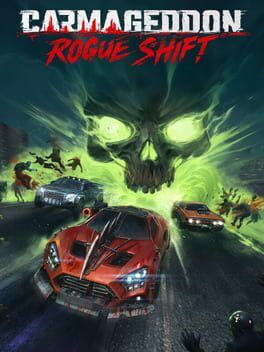
Carmageddon means something very specific to people of a certain age: grainy pedestrians, lawsuit-baiting headlines, and a driving model that felt like someone had weaponized a shopping trolley. Carmageddon: Rogue Shift has the unenviable task of dragging that fossil into 2026 while stapling on a very contemporary obsession with roguelite structure.
Based on what we’ve played of an early PC build, Rogue Shift is absolutely committed to its new identity. This is not a simple nostalgia pass with glossier gore. It is a run-based, progression-driven vehicular combat roguelite where the track, your objective, and your build are in constant flux.
Run-based carnage instead of fixed cups
Rogue Shift scraps traditional cups and championships for discrete runs. You drop into a procedurally assembled route of arenas, junctions, and side streets, each node on the route offering a choice: a combat-heavy contract, a high-stakes time trial, a scavenger hunt across a ruined overpass, or a detour to a risk-reward challenge.
A full run might last 20 to 40 minutes if you survive. Each event feeds into your ongoing build. Smash enough zombified pedestrians, wreck enough rival cars, and you accrue scrap and perk tokens. Between nodes, you spend those on short-term buffs, weapon swaps, and repairs. Finish a run, and a separate currency feeds into a meta-progression layer back at your garage.
The structure feels closer to something like Hades by way of a demolition derby than to any classic racer. You are not trying to perfect a single line through a static track. Instead, you are constantly triaging: do you detour to a scrapyard arena in hopes of a rare front-mounted harpoon, or sprint to the finish before your crumbling chassis finally gives up?
Roguelite progression that mostly respects your time
The roguelite layer leans on a familiar split between run-specific upgrades and persistent unlocks, but it is tuned more generously than many genre peers.
In-run, you are dealing with limited-use repair kits, ammo refills, and a deck of modifiers that can twist your playstyle. One run turned my clunky starter muscle car into a rolling artillery piece with homing rockets and a magnet that hoovered up scrap from half a block away. Another time, a string of bad rolls left me limping around on three wheels, praying for a repair station while a convoy of armored hearses boxed me in.
The meta layer uses those completed contracts and wreck totals to unlock new cars, weapon classes, and permanent perks such as tougher armor, better scrap yields, or improved handling for certain chassis archetypes. Early on, this drip-feed works: each couple of runs you are adding a new toy to your roster or smoothing off a rough edge of the handling.
There are signs this could wobble if 34BigThings gets greedy about the grind, but in the current build runs feel meaningfully productive even when you die early. You rarely come away empty-handed, and that is crucial for a game where failure is supposed to be part of the fun.
Handling that finally understands spectacle
Classic Carmageddon games often felt like masochism. Cars were floaty, collisions were inconsistent, and the physics swung from hilarious to hateful without warning. Rogue Shift lands in a much more deliberate space.
Cars have weight but are not clumsy. There is a generous drift window that lets you swing a hearse sideways through a pack of shambling bodies without instantly losing control. Impacts throw metal and limbs in wide arcs, but the post-collision recovery is quick enough that you can chain hits together instead of spending half a run wrestling the car back onto its wheels.
The camera is smart about framing chaos. When you sideswipe a rival into a fuel tanker, the game briefly leans into the explosion, then snaps you back into control without turning everything into a slow-motion cutscene. It is a small thing, but it keeps the pace relentless instead of letting spectacle kill flow.
The only real caveat is that the early build occasionally overdoes screen shake and particle intensity. In dense city nodes, with three explosions overlapping and your nitro active, it can be hard to read silhouettes and incoming traffic. That might be on the tunable side, but accessibility options will need to offer more control here.
Run variety and the roguelite problem
The biggest question hanging over Rogue Shift is whether its run-based structure has enough variety to keep players hooked over dozens of attempts.
Right now, route nodes remix a limited handful of templates. Downtown plazas, industrial overpasses, drainage ditches, and scrapyard arenas shuffle into different sequences with altered objectives and enemy mixes. On a macro level that works: you rarely feel like you are driving the exact same route twice.
On a micro level, though, some repetition is already creeping in. Escort contracts feel like slightly tweaked race events where the actual escort vehicle might as well not exist. Scavenger hunts are entertaining the first few times, but the collectible placement patterns quickly start to feel familiar.
The saving grace is how much your build can change the flavor of a run. A beefed-up plow and armor-focused perks turn a contract node into a methodical, almost tactical exercise in cornering and grinding down foes. A fragile sports car with boosted nitro and projectile weapons forces you to treat the same node as a hit-and-run gauntlet. The scaffolding might repeat, but what you are doing within it evolves if the upgrade pool keeps expanding.
Modernizing Carmageddon’s infamy
Carmageddon’s reputation was built on being offensive, and in 2026 that is a hard line to walk. Rogue Shift clearly knows it cannot just remaster 90s edginess and call it a day.
The tone here pushes absurdity over cruelty. Enemies are stylized zombies and mutants rather than photorealistic bystanders. The gore is cartoonishly overblown, with ragdoll physics exaggerating every impact. Environmental gags, billboards, and mission briefings carry a juvenile, metal-album-cover sense of humor that feels more knowingly dumb than genuinely mean-spirited.
This shift actually serves the roguelite structure well. When you are mowing through hundreds of enemies per run, the spectacle reads as arcade chaos rather than a deliberate attempt to shock. That is a healthier fit for a game that wants you to be laughing at how absurdly out of control everything gets.
Presentation and performance on modern hardware
Even in early form, Rogue Shift looks on target for its 2026 window across PS5, Xbox Series, Switch 2, and PC. The city hubs and wasteland outskirts share a chunky, industrial art style with exaggerated silhouettes that keep vehicles readable at speed.
Lighting and weather play a bigger role than old Carmageddon fans might expect. Nighttime runs soaked in neon signage feel very different from dust-storm daylight drives where visibility drops and headlights carve through brown haze. Again, variety is doing a lot of heavy lifting.
On PC, the build we tested held a mostly stable frame rate with a lot of scalability in its settings. Given how much is happening on screen in large brawls, stable performance will be non-negotiable for console versions, especially the less powerful Switch 2 hardware. If 34BigThings can keep the physics intact without cutting too deeply into draw distance or crowd density, Rogue Shift could be a rare example of a modern Carmageddon that feels good to play rather than merely good to remember.
Early verdict: promising structure, pressure on content
Carmageddon: Rogue Shift is not a lazy nostalgia play. It takes the core appeal of the series vehicular manslaughter, slapstick physics, and black humor and shoves it into a modern roguelite framework that, at least in early testing, mostly works.
The run-based structure gives Carmageddon something it has never really had: rhythm. The progression systems make failure palatable and give structure to the carnage. Handling finally meets the series halfway, embracing spectacle without abandoning control. The biggest open questions are about long-term variety in objectives and environments, and how heavily the game will lean on grind to pad out unlocks.
If 34BigThings can broaden the event pool, keep the upgrade economy generous, and continue to thread the needle on tone, Rogue Shift could be the rare revival that does more than coast on its name. For the first time in years, Carmageddon does not just feel like a controversy from another era, but like a series that might actually have something new to say with its metal and mayhem.
Final Verdict
A solid gaming experience that delivers on its promises and provides hours of entertainment.