
Review

By MVP
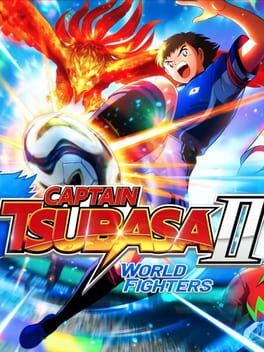
Image: IGDB
Store links: Captain Tsubasa II: World Fighters on Steam
A bigger sequel with one obvious buyer question
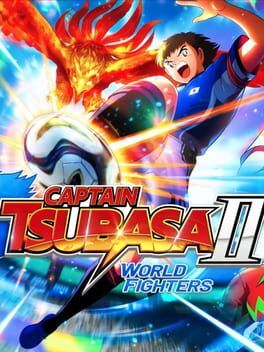
Captain Tsubasa 2: World Fighters arrives as a full-price arcade soccer sequel built around 110 playable characters, custom-player progression, super moves, and the World Youth arc, according to Bandai Namco's listings cited by Metacritic and TheXboxHub. That is the concrete pitch. The tension is whether Tamsoft has finally made the actual football worth playing between the fireworks.
On that question, the answer is mostly yes. Across the available review material, World Fighters is described as a clear refinement over Captain Tsubasa: Rise of New Champions rather than a reinvention. PCMag Middle East, after more than 20 hours on PS5 Pro, reported more accurate passing, more responsive movement, improved dribbling, better positioning play, and a cleaner interface. PlayStation LifeStyle similarly framed it as a sequel that builds on the first game's foundation with deeper but still approachable sports systems.
That matters for the audience this anime soccer game is chasing. Captain Tsubasa has never needed to compete with EA Sports FC as a simulation. Its job is to make a tackle, a through ball, a desperate save, or a last-minute shot feel like the turning point of a shonen tournament arc. World Fighters gets closer because the ordinary phases of play have more weight. You are still charging gauges and looking for a spectacular finish, but the buildup no longer feels like dead air before the cut-in animation.
The on-field game finally earns the spectacle
World Fighters works best when it treats soccer like a momentum sport. The basic loop is recognizable: win the ball, pass into space, dash past defenders, and work a shooting lane. The difference is that tackles can look like full-body collisions, passes and shots carry anime force, and signature techniques turn the penalty area into a boss arena. MonsterVine described it as ridiculous arcade soccer, with tackles, dive-kicks, and shot animations that feel closer to energy blasts than conventional kicks.
The sequel's smartest improvement is that it asks you to care about the steps before the super shot. PCMag Middle East specifically praised positioning and buildup as more important than in Rise of New Champions, while Ani-Game noted that shooting is tied to pressuring the goalkeeper over time rather than simply aiming at goal and pressing a button. In practice, that gives the game a useful sports-game rhythm: early possessions are about wearing down the keeper, identifying matchups, and moving the ball well enough to set up a decisive technique.
The goalkeeper system remains divisive. MonsterVine explained that when a shot comes in, the shooter chooses a direction and the goalkeeper must read the animation to attempt a Perfect Save. Correct reads preserve the keeper's energy, while repeated heavy shots can reduce their gauge over the match. That gives saves drama and makes goalkeeping more active than a passive dice roll. The downside, according to PCMag Middle East, is that goalkeeper stamina can still dominate match flow, and directional saving can feel like guessing. For a sports analyst, that is the key tradeoff: World Fighters creates pressure and comeback windows, but the most important defensive moments can sometimes feel less readable than they should.
The new ability to play as the goalkeeper is a meaningful addition rather than a novelty. Ani-Game reported that goalkeeping changes the feel of a match because blocking, timing, and shot reading use a different logic from attacking play. In a market where many licensed sports games treat defensive roles as chores, World Fighters deserves credit for making the last line of defense feel theatrical and mechanically relevant.
Story mode is the main event, with pacing as the tax
The single-player structure is the strongest reason to consider World Fighters if you care about Captain Tsubasa as an anime or manga property. Multiple sources state that the game covers the World Youth arc. PlayStation LifeStyle said original creator Yoichi Takahashi oversaw the plot, while MonsterVine reported that the game provides a quick recap of earlier arcs for players who did not follow the first game or the source material.
The create-a-player feature gives that story mode a cleaner entry point. Ani-Game described a surprisingly detailed character creator with options for facial features, hair, body build, and a visual style that fits alongside the established cast. More importantly, the custom player develops abilities and playstyle over time, which gives the campaign some light role-playing texture. PlayStation LifeStyle also pointed to side scenarios, link stories, and what-if material as part of the mode's appeal.
This is where World Fighters is most clearly serving anime fans first. The match is rarely allowed to be only a match. Rivalries interrupt play, character beats frame challenges, and national-team stakes push the campaign toward melodrama. MonsterVine found the shonen principles of effort, friendship, and victory surprisingly effective even as a newcomer to Captain Tsubasa.
The cost is pacing. MonsterVine criticized the way scenes and events can interrupt matches, noting that skipping them avoids disruption but risks missing major story moments. PCMag Middle East also cited frequent loading screens, repetitive dialogue, and optional scenarios that lose impact over time. That creates the game's biggest structural split. If you want a story-heavy sports anime adaptation, the interruptions are part of the flavor. If you want clean match flow, they become friction.
Modes, roster depth, and the multiplayer gap
As a package, World Fighters looks sturdy offline and thinner online. The confirmed headline number is 110 playable characters, cited in Bandai Namco's Metacritic summary and TheXboxHub's launch coverage. For a licensed sports anime game, that roster size is important because team identity is character identity. These are not interchangeable fullbacks with different ratings. They are personalities, signature shots, rivalries, and animations.
PlayStation LifeStyle reported that the game includes a detailed tutorial, practice mode, offline CPU play, standard online matches, and private online matches. That is a sensible spread for learning a sports system with unusual rules. It also gives newcomers a safer runway before stepping into competitive play, which matters because Captain Tsubasa's systems sit somewhere between arcade soccer, fighting-game matchup knowledge, and resource management.
The missing piece is competitive structure. PlayStation LifeStyle said players invested in online competition may wish for more in-depth modes such as tournaments. OpenCritic's page also quotes The Games Machine as holding off on judging online mode while recommending the game for arcade-football fans otherwise. Based on the available sources, World Fighters is better viewed as an offline story and couch-competition sports game with online support, not as a full competitive platform.
That distinction should guide the purchase. If your ideal sports game is career depth, ladder pressure, live events, and deep online ecosystems, the source material does not support expecting that here. If you want a campaign, a large character roster, practice tools, and flashy head-to-head matches, the package makes more sense.
Presentation and performance carry the fantasy
The visual pitch is one of World Fighters' clearest wins. PlayStation LifeStyle praised the anime action as gorgeous, MonsterVine called the presentation top-notch, and Ani-Game emphasized how matches capture the feeling of players unleashing spectacular techniques rather than simply kicking a ball. That is essential because the game's identity depends on selling impossible football as emotional sport.
The interface also appears stronger than before. PCMag Middle East praised the clean, readable UI, which is easy to overlook until a game starts layering stamina, shot power, super moves, chain mechanics, defensive reads, and character-specific techniques on top of normal soccer controls. A clearer UI makes World Fighters easier to parse without sanding down its excess.
Performance reporting is more limited. PCMag Middle East specifically cited excellent PS5 Pro performance after more than 20 hours. That is encouraging for Sony's upgraded hardware, but it should not be stretched into a blanket claim for every platform. TheXboxHub lists Xbox, PlayStation, Nintendo Switch, and PC availability, while Metacritic separates PlayStation 5 and PC review counts. The supplied sources do not provide comparable technical detail for Xbox, Switch, base PS5, or PC configurations.
Audio is the weaker presentation note in the available criticism. PCMag Middle East said English commentary lacks personality. In a game this committed to spectacle, flat commentary can make the space between cut-ins feel quieter than intended. The animations do plenty of heavy lifting, but the broadcast layer does not appear to match the energy of the best super moves.
Price, release information, and who should buy now
The practical details are mostly clear, with one date wrinkle. Metacritic lists Captain Tsubasa 2: World Fighters as released on Aug. 28, 2026, and shows a $59.99 Best Buy listing. TheXboxHub also dates its launch coverage Aug. 28 and states the game is on Xbox, PlayStation, Nintendo Switch, and PC. OpenCritic lists a release date of Aug. 27, 2026. The supplied sources do not explain the one-day difference, so it is best treated as a listing discrepancy rather than a separate confirmed rollout.
At $59.99, value depends heavily on your appetite for story mode and Captain Tsubasa's specific flavor of soccer. PCMag Middle East argued that the price feels high for the amount of meaningful variety, even while praising the improved football and strong offline package. That is a fair warning. World Fighters has a bigger roster and stronger fundamentals, but the reported online offering does not sound broad enough to carry the price for players who primarily want long-term competitive modes.
For anime fans, the recommendation is much easier. The game appears to understand the franchise's appeal: impossible shots, national rivalries, custom-player wish fulfillment, and big emotional match beats. For soccer fans with no attachment to Captain Tsubasa, the fit depends on tolerance for exaggeration. This is an arcade sports game where keeper stamina, super moves, and dramatic interruptions define the rhythm. If you need realism, look elsewhere. If you miss sports games that are willing to be strange, readable, and theatrical, World Fighters has a real lane.
The broader critical picture supports that middle-high recommendation. Metacritic lists the game as generally favorable, with 17 PlayStation 5 critic reviews at the time of the captured source text, while OpenCritic shows scores ranging from strong praise to more cautious 7-out-of-10 territory. The common thread is consistent: Tamsoft improved the feel of the football, preserved the anime spectacle, and left some pacing, AI, variety, and online questions on the pitch.
Verdict
Captain Tsubasa 2: World Fighters is the sequel this concept needed. It does not turn Captain Tsubasa into a traditional soccer sim, and it should not. Instead, it makes the ordinary phases of play sharper so the ridiculous moments hit harder. Passing, dribbling, buildup, and defensive pressure have enough substance to support the fireballs.
The story mode is the best reason to play, especially for fans who want the World Youth arc delivered with custom-player involvement and a large roster of recognizable characters. The same structure can drag, though, with event interruptions, loading screens, and repeated dialogue slowing the match rhythm. Online play sounds functional rather than ambitious, and the $59.99 price is easier to justify for solo players and franchise fans than for sports gamers looking for a deep competitive hub.
As a Captain Tsubasa 2 review, the cleanest verdict is this: World Fighters is a strong anime soccer game with better on-field fundamentals than its predecessor, a generous story focus, and enough arcade strategy to engage players who normally bounce off licensed anime games. It is flawed, sometimes stop-start, and still too dependent on goalkeeper resource systems, but when the ball finally leaves a striker's foot like a meteor, the sequel earns its theatrics.
Final Verdict
A solid gaming experience that delivers on its promises and provides hours of entertainment.