
Review
By Apex
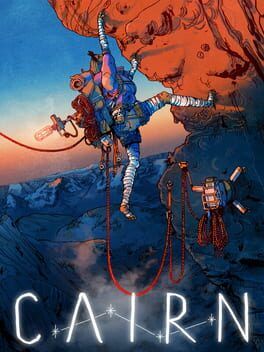
Cairn is not interested in making you feel powerful. It wants you to feel small, flesh-and-bone fragile, clinging to a slab of indifferent rock with a blizzard in your ears and a stamina bar that looks like a joke. Where most games treat climbing as a button-hold formality, The Game Bakers build an entire experience around the strain of inching upward, one limb at a time.
Across PS5 and PC, Cairn is the rare traversal game that makes Death Stranding’s weighty hiking and Jusant’s rhythmic ascents look almost relaxed. It is denser, harsher, and far more tactile than either, and over a full playthrough that focus is both its greatest strength and its biggest barrier.
Climbing that actually feels like climbing
You play as Aava, a mountaineer obsessed with claiming the unsummited Mount Kami. The story mostly hums in the background through sparse campfire vignettes and environmental details. What matters is the wall in front of you.
Cairn’s core is a limb-by-limb climbing model. Each hand and foot has its own contact point. You sweep a cursor over the wall to find holds, then commit with your triggers and face buttons. The catch is that almost everything you do drains stamina. Overreach and Aava’s muscles visibly tremble, the controller rattles, and her breathing spikes. Push just a bit further and she peels off the rock.
Compared with Jusant, which abstracts each grip into a rhythm game of alternating trigger pulls, Cairn is closer to an analog puzzle. There is no neat cadence, only bodies and friction. Every move feels provisional. Even on mouse and keyboard, where you trade trigger pressure for keys and mouse aim, you are still thinking in joints and leverage rather than icons and gauges.
Death Stranding’s hiking asks you to babysit balance while lugging cargo across open terrain, but its traversal is generous once you understand the physics. Cairn is the opposite. There is almost no slack. It wants you second-guessing every reach, every tiny reposition of a foot to reclaim a few pixels of stamina.
This is where the game earns its reputation. The act of climbing is physically expressive in a way video games almost never achieve. Watching Aava’s leg shift to a micro-ledges, feeling her arms relax for half a second as you find a rest stance, hearing the sigh she lets out when you nail a sketchy move, you are constantly reminded there is a body at stake, not just an avatar.
Stamina as a hard currency
Cairn’s stamina system is relentlessly strict. You do not have an ocean of grip to burn through. Instead you are working with a shallow pool that refills only when Aava is truly resting. That means actually being in a comfortable triangle stance, hanging from pitons, or wedging her into a chimney where her muscles can unlock.
Simple rules create vicious tension. Overexert and your stamina max shrinks until you can recover in a good position. Spend too much time fidgeting on bad holds and you will drain your reserves before you even reach the crux of a route. The most humbling part of early play is realizing how often you waste stamina just by twitching around.
Compared to Jusant, where stamina is a timing window to be managed, Cairn treats it like a currency you budget across an entire pitch. It feels closer to Death Stranding’s weight and balance systems in theory, but here every mistake is punished more quickly and more personally. Where Sam Porter Bridges can stumble, auto-correct, and jog on, Aava simply falls.
The game’s best sections are the ones where stamina, body position and risk line up cleanly. A sloping traverse peppered with shallow crimps forces you to tiptoe and plan quick, efficient chains of movement. An overhung cave demands that you burn a big chunk of stamina on a dynamic sequence, then collapse onto a hanging piton just as your grip fails. When the system clicks, stamina becomes a kind of tactical tension: you see the bar dying, you know exactly why it’s happening, and still you push for one more move.
Route-planning as the real puzzle
Like real climbing, the hard work usually starts before you move. Cairn constantly asks you to stop, zoom out, and treat the wall as a problem rather than a ladder.
The camera pulls back to show you several potential lines up a face. Some paths are longer but peppered with ledges where you can rest and place gear. Others are more direct, but demand brutal sequences of long, stamina-burning reaches with no chances to reset. Ledges you can stand on, cracks that will take a piton, and weird bulges of rock that hide brief no-hands rests all factor into your mental plan.
This is where Cairn surpasses both of its obvious peers. Death Stranding’s route planning exists, but the moment you drop fifty ladders on an incline, it turns into a logistics sim instead of a movement puzzle. Jusant offers multiple lines up its towering sculptures, yet they are mostly variants in flavor rather than commitment. Cairn’s routes, by contrast, can feel like entirely different climbs. One line might be safe but grindingly long and mentally exhausting. Another might be short, technical, and racked with real risk.
The PlayStation Blog’s advanced tips hammer this home: plan your entire sequence, scan for rest spots, think several moves ahead, and always have a bailout hold in mind. Ignore that advice and the game will punish you. When you commit to a corner too steep for a safe piton or burn half your stamina on a decorative dead end, the inevitable fall feels earned in the worst possible way.
It also has a subtle roguelike flavor. You reapproach the same walls on later attempts with a deeper mental map. You remember that a hidden jug hold sits just out of frame, that a nasty sloped shelf is a death trap unless you arrive there fresh. The mountain becomes familiar not because the game marks it up for you, but because of your own bruised memory.
Gear management that actually matters
Cairn’s gear systems sound mundane on paper. You carry pitons that act as both protection and temporary rest anchors. You juggle limited rope for belays. You pack food, warm layers, and other supplies for multi-day pushes.
In practice, this gear is the difference between a controlled ascent and a catastrophic slide into tedium. Pitons are the star of the show. You can slam them into cracks at marked spots, then clip in to recover stamina or arrest a fall. But they are strictly limited, and often the game forces you to gamble.
Do you burn a piton here, halfway up a wall that still has unknown horrors above, just to bank the last ten minutes of progress? Or do you hold onto it, roll the dice, and risk a fall that could send you screaming past three previous anchors? It is an agonizing calculation, and the correct answer is not always obvious.
There is a satisfying mini-game to placing pitons at full strength, but the real impact is psychological. Every clang of metal into stone is a bet. On PS5, the DualSense brings this to life with not just a click but a tangible change in trigger resistance; you feel that final drive home.
Supply management on the broader ascent wraps around this. Camps are rare, precious havens where you can sleep, craft, and reassess your route for the next day. Death Stranding is obsessed with what you carry, but most of its tools either automate traversal or trivialize it. Cairn’s equipment does not remove friction so much as reshape it. A heavier rack of pitons and food means security, but also more stamina drain, which nudges you toward leaner loads and higher-stakes decisions.
Over a full playthrough, this loop keeps climbs from blurring together. You are not just climbing because that is what the game offers. You are climbing because you mismanaged pitons three hours ago, because the summit window is closing, because the only way to reset your mistake is to go back into that awful overhanging gully and do it right this time.
Difficulty curve: from intimidation to obsession
Cairn’s opening hours are a wall in themselves. The training gym teaches fundamentals, but it does not shield you from bruising failure. Even after running its drills on rest positions and pendulum swings, stepping onto Mount Kami proper feels like hopping off a plastic bouldering wall onto a Himalayan ice face.
The difficulty curve is steep but readable. Early sections introduce basic hold reading and stamina budgeting, with relatively forgiving falls. Midgame routes layer in complex traverses, dynamic moves, and multi-pitch problem solving. Late climbs are brutal tests of everything you have learned, with long, exposed walls that can chew up thirty minutes of progress in a single mistake.
Where a lot of hard games sell themselves on punishment first and clarity later, Cairn works the other way around. The rules are consistent. Physics are legible. When you fall, it is rarely because the game surprised you but because you overreached, got greedy, or misread the rock.
Compared to Jusant’s graceful escalation, Cairn is more jagged. There are sharp spikes in difficulty, particularly in sections that mix awkward camera angles with precise body positioning. It shares some DNA with Death Stranding’s long, punishing hikes where one misstep can send you tumbling. The difference is that Cairn is focused almost entirely on those moments.
Over a full playthrough, this intensity will either hook you or grind you down. For me, the middle third is where fatigue looms. The novelty of the climbing system has settled, yet the summit still feels distant. A few long, visually similar faces in the midgame can blur together, and back-to-back big falls can make it feel like the game is stalling your progress just because it can.
The game fights this with smartly placed setpiece walls and subtle visual shifts in the mountain’s geology, but there are points where repetition wins out. If you bounce hard off repetition-heavy games, expect those stretches to bruise you.
Repetition: purposeful, but not painless
By design, Cairn is repetitive. The verbs you have are limited, and the game is fully aware of that. You move limbs, you rest, you place gear, you recover. The mountain changes, but you do not gain flashy new traversal tools or magic solutions.
The comparison to Death Stranding is sharp here. Kojima’s game is about repetition too, but its solution is to drown you in gadgets until hiking becomes logistics management. By the end, you are cruising highways and zip-lines over terrain you used to dread on foot. Cairn refuses that temptation. You are still the same climber on the final pitch that you were at the start, just more practiced and more haunted.
Jusant tries to keep repetition at bay with puzzle variety and short, self-contained climbing problems. Cairn is the opposite of snackable. You are always in the same project, always on Mount Kami, always one mistake away from doing a long stretch over.
The question is whether that repetition holds up. In my time with the game, the answer is mostly yes, because the repetition has teeth. Returning to a section is not rote; it is an opportunity to refine your line, to test a new piton placement, to squeeze more efficiency out of a traverse you previously muscled through. There is a climbing-gym mindset to it. You project routes, fail them, work individual sequences, and eventually link the whole thing.
That said, there are structural decisions that can make repetition feel harsher than it needs to be. Some checkpoints sit just a little too far apart, so a single late mistake can erase an entire evening’s progress. A handful of late-game sequences flirt with trial-and-error, particularly when poor visibility or unclear hold readability pushes you into blind leaps.
If you are the sort of player who bounced off Getting Over It or grows resentful at being sent back to redo content, Cairn will test your patience more than your technical skill. The difference is that its systems are deep enough and its feedback rich enough that, more often than not, you do learn something when you fall.
PS5 vs PC: where to climb
Cairn is fully playable on both PS5 and PC, but this is a rare case where the console version quietly has the edge.
On PS5, DualSense support is exceptional. You feel Aava’s grip failing through fine-grained haptics. Triggers stiffen as you wrench for a distant hold, then loosen as you settle into a rest stance. Subtle vibrations rise and fall with her breathing and heartbeat. It is not just cosmetic feedback. Over time you start to anticipate danger from feel even before the UI confirms it.
Performance is predictably rock solid. Visuals are not chasing photorealism, but the art direction sells the sense of scale and exposure, with sharp draw distances and clean silhouettes that make reading the wall easier. Load times are brief, which matters in a game where reattempts are constant.
On PC, mouse aim offers precise targeting of holds and makes scanning the wall fast and accurate. If you are comfortable with a controller, though, Cairn is one of the few games where I would explicitly recommend it, even on PC. The limb mapping and haptic feedback are simply more convincing that way.
The one drawback across both platforms is that, while the control scheme is thoughtfully laid out, it never quite becomes invisible. Even deep into the game you will occasionally fat-finger the wrong limb or fumble a piton placement, and those input errors can cascade into ugly falls. There is an auto-limb mode meant to help newcomers, but seasoned players and reviewers alike have pointed out that it is less reliable than simply going full manual.
Still, aside from that automation quirk, the PS5 and PC versions are functionally aligned. You are not missing content or features on either. Your choice comes down to whether you value DualSense immersion or the precision of a high-refresh PC setup.
How it stacks against other traversal greats
Seen next to its contemporaries, Cairn is surprisingly singular.
Compared to Death Stranding, it is narrower and crueler, but also purer. Kojima’s game treats traversal as the canvas for a sprawling story and a wild gadget sandbox. Cairn strips all that away until only the bodily reality of climbing is left. There is no bike to unlock, no powered exoskeleton, no highway to lay down. There is just you, the rock, and a slowly shrinking stash of pitons.
Against Jusant, Cairn trades flow for friction. Jusant is almost musical once it gets going, each ascent a sequence of satisfying inputs set to a gorgeous, meditative soundtrack. Cairn is not interested in Zen. It wants to live in the panic between grips, in the shaky breaths between moves. It is less immediately charming, far less accessible, and far more draining.
Over a long playthrough, this makes Cairn harder to recommend broadly than either of those games. Death Stranding’s maximalism and Jusant’s elegance both spread their traversal ideas across varied structures, making them easier to digest in sessions. Cairn’s focus is so intense it can start to feel like an endurance event.
But if your favorite parts of those games were the blank stretches of terrain and the solitary climbs, not the combat or story, Cairn feels like the logical endpoint. It is what happens when designers decide that the in-between moments should be the only moments.
Verdict
Cairn is a brutal, beautiful experiment in taking traversal seriously. Its tactile climbing, unforgiving stamina system, and meaningful route-planning carve out a space few games even attempt to enter. Over the course of a full ascent, it can be exhausting, occasionally repetitive, and sometimes unfairly punishing, but it almost never feels hollow.
Where Death Stranding turns walking into an epic and Jusant turns climbing into a meditative performance, Cairn turns ascent into obsession. If you are willing to suffer for your summit, there is nothing else quite like it.
If you are not, that is fine. The mountain does not care. It will be there, waiting, long after you let go.
Final Verdict
A solid gaming experience that delivers on its promises and provides hours of entertainment.