
Review

By Parry Queen
A promising nightmare on a forgotten island
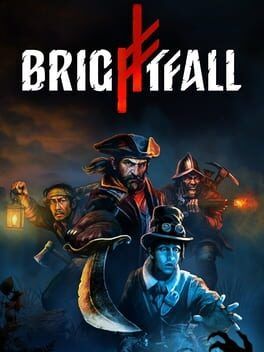
Brightfall arrives on Switch 2 as a co-op open world survival roguelite, and it wastes no time telling you exactly what matters. The sun drops fast, the fog rolls in, and suddenly your group is huddled around a flickering campfire, watching sanity and health tick away as something moves out in the dark. The hook is simple: keep your light alive, keep your mind intact, and push a little farther each run across an island that reshapes itself between attempts.
For an early access style build, the fundamentals are already clear. Brightfall wants the long term arc of Valheim, the session based panic of Don’t Starve Together, and a more pronounced roguelite structure layered on top. On Switch 2, that ambition mostly survives translation, but it is not without friction.
Co-op survival that actually needs co-op
Brightfall is technically playable solo, but its systems are tuned around at least two players. You land on an island erased from the maps after a plague, start with minimal gear, and fan out in search of sticks, ore, plants, and relics. In practice, the day is short, the map is hostile, and the light mechanics punish overextending, so splitting roles happens naturally.
One player scours for fuel and crafting materials while another hunts, scouts, or pushes toward foggy landmarks that hint at meta progression. When the encroaching night hits, everyone sprints back toward whatever source of light you have cobbled together, dumping resources into torches, braziers, or fragile lanterns. Communication becomes gameplay. Arguments over who risks a sanity hit to grab one more tree or ore vein on the edge of the gloom feel less like busywork and more like the core tension of the experience.
Compared to Valheim’s slower, more deliberate pacing, Brightfall is sharper and more session oriented. You are not building a permanent village over a week of real time play so much as establishing temporary footholds in a world that will rewrite itself when you inevitably fail. The early build keeps gatherings tight, with runs that naturally cluster around 60 to 90 minutes before a wipe or a planned restart. That shorter rhythm suits handheld sessions nicely and avoids the marathon fatigue that often creeps into survival sandboxes.
Light and sanity: not just another hunger bar
Survival games love meters, but Brightfall’s light and sanity mechanics are more than extra bars to babysit. Light is both your literal illumination and a kind of shared lifeline. Step too far into darkness and your sanity begins to fray. Visual distortions creep in, audio filters squeeze ambient sounds into a claustrophobic hum, and enemies that were merely dangerous in daylight become genuinely unmanageable.
The key twist is that light is local and limited. Torches burn out quickly, fixed campfires demand constant refueling, and carrying portable lanterns locks up one of your hands. You are constantly negotiating tradeoffs between personal safety and team efficiency. Do you leave a chain of small fires to mark a safe path back to camp or concentrate fuel into a single bright hub and gamble on sprinting blind through dark patches to reach it?
Sanity is where Brightfall nudges closest to Don’t Starve Together, but here it is less about quirky madness and more about mounting dread. As sanity drops, your effective field of view contracts under rolling fog and flashes of spectral shapes in the distance. Enemies hit harder and your character’s stamina pool shrinks, making every encounter in the dark feel like a mistake. Recovering sanity usually means basking in bright light or consuming precious crafted items, so the resource economy always ties back into the light theme.
In practice, these mechanics succeed in turning ordinary chores into tense decisions. A routine wood run can spiral into a rescue mission when a partner overcommits and vanishes into the gloom with your only good lantern. It is the kind of friction that makes co-op storytelling happen organically rather than through scripted quests.
The reshaping island and the roguelite loop
The big pitch for Brightfall is an island that literally rearranges itself between runs. In the early build that system expresses itself through a set of major biomes, hand authored landmarks, and procedurally reconfigured connective tissue.
Key points of interest, like plague scarred villages, ruined towers, and mysterious obelisks, tend to reappear in new configurations with each reset. Pathways, chokepoints, and resource clusters are what truly move around, so a familiar tower might now be tucked behind a swamp instead of sitting in a breezy valley. That structure strikes a good balance between discoverability and unpredictability. You start to recognize the island’s grammar without solving it once and for all.
Runs are organized around pushing deeper into higher threat zones, banking relics and knowledge at infrequent safe havens, then either being overwhelmed or choosing to cash out. Meta progression unlocks broader crafting trees, permanent buffs to sanity resistance, and new light sources that change your approach to exploration.
The question is whether the island’s reshaping keeps runs from blending together the way late game Valheim worlds sometimes do. So far, it mostly works. There is enough variety in how environmental hazards, weather, and time of day stack together that revisiting a biome does not feel like a rerun. A cliffside route that was a safe daytime shortcut in one run can become a death trap on the next when a fog bank and nocturnal predators combine.
That said, the procedural stitching is not invisible. You will sometimes catch seams, like repeated rock formations or familiar stand alone cottages placed at slightly awkward angles. It is not immersion breaking, but it reminds you that this is more of a smart shuffle than a fully authored saga.
How it plays on Switch 2
Performance on Switch 2 is encouraging with some caveats. In docked mode the early client targets a smooth frame rate that generally holds during daytime exploration and small skirmishes. Things become less stable when weather effects, dense foliage, and multiple light sources occupy the screen during big night time fights, which is unfortunately when Brightfall is at its most dramatic.
Visuals land in a middle ground between the painterly abstraction of Don’t Starve and the grounded realism of Valheim. Stylized character models and bold lighting keep the game readable even when the screen is busy. Dynamic shadows help sell the light mechanics, with darkness feeling like an actual volume instead of a lazy screen filter.
Handheld play benefits from the Switch 2’s sharper display, but the reduced screen size makes nighttime navigation trickier. On a TV you can track threats at the edge of the light cone; on the handheld these details can blur, making sanity dives feel a bit cheaper. There is an optional contrast boost and a slider for brightness that helps, though dialing them up undercuts some of the intended tension.
Online co-op across four players is functional but not flawless. In this early state, occasional lag spikes can desync enemy positions, which is especially painful in a game where two extra seconds in the dark can cost you half your sanity bar. Voice chat support through the console’s system layer works, but the lack of robust in game ping tools or contextual callouts means coordination relies heavily on external communication.
Standing apart from Valheim and Don’t Starve Together
Brightfall is very comfortable wearing its influences on its sleeve, but it avoids feeling like a pure mash up. Where Valheim emphasizes long term world ownership and careful, often cozy base building, Brightfall orients itself toward shorter, riskier pushes into hostile terrain. Bases exist, but they are more like evolving camps than permanent towns, and they are always at the mercy of the next island reshuffle.
Against Don’t Starve Together, Brightfall trades some of that game’s eccentric charm and intricate crafting depth for a more immediately legible loop built around light management and combat positioning. You will not spend hours deciphering bizarre recipes or farming oddball creatures. Instead, the tension comes from managing when and where you are willing to go dark, and how far you are ready to push teammates before they snap.
The sanity and light mechanics are the strongest differentiators. Valheim has night as a mild penalty, Don’t Starve has sanity as a quirky complication. Brightfall fuses the two into a central, oppressive force that defines every decision you make on the island. When it works, the game feels like a co-op horror survival trek without leaning on jump scares or scripted story beats.
The roguelite structure also sets it apart. Failed runs are not wasted evenings but data gathering expeditions that feed directly into your next attempt. Unlocking a more efficient light source or a new sanity ward item fundamentally changes your relationship to the map, encouraging you to revisit biomes with fresh tactics rather than simply grinding deeper out of obligation.
Early verdict
As an early access style snapshot, Brightfall is already a compelling proposition on Switch 2. The core loop of scrambling for resources by day, braving a hostile reshaping island by dusk, and clinging to sanity around fragile light sources at night is tense, flavorful, and well suited to co-op.
There are real concerns. Performance wobbles when the screen is busiest, online sync can betray you at the worst moments, and the procedural island sometimes reveals its seams. Crafting depth is also noticeably lighter than its inspirations, which may disappoint players who relish sprawling recipe lists and highly customized bases.
Yet, for now, the tradeoff feels intentional. Brightfall is more about shared stories of last second rescues and catastrophic overreach than building the perfect house. If the developers can deepen the island’s event pool, tighten netcode, and continue honing the sanity and light mechanics without sanding off their teeth, this has the potential to become one of the more memorable co-op survival experiences on Nintendo’s new hardware.
Score: 8/10
Final Verdict
A solid gaming experience that delivers on its promises and provides hours of entertainment.