
Review
By Big Brain
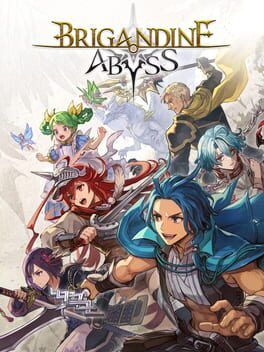
Image: IGDB
Store links: Brigandine Abyss on Steam
A demanding strategy sequel lands in a mixed critical position
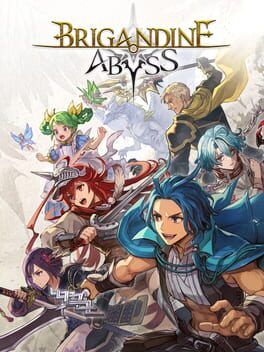
Brigandine Abyss arrives with the kind of premise Switch 2 strategy fans rarely get from console tactical RPGs: a continent-wide war layered over hex-grid battles, six playable factions, army management, recruiting, training, quests, and territory conquest. The tension is that the same structure that makes it stand out also makes it a hard recommendation for newcomers who expect a cleaner Fire Emblem-style campaign.
The confirmed release information comes through public listings and review pages rather than a single platform holder brief. Metacritic lists Brigandine Abyss as released on August 27, 2026, rated T for Teen, with critic coverage across PlayStation 5, PC, Nintendo Switch 2, and Xbox Series X. Anime News Network also lists the game for PS5, Xbox Series X|S, Nintendo Switch 2, and PC. Metacritic’s page currently describes the critical response as “Mixed or Average,” based on six critic reviews for PS5, PC, and Switch 2, and one critic review for Xbox Series X at the time captured in the source material. It also lists Target pricing at $49.99.
There is a small sourcing wrinkle worth flagging. Metacritic names Adglobe as developer. RPGFan also identifies Adglobe as developer and lists Happinet and NIS America among the publishers. Anime News Network’s review text describes Brigandine Abyss as developed by Happinet and published by NIS America. Since multiple sources point to Adglobe as developer while Happinet is tied to the series as publisher in other coverage, the safest reading is that public-facing attribution is inconsistent across outlets. For buyers, the practical takeaway is simpler: this is a new Brigandine entry being reviewed on current platforms, including Nintendo Switch 2, and it is being judged as a niche strategy RPG rather than a mainstream genre reset.
The campaign layer is the hook, and it is still the best argument for playing
The strongest case for Brigandine Abyss is its strategic scale. Video Chums describes the core loop as preparing parties and bases, choosing where to invade, and then fighting the invasion battle, with the broader war map gradually turning in the player’s favor. Cubed3 makes a similar point from a genre angle, arguing that Brigandine Abyss offers a rare amount of freedom compared with tactical RPG series that funnel players through stricter story paths.
That matters for the Brigandine Abyss Switch 2 audience because the console tactical RPG space is crowded with polished, character-led campaigns, but thinner on games that ask players to think like a commander. Here, faction choice affects starting position, available units, early rivals, and campaign rhythm. RPGFan identifies six factions on the continent of Meltitea, including Scarlet Will, Gran Dragnica, Purifanoe, Samura Village, Mysteine, and Pandemyuon, each with its own reasons to resist Abyssloa. Anime News Network’s description also outlines those factions, from dragon-allied Gran Dragnica to the fairy folk of Purifanoe and the lab-grown Chimera forces tied to Pandemyuon.
As a systems pitch, this is compelling. You are weighing front lines against expansion, deciding which leaders can leave on quests, watching territories become vulnerable, and building toward class changes and stronger unit formations. RPG Site explains that the game is divided into an Organization Phase and an Invasion Phase, with leaders assigned to quests for materials or other benefits, but unavailable for combat while away. That push and pull gives the campaign layer real consequence. Sending a key commander off the board is an economic decision, a defensive risk, and a future power play all at once.
The problem is that the macro layer does not fully escape the constraints of its story structure. Cubed3 reports that each story battle allows only three battalions, and that players who spend too much time developing side troops can hit later missions underpowered. That undercuts the fantasy of broad army experimentation. A strategy RPG can promise a wide bench, but if the campaign quietly rewards a narrow core, optimal play shrinks around the safest units. For long-term players, that becomes the first major meta lesson: Brigandine Abyss gives you a map full of possibilities, then pressures you to invest like a miser.
Battles reward patience, but the interface and difficulty curve ask for trust
On the tactical side, Brigandine Abyss appears most confident when it is slow, dense, and slightly intimidating. Video Chums reports battles with a dozen or more combatants on each side, built around hex maps, terrain, elements, enemy weaknesses, leader units, and underlings. The same review praises the way defeating powerful leaders can remove their attached forces, while also noting that this can punish careless play when the same rule works against the player.
This is the part of the tactical RPG review where the audience split becomes clear. If you like menu-reading, matchup planning, formation discipline, and incremental board control, Brigandine Abyss sounds rewarding. If you want clean readability and immediate tactical clarity, the source material repeatedly suggests friction. Video Chums specifically calls out frequent menu digging and says the process of understanding what each combatant can do could have been more intuitive. RPGamer, quoted on Metacritic, cites “wonky AI,” accuracy frustrations, and a large volume of non-combat mechanics to parse, while still praising the climactic feel of combat, background maps, melodramatic stories, and army raising.
Difficulty is another uneven front. Video Chums says the game takes an exceptionally long time to click and recommends starting on easy, stressing that even easy mode still has enough challenge while players learn the systems. The same outlet also says certain battles can feel nearly impossible, especially early in some campaigns before the player has a meaningful chance to optimize. That is not a small flaw in a strategy game. A steep learning curve can be satisfying when failure teaches a useful lesson. It becomes harsher when early campaign structure limits your corrective tools.
From a strategic perspective, the safest advice is to treat the first campaign as a calibration run. Do not spread experience too thin until you understand which leaders and battalions are likely to carry story battles. Use the Organization Phase as an economy engine, but keep border defense and story requirements in mind. Brigandine Abyss seems to reward commanders who accept inefficiency early, learn the interface, and then refine their army plan across subsequent factions.
Army building has depth, but customization is narrower than the premise suggests
Brigandine Abyss gives players plenty to manage between battles. Video Chums highlights hiring new units and leaders, assigning teams, buying and equipping gear, and working through deep preparation menus. RPG Site adds that units can change classes at level 10, then require class-change items at level 20, with those items obtainable through expeditions in the quest menu. Faction leaders are an exception, according to RPG Site, because they can change classes without those special items. RPG Site also notes a resurrection change: the game automatically restocks resurrection items at the end of every season, which suggests a softer loss curve than earlier entries.
Those systems create the appearance of a large strategic economy. The question is how much of that economy turns into meaningful player expression. Cubed3 is critical here, saying units lack customization and that even story leaders offer limited build choices. In that outlet’s view, the game tries to offset limited customization through sheer unit volume, but story missions and three-battalion limits pull players back toward a familiar core group. That is a real design contradiction. A broad roster is only as valuable as the game’s incentives for using it.
RPGFan frames the same issue through the series’ identity, arguing that Brigandine Abyss tries to bridge cult-series diehards and newcomers but waters down elements that previously made the formula distinct. Its review platform was Nintendo Switch 2, so its criticism is especially relevant to players searching for a Switch 2 strategy RPG. The concern is not that Brigandine Abyss lacks systems. The concern is that its systems do not always compound into the open-ended campaign the premise sells.
Still, there is a long-tail upside. Six campaigns with different starting forces can create variety across playthroughs even when individual unit builds are limited. Cubed3 says each campaign starts with different units and that the six playthroughs feel distinct enough for faction choice to matter, despite repeated maps. DualShockers, quoted on Metacritic, also credits the sequel with new mechanics, battlefield verticality, starting positioning, and quality-of-life improvements that make progression and questing more rewarding. The strategic ceiling is there. The question is whether you enjoy a game whose depth comes from campaign routing and roster management more than granular character builds.
The story is more present, but the added narrative weight exposes weak spots
Brigandine Abyss has clearer story ambitions than some earlier impressions of the series might lead players to expect. RPG Site says Abyss is a standalone entry and opens with the Brigandine, an arcane suit of armor, before the general Chaossolus steals it, betrays the ruler, kills him in front of retainers, and begins a conquest. From there, players choose among six playable factions. RPGFan places the setting on Meltitea, where Solginat is overtaken after the king’s advisor is corrupted by Abyss, creating the Abyssloa Empire and pushing other nations into resistance.
The increased event focus is one of the sequel’s visible changes. RPG Site says Abyss improves over Brigandine: The Legend of Runersia by adding more cutscenes and character interactions. RPGFan also notes faction-specific Event Battles, with Scarlet Will’s campaign revolving around the Ebony Fang, a rival mercenary group that betrayed its home kingdom in favor of Abyssloa.
But the reaction to that added story is mixed. RPG Site appreciates the increase in events, yet says the Scarlet Will scenario falls apart in later stages, criticizing how characters tied to Abyssloa are handled and calling their motivations weak. RPGFan similarly argues that each campaign features only three main characters, limiting character development. Anime News Network frames the sequel as a game that promised quality-of-life improvements, a new setting, and stronger faction narratives, but says the results are not straightforward.
For buyers, that means Brigandine Abyss should be approached primarily as a systems game. The faction premises are flavorful, and the setting gives campaigns enough motivation to move across the map, but the provided reviews do not support treating its narrative as the main draw. If you need character drama to carry a 20-hour-plus campaign, the available criticism suggests caution. If story is scaffolding for war planning, the broader package holds up better.
Switch 2 buying advice: deep campaign first, newcomer comfort second
As a Brigandine Abyss review for Switch 2 strategy fans, the recommendation turns on tolerance for friction. The confirmed platform spread means Nintendo Switch 2 players are not getting a sidelined version in coverage terms; Cubed3 reviewed the Nintendo Switch 2 version, RPGFan lists Nintendo Switch 2 as its review platform, and Anime News Network includes Switch 2 alongside PS5, Xbox Series X|S, and PC. None of the supplied sources provides a detailed Switch 2 performance breakdown with frame-rate targets, resolution data, load-time comparisons, or handheld-versus-docked analysis. That absence matters. There are no sourced claims here that Switch 2 performance is either a standout strength or a serious issue.
Price-sensitive players have one concrete public listing from the supplied material: Metacritic’s “Where to Buy” section lists Target at $49.99. Metacritic also notes that user reviews become available after four ratings, with the captured page telling users to return starting at 12:00pm PST on August 28, 2026. If you are deciding at launch, you are leaning on critic coverage rather than a mature player consensus.
Our score reflects that split. Brigandine Abyss earns points for tactical density, campaign scale, faction variety, and a strategy layer that asks players to plan beyond the next grid fight. It loses ground for onboarding, uneven difficulty, limited customization, repetitive pressure around core units, and story ambitions that several sources say do not fully land. Audio is not a prominent point of praise or criticism in the provided reviews, so it is scored conservatively rather than inflated. Performance is also scored cautiously because the available source set does not provide technical evidence beyond platform review coverage.
This is a game for players who like campaign planning, imperfect economies, and the satisfaction of turning a messy front line into a controlled map. It is a harder sell for newcomers who want smooth tutorials, expressive unit building, and story-led momentum. Brigandine Abyss gives Switch 2 owners a serious tactical campaign, but it remains a niche sequel that demands patience before it pays back.
Final Verdict
A solid gaming experience that delivers on its promises and provides hours of entertainment.