
Review

By Big Brain
A proper Bluey adventure you can put in your pocket
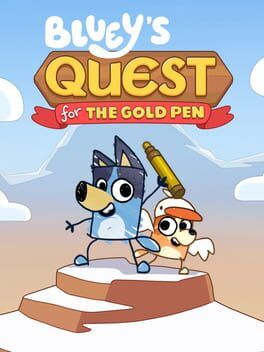
Bluey’s Quest for the Gold Pen could easily have been another lazy TV tie in. Instead, now that it is on both iOS and Android, it feels closer to a "kindergarten Zelda" built specifically for preschoolers and early readers. Crafted with series creator Joe Brumm and animated like the show’s own drawings come to life, it treats kids as curious players, not walking wallets.
You start at the Heeler family table, with Bluey, Bingo, Mum and Dad doodling in a sketchbook. Chattermax’s special Gold Pen goes missing, and the game promptly dives into Bluey’s imagination. Each page of the book becomes a level, turning familiar locations like the house, playground, creek and beach into hand drawn, lightly animated 2D worlds.
For kids, that premise is easy to follow: the pen is lost, Bluey is on a quest, and every stop along the way is an excuse to play pretend.
Capturing the show’s tone
This is where the game really shines. The writing is actually by Joe Brumm, and it shows. Dialogue sounds like the show, not like an imitation. Bandit jokes, Chilli gently nudges the kids along, and Bluey and Bingo bicker and encourage each other in ways parents will instantly recognize. There are fully animated cutscenes stitched between levels, and they feel like mini episodes instead of static storyboards.
The humour lands across ages. Younger kids get slapstick silliness, like Chattermax chaos and exaggerated sound effects. Parents get a quiet stream of wry asides that never feel mean or snarky. Most importantly, the game is calm. There are no timers screaming for attention, no combo meters, no noisy failure screens. It has the same cozy, unhurried pace as an episode of the show, where the fun comes from poking around and discovering things rather than winning.
The presentation helps sell that tone. The sketchbook art style looks like something Bluey actually drew, with crayon textures, simple outlines and occasional scribbles outside the lines. Background music is mellow and familiar, riffing on the show’s themes without looping into irritation after ten minutes on repeat. The original voice cast is here too, which goes a long way toward making this feel official.
Missions built for small hands and short attention spans
Mechanically, Bluey’s Quest for the Gold Pen is a side scrolling adventure about exploring, chatting and solving very gentle puzzles. Kids move Bluey around, jump across small gaps, push or pull simple objects, and talk to characters to pick up little quests.
Missions are short and self contained. One area might ask Bluey to help Bingo collect seashells for a sandcastle, another to find missing toys or follow a trail of footprints. Objectives are clearly illustrated, with bright icons and simple animations that make it obvious where to go next even if your child cannot read yet.
Controls are forgiving. The virtual stick is big, the jump button is generous, and platforming challenges are kept purposefully easy. Falling off a ledge does not result in a harsh game over screen. Bluey simply pops back up nearby, often with an encouraging line rather than a punishment. The game wants kids to try again, not feel scolded.
Parents who play games regularly might find the moment to moment interaction extremely basic. There is no combat, no inventory to manage, and puzzles rarely progress beyond "bring this item to that character" or "press these switches in order." That simplicity is a feature, though, not a flaw, given the target age. It makes co play easy and lets younger kids control the action themselves without a parent needing to constantly take the device back for tricky jumps.
Replayability for kids vs. parents
The main story is not huge by adult standards, but it is the right scale for younger players. You can reach the end of the Gold Pen quest in just a few hours if you move briskly. The real longevity comes from exploration and collectible hunts.
Every area hides stickers, doodads and optional mini quests. Kids are nudged to re enter locations to see what new drawings they can unlock or which side characters have something new to say. Because the worlds are compact and low stress, younger children often enjoy rerunning their favourite zones simply to mess around, much like replaying a favourite episode.
Parents who treat games like one and done narrative experiences may feel they have seen everything after a weekend. There is no deep post game, no alternate endings, and no difficulty modes to test more experienced players. Once the sticker book is filled and the Gold Pen is recovered, further replay exists mostly as free play for your child, not fresh content for you.
That said, the lack of dark patterns is a huge plus for parents. This is a premium, one time purchase with no ads, subscriptions or stamina bars. You are never pestered to buy coins, costumes or bundles. Compared with the usual free to play kids’ offerings, being able to hand over a phone without worrying about surprise charges or unskippable ads is legitimately refreshing.
How it stacks up against other TV licensed mobile games
It is important to judge Bluey’s Quest for the Gold Pen in context. On mobile, TV tie ins usually land in one of two buckets. The first is disposable ad riddled apps that lean on recognisable characters and cheap minigames. The second is surprisingly expensive subscription based hubs that bury simple activities inside aggressive upsell flows.
Compared to those, Bluey’s Quest for the Gold Pen is in a different league. It is an actual adventure game with a beginning, middle and end, wrapped in production values that match the show. The fact that its story was written by Joe Brumm, uses the real cast, and sports hand crafted level design from a seasoned studio gives it a sense of care that most licensed mobile games never approach.
Stack it up against other premium kids’ games based on TV shows, and it still fares well. It is not as mechanically dense as something like a full console platformer ported to mobile, but it fits its audience much better. Where some premium tie ins overshoot their target and end up too fiddly or text heavy for young players, Bluey’s Quest keeps controls and reading requirements manageable without talking down to kids.
The biggest drawback is that parents expecting a more shared, puzzle heavy experience might find it a bit light after their child’s first playthrough. Think of it as a beautifully produced, interactive season special rather than a sprawling adventure to sink weeks into.
iOS vs. Android
On both platforms, the core content is identical. The game looks and sounds the same, uses touch controls exclusively, and offers the same ad free premium structure. Performance on moderately recent devices is smooth, with quick loading into levels and no obvious framerate hitches. The iOS version had a head start and is slightly more battle tested, but the Android release arrives in a polished state, not as a cut down port.
Storage and battery usage are reasonable, though long sessions will still warm up older phones. There are no online only hooks, so it is suitable for offline car trips or flights.
Verdict
Bluey’s Quest for the Gold Pen is not just "good for a kids’ game." It is a genuinely thoughtful, age appropriate adventure that understands what makes Bluey special and translates it into interactive form. For children, it offers a safe, funny, gently challenging world to poke at. For parents, it offers a rare combination of quality, honesty in monetization, and respect for the source material.
If you go in expecting a snack sized adventure your kids will want to revisit, rather than a massive epic you will play for weeks yourself, it is an easy recommendation on both iOS and Android.
Final Verdict
A solid gaming experience that delivers on its promises and provides hours of entertainment.