
Review
By The Completionist
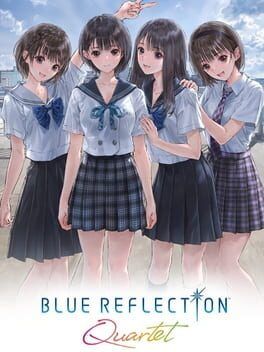
Image: IGDB
Store links: Blue Reflection Quartet on Steam
A complete Blue Reflection package arrives with an uneven center
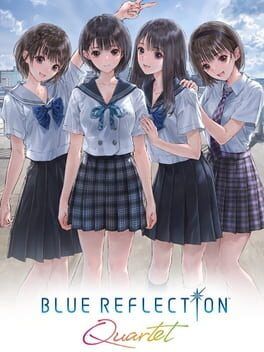
Blue Reflection Quartet’s strongest pitch is concrete and rare: Koei Tecmo and Gust have gathered four Blue Reflection works into one collection, with Metacritic listing the Switch 2 release for July 30, 2026, a T for Teen rating, Gust as developer, and Koei Tecmo Games attached to the listing. Pure Nintendo identifies the four included works as 2017’s Blue Reflection, the 2021 Blue Reflection Ray anime series, the 2023-24 Blue Reflection Sun mobile and PC project, and Blue Reflection: Second Light, which had previously been the only entry with a Nintendo release.
That scope is also the collection’s central problem. This Blue Reflection Quartet review is less about whether the series deserved preservation, because it did, and more about whether the Switch 2 version gives these emotionally precise magical-girl JRPGs enough polish, pacing, and combat clarity to stand out for players who already know Hinako, Ao, and Gust’s particular language of trauma, friendship, and recovery. The answer is qualified: Quartet is valuable, often beautiful, and occasionally moving, but it feels like a collection built around two strong console RPGs and two weaker connective pieces.
The current critical picture supports that tension. Metacritic lists the Switch 2 version as “Generally Favorable,” but its own critic breakdown for the platform is split between positive and mixed reviews. Game8 scored the Switch 2 version 68 and called it a collection that is “less than the sum of its parts,” while Nintendo World Report said it was glad to experience the two console games but wished Ray and Sun had received more attention. Digitally Downloaded, by contrast, was far warmer, calling the combined package an “enormously heartwarming 100 hours.” That spread matches my buyer’s-guide take: returning fans have the most to gain, but they also have the context to notice where this compilation cuts corners.
The two mainline RPGs remain the reason to play
Quartet is at its best when it lets Blue Reflection and Blue Reflection: Second Light breathe as full JRPGs. Pure Nintendo describes both as turn-based games built around a timeline that shows when party members and enemies will act, with the player able to wait longer for stronger attacks or more uninterrupted actions depending on the system in use. That structure remains the collection’s clearest combat strength, because it makes time itself part of your build planning. You are reading the lane, deciding when to bank momentum, when to interrupt, and when a debuff or delay is worth giving up immediate damage.
Second Light still feels like the more confident game. Pure Nintendo notes that its combat and exploration are more refined than the original’s, which is consistent with its sequel status. The result is a better-paced loop between relationship-building, field exploration, and battle preparation. In a Switch 2 JRPG review context, that matters because Quartet is asking players to engage with an archive, not a single modernized remake. The older game can be stiff, but the sequel shows how Gust learned to clarify its own ideas without abandoning the series’ emotional softness.
The first Blue Reflection remains flawed in ways that are easier to forgive inside a collection. Digitally Downloaded emphasizes that the original never had the production budget of a Final Fantasy or Persona, but praises its art direction and Mel Kishida’s character work as central to its identity. Nintendo World Report similarly frames the first game as “flawed but interesting,” while saying the second sands out many of those issues. That is the right lens for returning fans: Quartet does not transform the original into a modern prestige JRPG, but it does make its strengths and rough edges easier to compare against Second Light’s improvements.
Visual polish is better as art direction than as Switch 2 showcase
If you are approaching Blue Reflection Quartet Switch 2 as a hardware showpiece, temper expectations. The sources consistently praise the series’ beauty, but not because of cutting-edge rendering. Digitally Downloaded argues that Blue Reflection’s technical detail is below bigger-budget RPGs while calling the art direction “impeccable.” Cubed3 also highlights the collection’s colourful, lively style and says it supports the emotional nature of the stories. That distinction defines the Switch 2 version: the images, colors, costumes, and mood still carry the material, but the collection does not fully escape its uneven origins.
Game8 is more critical on the platform-specific side, saying the new and improved visuals remain dated and calling performance unimpressive on Switch 2. The provided source text does not include frame-rate counts, resolution targets, or patch notes, so it would be irresponsible to present a technical verdict beyond that reported experience. What can be said is that Quartet’s Switch 2 version is being received as visually cleaner than historically scattered access to the franchise, but not as a remaster that dramatically modernizes every component.
The unevenness is most visible because Quartet places four differently sourced works next to each other. A console RPG, a sequel, an anime-derived segment, and an adaptation of a mobile and PC project do not share the same production grammar. The collection’s best scenes benefit from Kishida’s character supervision, pastel melancholy, and Gust’s skill with intimate spaces. Its weakest scenes feel assembled rather than newly authored for a premium console compilation. For returning fans, the polish is sufficient to revisit the emotional core. For newcomers looking for a pristine Switch 2 JRPG, it is harder to recommend without caveats.
Combat clarity survives, but pacing suffers outside the console games
The strongest systems case for Quartet remains the timeline combat in Blue Reflection and Second Light. It is readable, characterful, and more tactical than its gentle presentation suggests. Pure Nintendo’s description of waiting to increase attack potency or chain more actions captures the important decision point: Blue Reflection’s battles are about timing pressure, party rhythm, and status manipulation rather than elaborate equipment puzzles. When several allies and enemies are moving along the same sequence, the battlefield becomes busy, but in a controlled way.
That clarity does not extend evenly to the full Quartet structure. Game8 says Ray and Sun function more as “forgettable narrative bridges” than full games in their own right, and Nintendo World Report says their inclusion in their current states soured the experience. Metacritic’s excerpt from Siliconera is similarly pointed, saying Quartet is worth it for the two original console games but that the Ray segment is poorly handled and the Sun adaptation lacks punch and attention to detail. Those are not small complaints in a collection built around the idea of completeness.
From a progression standpoint, the issue is momentum. The two mainline RPGs give you relationship growth, exploration, and combat preparation in a stable rhythm. The weaker adaptations interrupt that rhythm with material that is important to the franchise timeline but less satisfying as play. Quartet wants to solve Blue Reflection’s accessibility problem by putting the whole saga in one place. It partially succeeds, but it also exposes why cross-media lore can be punishing when every chapter does not receive the same mechanical care.
The story still understands bonds, but Sun remains the fault line
Blue Reflection’s emotional identity remains unusually specific for a JRPG. Pure Nintendo describes the series as heavily character driven, focused on relationships, discovery, and healing as much as saving the world. Metacritic’s summary says the series depicts the emotions and bonds of teenage girls across multiple mediums, with Mel Kishida credited for character design and series supervision. Cubed3 argues that Gust’s strength lies in turning everyday concerns into larger-than-life stories, then points to slice-of-life conflicts sitting beside a larger fight against monsters that consume fragments of personality.
That is still the reason to care. The best Blue Reflection stories are patient with vulnerability. They are interested in how young women define themselves through injury, anxiety, rivalry, affection, and mutual recognition. Digitally Downloaded’s source text recalls the original Blue Reflection’s focus on Hinako Shirai, a ballet student whose knee injury destroys the future she had built her identity around. That kind of premise gives the series a grounded ache before the magical-girl transformations arrive.
Quartet’s most divisive inclusion is Blue Reflection Sun. Digitally Downloaded notes that Sun added a male character to a series many fans understood as male-free and overtly queer, and says this upset parts of the fanbase. Cubed3 is much harsher, criticizing Sun’s framing as a heterosexual male power fantasy and arguing that its fan service undermines a franchise otherwise built around young women finding themselves. Game8 also points to weak adaptation work across the non-console entries. Quartet does not erase that fault line. It includes Sun because a complete archive would be stranger without it, but its presence changes the emotional texture of the package and will be the hardest sell for returning fans attached to the earlier tone.
Quality-of-life additions help, but they cannot rebuild half the collection
The most useful reported additions are practical. Game8 cites new quality-of-life features including a Database, Photo Mode, and autosaving, and says these improve the highlight titles in the collection. For a lore-heavy series that previously required players to chase games, anime, and mobile material across different contexts, a Database is especially valuable. Blue Reflection’s terminology, emotional fragments, character links, and cross-entry implications benefit from having reference material close at hand.
Photo Mode is a natural fit because this is one of Gust’s most image-conscious franchises. Even when the technical finish looks dated, the series’ strength lies in poses, color palettes, watery light, school spaces, and transformation imagery. Autosaving is less glamorous but important in a long collection, especially one Metacritic’s Digitally Downloaded excerpt frames as potentially around 100 hours.
The catch is that quality-of-life work improves navigation more than substance. It cannot make Ray feel like a full JRPG if the adaptation is thin, and it cannot make Sun’s tonal shift disappear. It also cannot answer every practical buying question. Metacritic lists a Fanatical offer at $43.49, marked down from $49.99, but the provided source material does not include Nintendo eShop pricing, physical availability details, upgrade-path information, file size, or Switch-to-Switch 2 entitlement language. Based on the supplied listings, confirmed platforms include Nintendo Switch, Nintendo Switch 2, PlayStation 5, and PC, but buyers should check their storefront of choice for current price and version details before purchasing.
Verdict: best for returning fans who value the archive over the remaster
Blue Reflection Quartet is a good collection with a preservation problem it only partly solves. As a Blue Reflection Quartet JRPG package, it finally makes the broader series easier to approach, and the two mainline RPGs still justify attention through warm characterization, elegant art direction, and combat systems that reward timing without burying the player in mechanical noise. Second Light remains the cleanest expression of the formula, while the original gains value from being playable beside its sequel.
As a Blue Reflection Quartet Switch 2 release, it is harder to praise without qualification. Reported criticism from Game8 about dated visuals and unimpressive Switch 2 performance, combined with Nintendo World Report and Siliconera’s concerns about Ray and Sun, points to a collection that needed more restoration work around its weaker half. The Switch 2 version gives the series enough visual polish and combat clarity to satisfy returning fans who mainly want the console games preserved in one place. It does not give every corner of the franchise equal care.
My recommendation depends on your relationship to Blue Reflection. Returning fans should consider this the most convenient way to own the current canon, with the understanding that Ray and Sun are supplemental at best and frustrating at worst. Newcomers who love Gust, Atelier, Persona-style social rhythms, or magical-girl fiction can start here, but should anchor expectations around the two full console RPGs rather than the promise of four equally substantial games. If you want a pristine Switch 2 JRPG review darling that shows off new hardware, wait for a sale. If you want a heartfelt, uneven archive of one of Gust’s most niche worlds, Quartet earns its place on the shelf.
Final Verdict
A solid gaming experience that delivers on its promises and provides hours of entertainment.