
Review

By Pixel Perfect
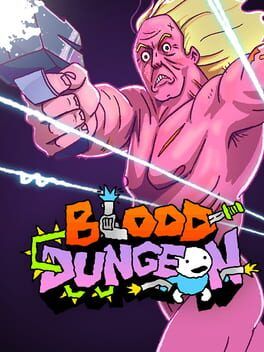
Image: IGDB
Store links: Blood Dungeon on Steam, Blood & Dungeon on Steam, Dungeon No Dungeon: Blood Knight on Steam
Messhof’s crowded-genre gamble has one clear hook
Blood Dungeon arrives with the hardest possible pitch for a small action roguelike in 2026: another auto-attacking survival game in a field still orbiting Vampire Survivors. The concrete difference, confirmed by developer Messhof and echoed across review coverage from PlayStation LifeStyle, PC Gamer, and Polygon, is that this Blood Dungeon roguelike is also a 2D platformer. You are not only kiting enemies across flat arenas while weapons fire on cooldown. You are jumping, climbing, wall-jumping, scrambling over chains, moving through water, and using dungeon geometry as the real combat interface.
That hook matters because the genre has become brutally efficient at producing competent imitators. A new bullet heaven needs a reason to interrupt players who already have Vampire Survivors, Brotato, Megabonk, and a dozen Steam library curios. Blood Dungeon’s answer is movement. Messhof, best known for Nidhogg, builds the game around a body in space rather than a cursor or aiming reticle. PlayStation LifeStyle’s PS5 review describes the result as an autoshooter where you do not control aiming directly, but quickly learn that your positioning influences which nearby target gets hit. That one rule gives Blood Dungeon its identity: platforming becomes aim correction, defense, route planning, and panic management all at once.
The release picture is mostly clear, with one notable wrinkle. Messhof’s own site presents Blood Dungeon as a 2D platforming survival game, while MonsterVine and Game Informer report an August 25 launch for Nintendo Switch, Nintendo Switch 2, PC via Steam, PlayStation 5, and Xbox Series X|S. PC Gamer’s review box, however, lists the release date as August 26. The sources do not explain the discrepancy, so readers should treat August 25 as the publisher and news-listing date, while noting that at least one review outlet recorded August 26. PC Gamer also lists the price as TBC, so there is no sourced final price here.
Combat flows through positioning, not precision aiming
Blood Dungeon’s smartest combat decision is also the one that will irritate some players during the opening runs. According to PlayStation LifeStyle, your character fires automatically on a cooldown and aims automatically, with targeting that prioritizes the closest object. That can feel blunt at first. In a standard action platformer, missing a shot is your fault. In Blood Dungeon, the first instinct is to blame the game when your fire goes somewhere unhelpful. Then the design clicks: you are not aiming a gun, you are aiming your body.
That shift gives the combat a springy, slightly feral rhythm. Instead of building a safe circular path around enemies, you are reading walls, chains, water, ladders, ledges, and monster vectors. MonsterVine’s launch coverage, citing Messhof’s announcement details, notes that enemies include bats, centaurs, exploding eyeballs, and creatures that fly through walls or move across surfaces in different ways. Those details are important because movement options only matter if the room can pressure them. A wall jump means little if the swarm behaves like a flat tide. Blood Dungeon’s creature variety gives the platforming spaces teeth.
The weapon side is broad rather than fussy. Messhof says the game includes over 100 unlockable weapons and upgrades, a figure also cited by PlayStation LifeStyle and MonsterVine. PlayStation LifeStyle praises combinations such as rotating swords for close-range protection paired with armor-piercing guns for distance damage. Polygon frames the game as a DPS arms race, with less emphasis on intricate buildcraft than on getting baseline power high enough to survive the next escalation. That is a fair caution. Blood Dungeon’s decision-making, at least as described across reviews, sounds more immediate and tactile than deeply strategic. The pleasure comes from making a messy kit function under pressure, not from assembling a spreadsheet-perfect engine over thirty quiet minutes.
The roguelike structure keeps failed runs productive
The strongest roguelike design in Blood Dungeon appears to be its layered progression. Messhof’s site says players gather blood and powerups during runs, then take bones earned from surviving to the Bone Shop to get stronger. MonsterVine names the Dogmancer as the permanent-upgrade vendor who asks for a bone toll. PlayStation LifeStyle describes that structure as one of the game’s best features because it keeps progress visible even when a run collapses early.
That matters in a crowded indie dungeon crawler space because attrition is often where roguelikes lose players. If a ten-minute attempt ends with nothing but a restart button, the game has to be exceptional every second. Blood Dungeon uses overlapping rewards to reduce that sting. During a match, collecting blood raises your blood level and opens upgrade choices. Hidden chests can add weapons and upgrades. Outside the run, bones feed permanent buffs. Quests unlock additional upgrades, arenas, skins, and other rewards, according to Messhof. Game Informer also reports online leaderboards and daily dungeons, which shift the game toward repeatable score chasing after the first wave of unlocks.
There is a tradeoff here. Permanent progression can smooth difficulty so well that mastery and grinding blur together. Based on the source material, Blood Dungeon leans into the pleasant side of that bargain. PlayStation LifeStyle says even bad runs feel like they move you toward future strength, while Polygon calls it a high-score chase first and foremost. The design goal is not purity. It wants the player to survive a little longer, unlock a stranger character, find a nastier weapon, and immediately try again.
Dungeon pacing is where Blood Dungeon earns its seat
The reason Blood Dungeon stands out is not simply that it adds jumping to a bullet heaven formula. It is that the dungeon pacing forces those jumps to matter. Messhof describes the game as parkouring around treacherous dungeons to kite monsters while gathering blood and powerups. MonsterVine expands that into ladders, grates, chains, walls, ceilings, and water. Those traversal surfaces create tempo changes that flat autoshooters usually avoid. A safe route can become a trap when enemies approach from above. A climb can buy distance but cost access to blood drops. Water can create a momentary escape while also interrupting the clean loops players might expect from the genre.
This is the game’s best answer to the question at the center of this Blood Dungeon review: are its roguelike structure, combat flow, and dungeon pacing strong enough to stand out? On the evidence provided, yes, because the pacing is built around constant repositioning rather than passive orbiting. PlayStation LifeStyle notes that the screen can feel overwhelming at first, but says the chaos becomes readable with time. Polygon’s Summer Game Fest impressions describe a Steam Deck demo that produced the familiar time-slip effect associated with the best survival roguelites, and later review text emphasizes the pull of its crude, immediate loop.
The caveat is that this pacing depends on player tolerance for noise. Auto-aim, swarming enemies, vertical surfaces, unlock prompts, projectiles, blood pickups, and environmental hazards all compete for attention. Players who like clean, tactical readability may find Blood Dungeon scrappier than elegant. Players who enjoy platformers where survival comes from improvisation, however, should find its rooms lively in a way many Survivors-like arenas are not.
Characters and arenas give the chaos useful shape
Messhof lists nine unlockable playable characters, each with different traits and weapons, plus six unlockable survival arenas. MonsterVine identifies examples: Leggy can spin climbable webs, Bug can fly, and Skinja brings speed to the dungeon. Polygon also singles out Skinja, described there as a nude cartwheeling character, as a favorite. Those character differences are not cosmetic flavor in a game built around traversal. Flight, webs, speed, starting weapons, and movement perks change how you read the same room.
That is a strong fit for Blood Dungeon’s structure. A character with superior mobility can turn vertical routes into safety valves. A slower or stranger moveset can make the same arena feel hostile. Starting weapons also affect the first fragile minutes before upgrades snowball. In many auto-battlers, the opening is a formality until the build starts working. Blood Dungeon’s platforming appears to make the opener more expressive because your character’s physical rules determine how much danger you can steal value from.
The six-arena count sounds modest on paper, especially beside the huge number of weapons, upgrades, quests, and enemy types. The practical question is whether the arenas differ enough to support long-term play. The source material confirms unique survival arenas but does not detail every arena’s layout or modifiers. That leaves an unanswered question for players who measure roguelike value by map variety. The safer expectation is that Blood Dungeon’s replay value comes from character, enemy, upgrade, quest, daily dungeon, and leaderboard combinations rather than a huge campaign of bespoke stages.
Crude art, dungeon dnb, and a deliberately ugly charm
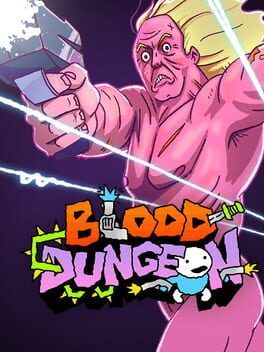
Blood Dungeon’s presentation will be divisive, and that is clearly intentional. PlayStation LifeStyle compares its slimy look to Messhof’s Nidhogg II, while Polygon describes its lo-fi style as misshapen doodles and magic-marker ugliness with Adult Swim energy. The important part is that both outlets see the crudity as a feature rather than a production failure. Blood Dungeon looks abrasive because it wants to feel grubby, stupid, fast, and a little wrong.
That can help gameplay. PlayStation LifeStyle says the art communicates information quickly despite its crude drawings. In a game where enemies swarm from surfaces and weapons fire automatically, instant readability is worth more than polish. Still, taste is a real buyer concern. If you bounced off Nidhogg II’s fleshy, cartoon-gross look, Blood Dungeon may be a hard sell for long sessions. It does not appear to be courting players who need clean pixel nostalgia or lavish indie illustration.
Audio has a cleaner selling point. Messhof credits Thomas Hoey for music and sound effects, and its feature list calls out a dynamic “dungeon dnb” soundtrack. MonsterVine also reports that soundtrack detail. The phrase fits the game’s pacing: drum-and-bass energy suits a platformer where every few seconds are about climbing out of a bad decision before the swarm catches up. Based on the available coverage, Blood Dungeon’s audiovisual identity is cohesive, but it is deliberately abrasive enough that some players should watch footage before buying.
Performance, platform guidance, and verdict
For a Blood Dungeon PS5 review audience, the strongest sourced platform note is PlayStation LifeStyle’s highly positive PS5 assessment, which calls it one of the best PS5 roguelikes available. The provided text does not mention PS5 technical issues. On PC, PC Gamer reviewed Blood Dungeon on a laptop with an RTX 3060, Ryzen 5 5600H, and 16GB RAM, and states that Steam Deck support is officially “unknown” but that the game “works great” on the device. That is useful but limited guidance. It is not the same as Valve verification, and the sources do not provide console frame-rate targets, resolution details, or Switch performance impressions.
So should you buy now or wait? If the price lands in the range players expect from compact indie roguelites, Blood Dungeon looks like an easy recommendation for fans of auto-battlers who want more physical control and less passive circling. If you need deep build theorycrafting, PC Gamer’s “surprisingly conservative” verdict and Polygon’s note about limited decision-making are worth taking seriously. This is a movement-first roguelike, not a build-lab epic. If you dislike crude gross-out art, wait for footage or a demo. If Steam Deck is your intended platform, PC Gamer’s experience is encouraging, but the official status cited there remains unknown.
As a buyer’s guide judgment, Blood Dungeon succeeds because it finds a mechanical pressure point that many Vampire Survivors successors miss. It does not reinvent auto-shooting progression, and its upgrade choices may be too direct for players who want elaborate synergies. But the platforming changes the feel of every second. You survive by reading space, cheating distance, converting movement into targeting, and accepting that every ugly little room can become a comedy of errors. In a genre packed with competent echoes, that is enough to make Blood Dungeon feel discovered rather than manufactured.
Final Verdict
A solid gaming experience that delivers on its promises and provides hours of entertainment.