
Review

By Pixel Perfect
Introduction
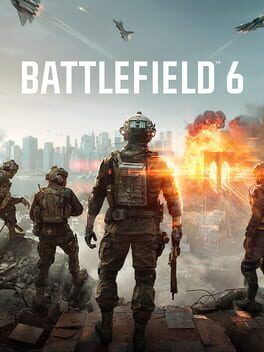
Battlefield 6 arrives under heavy pressure. After Battlefield 2042’s identity crisis and a decade of muddled experiments since Battlefield 4, this is pitched as the big course correction. Classes are back, destruction is back, a single-player campaign exists again, and there is even a free-to-play battle royale, RedSec, to pull new blood into the ecosystem.
In series context, Battlefield 6 sits somewhere between Battlefield 3/4 and Bad Company 2 in spirit. It is more grounded than the chaos of Battlefield 1 and V, but it still chases spectacle. The problem is that every time it strikes that old Battlefield magic, some modern live-service rough edge or technical wobble drags it back down.
Map Design: Half Nostalgia, Half No Man’s Land
The headline promise was “classic Battlefield” maps: strong chokepoints, vehicle lanes that matter, and infantry routes that encourage squad play instead of chaotic meat grinders. On its best maps, Battlefield 6 delivers.
Urban maps evoke the density of Seine Crossing or Siege of Shanghai without feeling like direct remakes. Multi-level interiors, tight courtyards, and flanking alleyways give Assault and Engineer players clear jobs while still leaving sightlines for snipers and long-range support. These maps understand what made Battlefield 3’s Metro click, but they are not just hallway spam. You can rotate, reposition, and crack armor with smart use of verticality and gadgets.
The more open, vehicle-heavy maps are a harder sell. Some of them recall the best of Caspian Border or Golmud Railway, with hilltop capture points that matter and clear armor routes that do not completely smother infantry. Others repeat 2042’s worst sins, stretching flags so far apart that they might as well be separate TDM servers stitched together. When the player count thins out or a side loses its armor complement, these maps can feel dead, as if you are driving miles between the few pockets of action.
Crucially, Battlefield 6 is at its best on mid-sized, multi-lane maps that push squads toward objective clusters. The launch rotation includes nine maps, and only about half of them feel tuned to that sweet spot. You can sense that Battlefield Studios is already chasing feedback with talk of upcoming “large-scale map reworks,” which is not comforting for a game marketed as a return to form.
Class Identity: Finally, A Coherent Squad Again
One area where Battlefield 6 genuinely corrects the series’ course is class identity. The 2042-style specialist system is gone. We are back to four clearly defined archetypes: Assault, Engineer, Support, Recon. Each class has its own gadget pool and passive bonuses, and more importantly, the gun and gadget pairing finally makes sense.
Assault rifles and SMGs sit primarily with Assault. Launchers and repair tools are back in Engineer’s hands. Support controls ammo, suppressive LMGs, and some of the stronger deployables. Recon is your scout, with spotting tech, DMRs, and classic bolt-actions. You can still tinker around the edges with weapon assignments, but the hard limits on class tools bring back that essential Battlefield friction: if your squad refuses to run at least one Engineer and one Support, you will lose armor wars and bleed tickets.
This sharper identity pays off most in Conquest and Breakthrough. Chokepoint defenses feel like they require actual planning, with Support players setting up machine guns and ammo, Engineers digging in with mines and launchers, and Assault pushing the flanks. Recon finally has more meaningful recon tools than just a drone and a bipod. The result is a more readable battlefield where you can tell, at a glance, what your squad is actually capable of.
Progression within each class is straightforward but grindy. You unlock new gadgets and class passives through XP tied to class-specific actions, which encourages playing your role, but the early game can feel punishing when you do not yet have access to the better tools. Compared with Battlefield 1’s more elegant weapon sets, Battlefield 6 can feel a bit like an MMO talent tree bolted on top of a shooter that did not need it.
Destruction: Familiar Spectacle, Limited Evolution
Destruction is one of the franchise’s defining features, and Battlefield 6 brings it back in a way that is immediately satisfying but not especially surprising.
Interiors remain highly destructible. You can plaster stairwells, carve new sightlines through walls, and obliterate soft cover with tank shells or rocket strikes. In the heat of a match, when a building corner collapses and turns a safe nest into a death trap, Battlefield 6 still delivers those only-in-Battlefield moments that no other major shooter quite matches.
Macro destruction is more conservative. Skyscraper-level set pieces in the style of Siege of Shanghai are rare, and the few big “Levolution” moments tend to be heavily scripted, more like heavily choreographed fireworks than systems-driven chaos. It looks great in trailers, but regular play mostly comes down to familiar patterns: strip facades, blow out cover, punish campers.
Engine limitations are apparent when the server is stressed. In 128-player modes you will sometimes see odd desync where walls visually crumble a second after a tank round hits, or rubble collision lingers longer on some clients than others. None of it totally breaks the game, but it chips away at the fantasy of a fully reactive battlefield.
Taken as a whole, destruction in Battlefield 6 is a step up from 2042’s timid approach, but it does not genuinely push the tech beyond what we saw in Battlefield 4 at its peak. As a “return to form,” it succeeds. As a modern evolution, it feels strangely restrained.
Gunplay and Netcode: Great Feel, Inconsistent Delivery
Moment to moment, Battlefield 6’s gunplay is the sharpest the series has felt since Battlefield 4. Weapons have weighty recoil patterns that reward burst control, movement has just enough momentum to separate it from twitchier arena shooters without feeling like wading through mud, and sound design sells the impact of each shot and explosion.
The catch is the netcode. On a good server, Battlefield 6 feels fantastic. Time-to-kill is readable, hit markers are honest, and you can win fights on raw mechanics and positioning. On a bad server, everything unravels. Hit registration occasionally feels a half-second behind your crosshair, peeker’s advantage is obvious, and close-range encounters can devolve into coin flips.
Technical breakdowns of Battlefield 6’s netcode highlight a 30 Hz server tick for standard matchmaking. In 2025, that is difficult to swallow, especially in a franchise that sells itself on competitive scale. Battlefield’s historical netcode problems are not new, but having them persist in the self-proclaimed comeback entry is frustrating.
Patches since launch have chipped away at the worst offenders, with adjustments to aim assist, bloom, and hit detection in recent updates. The trend is positive, but the fact that “netcode fixes” are still prominent in Season 1 patch notes says everything about how unfinished the foundation felt at release.
RedSec Battle Royale: Smart Integration, Sloppy Execution
RedSec, the free-to-play battle royale component, is Battlefield 6’s biggest swing at a sustainable live-service future. Conceptually, it is clever. RedSec uses the same weapons, movement, and broad destruction model as the core multiplayer. Progression is largely shared, so leveling an Assault rifle in Conquest carries over to your BR loadouts, and cosmetics are mirrored across both modes.
Matches drop 100 players into large-scale maps that remix portions of the main game’s arenas, stitched together with bespoke points of interest and more open terrain. Vehicles are present but limited, which keeps the game from devolving into armored drive-bys. Destruction allows you to breach buildings and erase cover, adding a delightful unpredictability to late circles.
All of that sounds great on paper, and occasionally, in practice, RedSec produces thrilling sandboxes where third-partying a fight by blowing out a wall feels deeply Battlefield.
The problem is pacing and polish. Early matches can feel like running simulator between sparse points of interest. Loot distribution is uneven, leading to too many circles dominated by a couple of squads who got early high-tier drops, while others scavenge pliers and pistols. Worse, RedSec inherits core netcode issues from the main game. Hit-reg complaints are rampant, and the 30 Hz baseline feels particularly bad in a one-life mode where every bullet counts.
Some design decisions also undermine its potential. Solo queues are restricted or missing in certain playlists, lobbies autofill with squads whether you want them or not, and the matchmaker occasionally throws wildly different MMRs together just to fill a server. These issues make it harder for RedSec to compete with more refined battle royales that have had years to smooth their rough edges.
Integration with the main game is at least financially generous. RedSec is free-to-play, with a shared battle pass and cosmetic store, and the grind is not as predatory as some competitors. Still, you can feel the live-service gears turning: daily quests across both modes, FOMO-laden limited skins, and early-season content droughts that rely too heavily on cosmetic drops instead of substantial new experiences.
Live-Service Prospects: Can Battlefield 6 Hold the Line?
Live-service shooters live or die on two things: consistent content and technical stability. Battlefield 6 is shaky on both.
The roadmap around Season 1 promises new maps, modes, weapons, and a handful of reworks aimed at addressing community complaints about map size, aim assist, and hit registration. These are the right things to focus on, but they also signal that a lot of what shipped at launch was not ready.
On the plus side, Battlefield 6 benefits from a solid core loop. When the stars align, you have large-scale battles with coherent class roles, meaningful destruction, and excellent audiovisual design. That base is strong enough that, like Battlefield 4, Battlefield 6 could be in a much better place a year from now.
The danger is attrition. RedSec is fighting for attention against established juggernauts, and the main multiplayer suite is competing with a crowded field of extraction shooters, tactical hybrids, and more traditional arena games. Without faster, more decisive network improvements and a steadier stream of genuinely new maps rather than lightly remixed layouts, Battlefield 6 risks repeating the slow fade of 2042. The free-to-play battle royale helps, but its technical troubles make it feel more like a funnel for cosmetics than a genuinely compelling long-term main mode.
Verdict
As a “return to form,” Battlefield 6 is half victory lap, half cautionary tale. It restores much of what fans loved about the series: defined classes, satisfying destruction, and the potential for huge, memorable moments where a single squad play swings an entire match. In those flashes, it feels worthy of the Battlefield name again.
Yet too many of its maps misjudge pacing, its destruction tech rarely feels truly new, and its netcode undercuts the outstanding gunfeel. RedSec is an admirable attempt to bind a free-to-play battle royale to the core experience, but its pacing and technical issues keep it from standing alongside the genre’s best.
If you are a lapsed Battlefield veteran hungry for something closer to Battlefield 3 or 4, Battlefield 6 is the first entry in years that actually deserves your time, with the caveat that you are signing up for a work in progress. Whether it grows into a late-blooming classic like Battlefield 4 or settles into a middling live-service grind will depend less on its promising foundation and more on how quickly Battlefield Studios can finally, definitively fix the netcode and sharpen its maps.
Final Verdict
A solid gaming experience that delivers on its promises and provides hours of entertainment.