
Review

By Big Brain
A brick-breaker with roguelite teeth
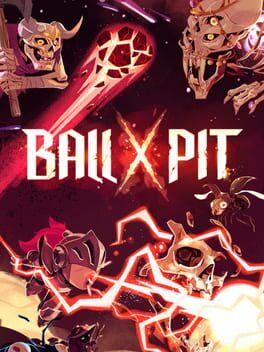
Ball X Pit looks like a gag at first glance. The premise is that the glorious city of Ballbylon has been obliterated, leaving behind a monster-stuffed sinkhole and a handful of survivors who decide the solution is to fire magic balls into it forever. Underneath the goofiness is one of the sharpest evolutions of Breakout since Arkanoid, rebuilt as a modern roguelite with progression hooks aimed squarely at fans of Vampire Survivors and Balatro.
On paper, Ball X Pit is simple. You move your hero along the edge of the pit, aim a trajectory line with the right stick, and launch balls that ricochet through fractal patterns of monsters, bricks, and loot blocks. Clear enough waves and you descend deeper, chasing bosses and rarer resources. Then you drag that haul back home to expand your town, unlock new characters, and soup up future runs.
In practice, Kenny Sun and crew have built a dense mechanical sandbox out of balls, heroes, and buildings that interact in surprising ways. The crucial question is whether those systems deepen the arcade core or just smother it in meta-progression. Thankfully, for the most part, Ball X Pit sticks the landing.
Ball types that turn Breakout into a build-crafting game
Ball X Pit’s magic trick is turning ball choice into the equivalent of a card deck or weapon pool. Your starting knight spits out a single iron ball that hits like a truck but travels slowly. It feels like classic Breakout, demanding careful angles and patient clean-up. Within a few runs you unlock variants that completely reshape how you think about bounces.
There are piercing balls that chew through entire enemy lines, splitting bombs that fragment into clouds of shrapnel, sticky orbs that can be recalled mid-flight for precise re-aims, and elemental balls that ignite enemies or freeze them in place. Many of these are not just straight damage upgrades; they come with tradeoffs, like faster decay rates, limited bounces, or awkward trajectories that force you to pre-plan your shots.
The roguelite layer hits when you start fusing balls mid-run. Combining different types can turn the arena into a physics lab. A piercing shock ball might carve a path and then discharge lightning chains from every ricochet. A slow iron orb can be fused with a split bomb to create a ponderous wrecking ball that detonates into a screen-wide firestorm once it reaches critical hit count. It evokes Balatro’s delight in discovering busted synergies, except your combos live in geometry and momentum rather than numbers on a card.
The balancing act here is impressive. Early on you are tempted to chase raw damage, but the game quietly trains you to value coverage, crowd control, and resource generation. Some orbs leave behind coins or materials on impact, creating builds built around harvesting rather than just killing. Others spawn temporary platforms or orbiting satellites that change how you position. The best runs feel less like you are just choosing a stronger ball and more like you are authoring a playstyle.
If there is a weakness, it is that the UI sometimes lags behind the complexity. You can stack several modifiers on a single ball, but their combined behavior is not always communicated cleanly. The game wants you to learn by doing, which fits the arcade vibe, but in long sessions it can be frustrating to misjudge a new fusion and wipe because you misunderstood how gravity tweaks or bounce caps interact. A more detailed preview or firing range would have helped.
Characters that are more than stat sticks
Alongside ball types, Ball X Pit’s growing cast of heroes does a lot of heavy lifting. This could easily have been a roster of marginal stat tweaks. Instead, each hero is a rule-bender that re-frames how you use the same pool of balls.
The default knight is about reliability: high base health, slow but hard-hitting orbs, and a defensive barrier ability that forgives sloppy angles. Swap to the rogue-like character and suddenly you are firing volleys of lighter balls, leaning into crits, and abusing abilities that let you nudge trajectories mid-flight. A mage may generate mana with every bounce and spend it to manually detonate balls or blink around the rim of the pit.
The smartest touch is how heroes plug directly into the town-building layer. Specific buildings unlock or empower particular characters, giving you a reason to chase their synergies rather than just pick the latest shiny unlock. A workshop might reduce fuse costs for the engineer hero that thrives on Frankenball experimentation. A temple can grant extra revives to a high-risk caster whose build explodes if you can survive long enough to get rolling.
This interplay keeps the roster from feeling like a pile of DLC-ready skins. Switching characters between runs is less about novelty and more about testing a new thesis: what if I build my whole town around fueling this one hero’s gimmick? The game rewards that kind of focused experimentation with noticeable spikes in power and distinct-feeling runs.
The downside is that some heroes clearly lag behind. A couple of late-game unlocks have niche defensive gimmicks that feel underbaked compared to the flashy ball-spam builds you have already perfected. When the game leans too hard on survivability without giving you new tools to manipulate ball physics, it drifts away from what makes it special.
Town-building that mostly earns its keep
Between dives you return to a tiny settlement perched at the edge of the pit. This is your meta-hub, split into buildable plots that you fill with workshops, resource generators, shrines, and stranger things. It is easy to assume this is window dressing on the real game, but Ball X Pit pushes the town surprisingly far.
Buildings generate long-term resources, unlock fresh ball types, add passive bonuses like bounce damage increases or extra rerolls, and even introduce new NPCs with quests or one-off upgrades. It feels closer to a light city-builder than the usual static hub screen, especially once you start juggling adjacency bonuses and production chains. You might place a foundry next to a storage depot to boost metal output, which then feeds into higher-tier gear costs and hero unlocks.
The good news is that this structure gives each run a strong sense of purpose. Even failed dives tend to produce just enough currency or materials to drop a new building foundation or upgrade an existing one, which scratches the same long-tail itch as Vampire Survivors’ meta-tree. There is always one more tile you want to fill before you log off.
The bad news is that the interface for managing your growing sprawl is clunkier than it should be. As several reviewers have noted, navigating menus, comparing building effects, and shuffling layouts can feel like wading through treacle compared to the snap of the arcade action. On a controller, placing buildings is fine, but drilling into their upgrade paths and cross-checking hero synergies is more tedious than it ought to be.
Still, the town succeeds where it counts. It gives the game a tangible sense of place and progression, and it contextualizes what would otherwise be a very abstract loop. You are not just grinding numbers; you are rebuilding Ballbylon into a ridiculous, ball-obsessed fortress.
Progression and the difficulty curve
For a roguelite built on an evergreen arcade template, pacing is everything. Ball X Pit starts gently. Early waves are slow, enemies telegraph generously, and your first few upgrades have obvious, chunky impact. The game wants to teach you that angles matter more than raw stats. Firing haphazardly will get you killed faster than a slightly weaker, well-placed shot.
After a few hours, the training wheels come off. Enemy waves start mixing patterns like bullet hell shooters, bosses spray projectiles that turn the screen into a geometry puzzle, and environmental hazards begin to warp your planned trajectories. The difficulty spikes are noticeable, but they are tied closely to your meta-progression. A town that prioritizes greed buildings over survivability can leave you feeling underpowered in the midgame.
The progression curve is tuned for compulsion. New ball types, heroes, and building tiers arrive at a steady cadence, especially across the first ten or fifteen hours. This is the Vampire Survivors part of its DNA, where every failed run produces at least a new knob to twist next time. The hook is strong enough that it is easy to lose evenings to chasing a single fusion combo you have not quite pulled off yet.
Where the curve falters is at the high end. Once your town is well-developed and your favorite hero-ball combo is online, the balance swings from tense to slightly autopilot. Much like Balatro’s later antes, fully optimized Ball X Pit runs can slip into a rhythm where you are watching your machine work more than you are making interesting decisions. The game tries to fight this with higher-speed settings, ultra-dense waves, and mutators that twist enemy behavior, but experienced players may find a plateau where real challenge is more about self-imposed constraints than what the game throws at you.
That said, the core act of lining up shots, watching the first bounce, and then tracking the cascade of ricochets as your ball slaloms through a sea of monsters never really loses its sparkle. Even when the numbers are on autopilot, the moment-to-moment spectacle carries the experience.
A new staple for roguelite sickos?
The obvious comparison points are Vampire Survivors and Balatro, but Ball X Pit is not just mimicking their surface tricks. From Survivors it borrows the sense of exponential scaling and the satisfaction of turning a fragile build into a screen-shredding nightmare. From Balatro it borrows the joy of discovering emergent synergies and the sense that you are exploiting, not just participating in, the rules.
What sets Ball X Pit apart is how physical it all feels. Your power is not purely in stats or card text but in where that first ball touches down. Even the wildest builds still depend on your spatial understanding of the pit and your ability to read bounce lines while projectiles fly back at you. That anchors the slot-machine impulse in actual skill, keeping it just this side of mindless.
It is not flawless. The town-building UI needs a pass, a few heroes and ball types feel more like filler than revelation, and the late-game difficulty plateaus unless you chase the nastiest modifiers. But taken as a whole, Ball X Pit earns the hype swirling around it as a 2025 hidden gem.
If you bounced off roguelites that felt too hands-off, this is a rare one that respects your input. If you already live on a diet of Survivors-likes and Balatro-style deck tinkering, Ball X Pit is absolutely worth adding to the rotation. Once it clicks, it is the sort of game you boot up for a quick 20-minute dive and realize at 2 a.m. that you have rebuilt an entire city in the shadow of a pit full of very, very broken balls.
Final Verdict
A solid gaming experience that delivers on its promises and provides hours of entertainment.