
Review

By Parry Queen
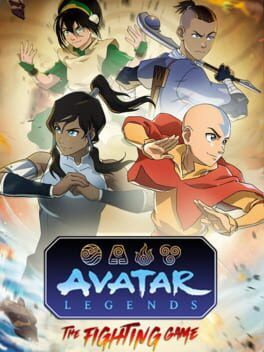
Image: IGDB
Store links: Avatar Legends: The Fighting Game on Steam
A strong fighter caught between Avatar fans and execution killers
Avatar Legends: The Fighting Game is built around a simple promise: a four-button, 1v1 fighter with light, medium, heavy, and Flow controls, plus auto-combos and quarter-circle specials that keep the input list readable. The tension is that multiple launch reviews describe a game whose controls are approachable while its match pace, movement demands, combo routes, and teaching tools are much less forgiving.
That split defines this Avatar Legends The Fighting Game review. GamingBolt calls it a game that is easy to learn and difficult to master, but also fast enough to overwhelm players whose reflexes are not already trained for the genre. IGN goes further, describing it as one of the most difficult 1v1 fighting games to learn, while still calling its combat extraordinary once players can access even part of a character’s toolkit. Kotaku lands on the same contradiction from the other side: the bones of an excellent fighter are there, with varied kits and gorgeous hand-drawn animation, but the surrounding single-player and tutorial structure can feel hostile to newcomers.
That makes Avatar Legends a sharper proposition than the license might suggest. This is not a casual arena brawler wearing Avatar skins. According to the supplied reviews, Gameplay Group International has made a technical, mobility-driven 2D fighter whose best moments come from spacing, air control, resource management, and high-speed conversions. For fighting game players, that is the hook. For Avatar fans who mainly want to see Aang, Korra, Toph, Azula, and Sokka clash, it is also the warning label.
Elemental combat has simple inputs, but the depth is in timing
The core combat system appears clean on paper. IGN reports three attack buttons and a Flow button. GamingBolt describes light, medium, and heavy chains into quarter-circle specials and EX moves, with light-button auto-combos acting as a first step rather than a long-term substitute for routing. EventHubs also notes that the game has no simplified inputs, but that motion commands do not go beyond quarter-circles, with macros available for dash, throw, and supers.
That control scheme matters because Avatar Legends puts its difficulty somewhere healthier than command-list memorization. Based on the reviews, the game asks players to learn when to occupy space, when to cash out, and how to route after launchers. GamingBolt’s Azula example is the clearest: her Rending Blaze works like a dragon-punch-style light special that lifts opponents into the air, after which her aerial specialty lets her continue a light-to-heavy chain and slam the opponent back down. The input is not the wall. The execution check is timing the extension and understanding when the launcher is actually available.
That is good fighting game design if the rest of the package supports it. A beginner can mash into something flashy, but the better player gets rewarded for route knowledge, hit confirms, and vertical awareness. The downside is that auto-combos reportedly stay surface-level. They get you moving, but they will not teach neutral, defense, anti-air discipline, or when to spend resources. For players searching for an Avatar fighting game review to answer whether this has competitive substance, the answer from the sourced material is yes. The real question is whether the game gives enough runway before it asks for tournament-speed decisions.
Flow is the system that makes bending feel competitive
Flow is the mechanic that appears to separate Avatar Legends from a licensed fighter built only around recognizable moves. IGN says the Flow button is generally tied to each character’s unique movement options and is what opens the combat system. Shacknews describes Flow as a resource each character can use to dodge incoming attacks and unleash unique moves, with its own meter. Emptying that meter reportedly leaves the player in an unbalanced state, creating a punish window for stronger hits.
That structure is promising because it makes movement costly. In many anime-style fighters, mobility can become a universal escape hatch if the system is too generous. Avatar Legends seems to avoid that by tying evasive and pressure-extending options to a resource that can run dry. If Shacknews’ description holds across matchups, Flow is not a free panic button. It is a tempo tool: spend it to maintain pressure, adjust air positioning, or escape a bad exchange, then accept that overuse can put you in danger.
For competitive players, that is where the game’s long-term matchup texture should live. The sources repeatedly emphasize character-specific movement rather than one dominant universal mechanic. IGN frames Avatar Legends as a fighter focused on creative combo expression, execution, and character uniqueness over powerful universal systems. That is a strong identity. It also means balance will be harder to judge at launch, because a mobility-driven game often takes time before players discover which Flow options are merely flashy and which ones invalidate neutral.
The Avatar Legends roster is compact, distinct, and heavy on fan service
MonsterVine reports a 12-character launch roster, with Zaheer, Ozai, Avatar Aang, and Nightmare Korra revealed as the final additions during a Maximilian Dood-hosted livestream ahead of release. EventHubs lists the playable lineup as Aang, Zuko, Sokka, Toph, Katara, Korra, Azula, Avatar Kiyoshi, Zaheer, Firelord Ozai, Avatar State Aang, and Nightmare Korra, while noting that Avatar State Aang and Nightmare Korra must be unlocked. The naming differs slightly between outlets, with MonsterVine using Avatar Aang and EventHubs using Avatar State Aang, but both point to the same broad idea: powered-up Avatar variants are part of the launch package.
The roster is small by modern platform-fighter or tag-game standards, but the cited reviews argue that the characters are meaningfully differentiated. GamingBolt says Toph is grounded, spacing-focused, and among the more beginner-friendly fighters, while Aang is another aerial specialist and Katara leans into relentless close-range pressure. Kyoshi is described as a larger silhouette with slower windups, power, and graceful animation. Sokka, as the non-bender, follows a different design philosophy through weapon mastery, deceptive mix-ups, a boomerang projectile, and the Meteorite Sword.
That is the right way to handle an Avatar Legends roster. The fan-service value is obvious, especially for an Aang Korra fighting game that pulls from both Avatar: The Last Airbender and The Legend of Korra, but the better news is that the fan service reportedly maps into mechanics. Kotaku says characters’ personalities are reflected in their kits. Shacknews similarly says each fighter feels authentically designed around bending style, or Sokka’s lack of bending. That is the difference between a character select screen full of familiar faces and a fighter where matchup learning feels tied to the fiction.
Story mode sounds generous, but onboarding is the real flaw
The single-player package is where the sources disagree most sharply. EventHubs praises the amount of modes, citing Story, Local VS, Online VS, Ranked, Online Lobbies, Arcade Mode, Free Training, Tutorials, Trials, How to Play, and Gallery. TheGamer calls the story mode a standout, reporting an original riftbending plot conceived by Avatar co-creator Michael Dante DiMartino and written by series writer Tim Hedrick. According to TheGamer, the 27-chapter story brings multiple timelines together, places three Avatars in the same strange reality, and flips many character personalities. That is substantial licensed-game material, not a token arcade ladder.
The problem is that a generous menu does not automatically make a fighter teachable. Kotaku argues that the story campaign and arcade modes start players against opponents playing well above beginner level, with no difficulty options to slow the learning curve. IGN also reports an inability to change AI difficulty in single-player. That is a serious issue for an Avatar game at a $30 price point, because a large share of the audience will arrive from the series rather than from ranked lobbies.
Training coverage is also contested. Shacknews praises a helpful tutorial and a Breakdown mode that slows time to teach combo timing and inputs. EventHubs calls the tutorial an unexpected standout. Kotaku says the tutorials and trials begin too complex and that the glossary does not visually communicate concepts well enough for players who are not already familiar with fighting game language. IGN describes training mode as cumbersome and missing standard features. The fair read is that Avatar Legends contains teaching content, but not all reviewers found it effective for true beginners. For a game built on fast movement and timing-sensitive conversions, that gap matters.
Animation sells the fantasy, while the package shows its budget
The presentation earns consistent praise where it counts most: character animation. GamingBolt highlights lovingly crafted hand-drawn animation. IGN points to the way characters move, the variety in playstyles, and the flexibility of combat options. Kotaku calls the animation sublime when the action is flowing. EventHubs reports that each character features hundreds of hand-drawn animations and says the action rarely becomes visually cluttered despite the amount happening on screen.
There are caveats. EventHubs notes that some animations and frames in the review build looked less polished, including examples tied to Ozai that the outlet expected to be refined for launch. Kotaku says the game can feel budget-priced in its simpler presentation and menus. Those comments track with the reported history of the project. CGMagazine and TheGamer both describe Avatar Legends as a game first announced under Maximum Entertainment, later dropped or informally cancelled, and then revived by Gameplay Group International, a studio focused on giving promising cancelled games another chance.
That history does not excuse rough edges, but it helps explain the shape of the finished product: unusually ambitious combat and animation for the price, with less polish around the surrounding interface and teaching infrastructure. CGMagazine lists the MSRP as $29.99, while Kotaku refers to it as a $30 budget release. MonsterVine reports launch for PlayStation 5, Xbox Series X|S, PC via Steam, and Nintendo Switch. There is some date and publishing-label ambiguity in the supplied material: MonsterVine says the game launches July 23, CGMagazine lists a July 21, 2026 release date and PM Studios as publisher, while MonsterVine frames Paramount Games as revealing roster news. The provided sources do not reconcile those details, so buyers should verify their platform store listing in their region.
Online fundamentals are encouraging, but lobby limits hurt community play
For a modern fighter, netcode is part of the review score. Shacknews reports that Avatar Legends uses rollback netcode and lets players set frame delay when matching with opponents to compensate for latency or connection issues. The same review says rematches and returns to character select were quick and easy. That is the practical online news competitive players want to hear, especially for a fast game where dropped timing turns strong routes into punishable mistakes.
The catch is social infrastructure. IGN reports that online lobbies can only support two players. For ranked grinding, that may be acceptable. For local-scene lab nights, streamer rooms, and community sets, it is a limitation. A fighter with this much character-specific movement benefits from spectators, long sets, and rotating groups. Two-player lobbies make that harder than it should be.
Performance details are otherwise limited in the supplied sources. CGMagazine reviewed the PC version after roughly 13 hours, and Shacknews’ rollback comments suggest the online implementation has the right foundation, but the material does not provide frame-rate targets, Switch performance comparisons, or platform-specific issues. Players sensitive to handheld performance should wait for platform-specific testing, especially because the game is launching on Switch as well as current-generation consoles and PC.
Verdict: a serious fighter first, an Avatar celebration second
Avatar Legends: The Fighting Game has the most important thing a licensed fighter can have: its characters reportedly play like themselves. Aang’s airiness, Toph’s grounded control, Katara’s pressure, Azula’s aerial conversions, Kyoshi’s weight, Zaheer’s movement, and Sokka’s weapon-based trickery all point toward a compact roster designed around distinct combat jobs rather than interchangeable fan favorites. The Flow system gives that roster a mechanical spine by turning movement into a resource decision.
The price also helps. At the $29.99 MSRP listed by CGMagazine, Avatar Legends is easier to recommend to competitive players who want a new lab project and to Avatar fans who already enjoy fighting games. It belongs in the best new fighting games 2026 conversation on combat quality alone, based on the breadth of praise from IGN, GamingBolt, Shacknews, EventHubs, and TheGamer.
The caveat is firm: total newcomers should be careful. The game may offer auto-combos, tutorials, trials, and a story mode, but Kotaku and IGN both identify missing or inadequate learning-ramp features, especially the lack of single-player difficulty options. If you already understand neutral, hit confirms, meter management, and matchup study, Avatar Legends sounds like a strong buy. If you are here only because you love Avatar and rarely touch fighters, wait for clearer post-launch onboarding updates or be ready to learn the hard way.
GameLoop score: 8.2 out of 10.
Final Verdict
A solid gaming experience that delivers on its promises and provides hours of entertainment.