
Review
By Story Mode
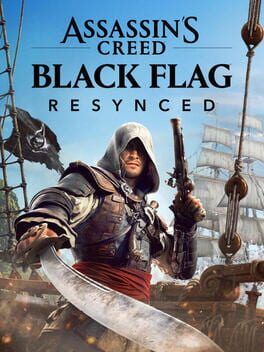
Image: IGDB
Store links: Assassin's Creed Black Flag Resynced on Steam
The strongest change is also the remake’s biggest risk
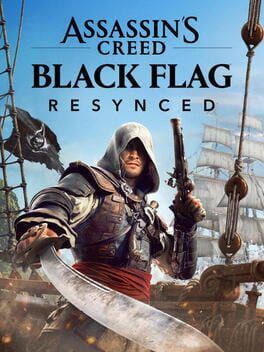
Assassin’s Creed Black Flag Resynced arrives July 9 on PC, Xbox, and PS5, according to Kotaku’s review coverage, and the clearest confirmed shift is that Ubisoft has rebuilt one of the series’ most beloved entries with modern Assassin’s Creed technology while keeping it closer to a streamlined action-adventure than the RPG-heavy games that followed. Kotaku reports that Resynced is Ubisoft’s first full remake of a previously released Assassin’s Creed game and that it is built with the same technology that powered Assassin’s Creed Shadows. IGN identifies Ubisoft Singapore as the studio behind the remake and describes new graphics, revamped combat, and retooled exploration and stealth systems.
That creates the central tension of this Assassin’s Creed Black Flag Resynced review. Black Flag’s pirate fantasy worked in 2013 because its rhythm was clean: sail, stalk, board, loot, upgrade, repeat, with Edward Kenway’s selfish climb toward notoriety giving the Caribbean a human pulse. Resynced’s best reported changes sharpen that rhythm. Its most questionable ones come from the series’ long drift toward clearer routes, modern discovery rules, wider combat toolkits, and extra post-game content. The remake preserves the fantasy when those systems remove old friction. It stumbles when they make Edward’s story feel too managed or too extended.
Naval combat still carries the whole voyage
Across the supplied review material, the Jackdaw remains the remake’s anchor. VGC calls Edward’s ship essentially the game’s other main character, serving as transport, home for exposition, and the weapon that turns Spanish and British fleets into floating salvage. GamingBolt says the original Black Flag’s naval gameplay has aged “incredibly,” and reports that Resynced expands the Jackdaw’s toolset with new secondary-fire options, including Heated Shots for broadsides and Double Shot for chain shots. Those details matter because Black Flag Resynced naval combat is at its best when it gives the player several ways to read a fight before the boarding hooks fly.
The reported changes point to a remake that understands why the original’s ship battles worked. A good Black Flag encounter is a moving set-piece rather than a static arena. You measure wind, distance, enemy facing, hull damage, and your own greed. The newer secondary-fire options appear to widen that decision-making without turning every naval exchange into a spreadsheet. GamingNexus describes spending dozens of hours ignoring the story, sailing the Caribbean, pillaging, upgrading the ship, and letting detours become the point. That is the highest compliment a pirate game can earn: the horizon still looks like a promise instead of a commute.
There is some inherited Ubisoft structure around that freedom, but the better reports suggest restraint. IGN says Resynced uses a more discovery-focused map approach, where non-quest points of interest are revealed through synchronization points or proximity rather than flooding the map from the outset. GamingNexus similarly says the map is not overloaded with icons screaming for attention. That change suits Black Flag more than it might suit a denser city-based Assassin’s Creed, because the Caribbean needs space between incidents. A ship chase feels better when the sea has room to breathe.
Stealth and land combat lose old irritation, then inherit new expectations
The land game is where the Black Flag Resynced remake does its most delicate surgery. The original was famous for thrilling ship combat and infamous for some rigid stealth rules, especially eavesdropping and tailing sequences that could desynchronize a mission after one awkward mistake. Console Creatures reports that missions have been overhauled to be more open-ended and that eavesdropping and tailing failures no longer cause desynchronization. VGC also cites less tedious tailing missions and earlier access to late-game equipment as smart changes.
That is the remake acting like a good editor. The fantasy of Edward Kenway is speed, nerve, and improvisation. A pirate who can cripple a frigate in open water should not feel like he has failed history because he stepped a few feet outside an invisible listening circle. Removing those fail states appears to let stealth function as a flow rather than a tripwire. IGN adds that parkour transitions are smoother, direction changes are quicker, and routes are more clearly marked with white paint and cloth, which reduces trial and error during rooftop movement.
Combat is less of a simple counter-kill carousel than it was in 2013. VGC reports that Edward now relies on a generous perfect parry to open enemies to quick kills, with chaining still present but no longer allowing him to bounce through entire squads while guards politely wait their turn. That sounds like the right kind of modernization: enough resistance to keep sword fights awake, without forcing Black Flag into the timing-heavy identity of a different action series. The tradeoff is tone. New Assassin’s Creed readability can make the world feel cleaner and more authored. When every climbable route is signposted and every encounter has a clearer modern grammar, the Caribbean can lose a little danger. Resynced seems to win that exchange most of the time because the old pain points were real, but players who loved the rougher edges may notice the guardrails.
Edward’s story benefits from focus, but the new ending raises questions
Several sources agree that Resynced narrows the story around Edward Kenway. GamingBolt reports that the original’s present-day Abstergo storyline has been cut, leaving the remake focused entirely on Edward’s journey. Rock Paper Shotgun also describes the remake as deliberately narrowing its focus toward Edward, whose connection to the Assassins begins through theft and opportunism rather than conviction. That cut will likely be welcome for players who remember Black Flag as a pirate tragedy first and an Animus workplace story second.
The result, according to GamingBolt, is a story that remains engaging, with excellent performances, tight writing, new late-game scenes, and slightly expanded arcs for key characters. Console Creatures says Resynced adds quest lines for Stede Bonnet and Blackbeard, a new endgame chapter, and three new hireable Jackdaw officers: Lucy Baldwin, Abel “The Padre” Galvao, and Tobias “Deadman” Smith. That additional material strengthens the sense of the Jackdaw as a crewed vessel rather than a menu with sails.
The concern is how much Black Flag should continue after Edward’s arc has already made its emotional turn. Rock Paper Shotgun criticizes the newly added epilogue missions for replaying elements of Edward’s growth after the main quest has already brought him to a more self-aware place. RPS also notes that Freedom Cry, the original Black Flag DLC centered on Adéwalé, is absent, citing Ubisoft’s stated choice to focus on Edward’s adventure. That choice is coherent, but it narrows the remake’s historical and emotional range. For returning players, the missing Freedom Cry material may sting more than the removed Abstergo sections. For newcomers, the extra Edward content may feel like value, but the best pirate stories know when to let the tide carry the ship out.
The PS5 Pro question is real, but the confirmed details are limited
The Assassin’s Creed Black Flag PS5 Pro angle needs careful handling because the supplied sources do not confirm a detailed PS5 Pro feature list. Kotaku explicitly says its reviewer played the remake on PS5 Pro, and Console Creatures reports that the game looks impressive on PlayStation 5, with improved textures, character models, clothing, facial expression, hair, and the Jackdaw itself. IGN reports Anvil engine upgrades, ray tracing options, modern textures and physics, and a smooth 60 fps on PC. Those are meaningful technical claims, but they are not the same as a confirmed PS5 Pro mode breakdown.
Based on what is documented, Resynced appears to be a substantial visual rebuild rather than a light remaster. Console Creatures says it has been remade from the ground up, while Kotaku says it is a faithful remake rather than a one-to-one replica. IGN highlights weather, wind, water, foliage density, busier cities such as Havana, and modern material detail in hair, skin, and clothing. For a game built around sea state, storm light, and the silhouettes of ships on the horizon, these upgrades are not cosmetic garnish. They support the core fantasy.
Still, buyers specifically choosing between PS5, PS5 Pro, Xbox, and PC should note what remains unanswered in the provided material. There is no sourced confirmation here of PS5 Pro resolution targets, frame-rate modes, ray tracing availability on console, or upgrade-path details. IGN’s 60 fps claim is explicitly for PC. If your purchase depends on a particular PS5 Pro graphics mode, wait for Ubisoft’s official technical breakdown or platform-specific analysis. If your concern is broader presentation rather than exact mode labels, the available reviews consistently describe a visually strong remake.
Modern systems help the pacing, as long as they stay out of Edward’s way
The best reported design decision in Resynced may be what Ubisoft did not add. Kotaku says this is not an RPG like more recent Assassin’s Creed entries: there are no piles of loot to manage, no skill trees to spend points in, and no enemy level walls forcing players to grind before continuing. The upgrade loop remains closer to the original, with resources gathered from ships and animals used to improve the Jackdaw and Edward’s gear. Kotaku also reports finishing the main campaign and a healthy portion of side content in about 35 hours, which places Resynced far below the sprawl of the largest modern entries.
That pacing suits Dante Rossi’s action-adventure test: does the game keep the next set-piece close enough that the story’s pressure holds? By the accounts provided, mostly yes. Edward’s hunger for wealth needs a world full of things worth stealing, but his arc collapses if the player spends 80 hours optimizing belts and damage numbers. Resynced’s reported restraint lets ship upgrades, crew encounters, forts, wrecks, hunts, and Templar pursuits feed the fantasy without burying the narrative under progression fog.
There is friction, though. Modern discovery systems, highlighted traversal paths, open-ended mission design, and cleaner combat all make Resynced easier to parse. Most of that is welcome. Some of it also makes the Caribbean feel less unruly than memory suggests. This Assassin’s Creed remake review comes down to that balance: Resynced is strongest when it sands away 2013’s clumsiness, weakest when it reminds you that modern Ubisoft design often wants every adventure to be legible before it is surprising.
Verdict: a sharper Black Flag, with a few modern barnacles
Assassin’s Creed Black Flag Resynced appears to be the rare remake that understands the source of its original appeal: the Jackdaw, Edward Kenway’s restless momentum, and the intoxicating loop of open-sea violence followed by hard-won upgrades. The reported naval additions deepen ship combat without smothering it. The stealth and mission changes remove some of the original’s worst fail-state frustration. The visual rebuild gives the Caribbean the scale and weather it always implied.
The caveats are worth taking seriously. Freedom Cry’s absence leaves a meaningful gap for players who valued Black Flag’s wider legacy. The new epilogue content, as criticized by Rock Paper Shotgun, risks extending Edward’s arc past its cleanest ending. PS5 Pro-specific claims remain under-documented in the supplied source material, so performance-sensitive console buyers should wait for hard mode data before treating that version as definitively superior.
For newcomers, Resynced looks like the easiest version of Black Flag to recommend: modern controls, cleaner stealth, a less cluttered map, and no RPG bloat standing between you and the next broadside. For returning players, it is a stronger remake than a museum piece, which means some old roughness is gone and some modern smoothness has taken its place. The pirate fantasy survives. At its best, when the wind catches and the Jackdaw cuts toward smoke on the horizon, it still feels like the series found open water and remembered how to breathe.
Final Verdict
A solid gaming experience that delivers on its promises and provides hours of entertainment.