
Review

By The Completionist
A New Frontier For Arknights
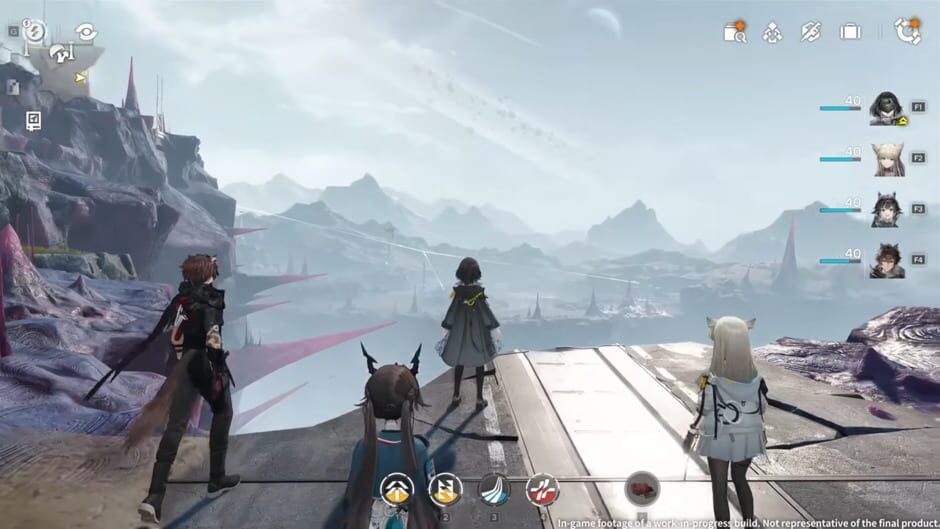
Arknights: Endfield could have been a lazy brand extension, a glossy way to squeeze more money out of a wildly popular tower defense gacha. It is not that. Endfield takes real swings, trading lane-based tactics for a 3D action RPG layered over a light but surprisingly engaging factory-sim. The result is a hybrid that is sometimes uneven and occasionally grindy, yet consistently compelling once its systems lock together.
Crucially, it also works if you have never touched classic Arknights. There are references and tonal echoes, but Endfield treats you as a fresh arrival on Talos-II, not as a lore archivist. You are the Endministrator, dropped into a corporate frontier operation where you punch monsters in the face, then go home and argue with power grids and production lines.
Whether that mix clicks for you comes down to three things: how fast the early game opens up, how satisfying the tech tree and factory layer feel, and how badly the gacha leans on your wallet.
Early Game Pacing: Slow Burn, Smart Ramp
The opening hours of Endfield are cautious. If you are coming straight from something like Genshin Impact or Wuthering Waves, the first two chapters will feel methodical, even restrained. Combat arenas tend to be small, enemy compositions simple, and your toolkit limited to a handful of Operators with basic skills.
That restraint pays off. Endfield spends its first few hours drilling the fundamentals of its hybrid combat. You learn that positioning matters as much as dodging, that deployable turrets are not just damage but space control, and that swapping between Operators to chain skills is non-negotiable on higher difficulties. The game holds back on big spectacle boss fights and dense enemy waves until you understand how all those dials turn.
The problem is that this onboarding is paired with a fairly chatty story and a lot of stop-and-go tutorial prompts. Newcomers will appreciate the clarity, but players used to immediate freedom may bounce off before the map opens and the factory layer comes online. Once the AIC Factory and regional development systems unlock, the pace improves dramatically. Suddenly you are not just clearing missions in isolation. You are carving out a footprint on Talos-II, building supply chains that feed directly into your combat power.
From that point, the rhythm settles into a satisfying loop: explore a new region, scout resources, establish facilities, then dive into quests or combat challenges that push those new materials and Operators to the limit. It still leans on repetition, but the sense of building something persistent offsets a lot of the usual gacha fatigue.
Combat Meets Factory: How The Hybrid Actually Feels
On the ground, Endfield is an action RPG first. You directly control one Operator at a time in third person, with light and heavy attacks, a dodge, and a couple of character-specific skills on cooldowns. You can hot-swap between squad members to access different roles, and their skills often combo in ways that feel closer to a team-based character action game than a traditional ARPG.
What separates Endfield from its peers is how often it asks you to think like a base builder while you are swinging a weapon. You are constantly deploying devices and field structures: turrets to lock down lanes, barriers to funnel enemies, drones that shuttle materials or apply buffs. These structures plug straight into the tech you have unlocked back at base. When your factory upgrades yield a new kind of generator or an improved combat module, you see those changes reflected in your loadout the next time you step into the field.
This is not Factorio in disguise. The factory layer is much more approachable and visually guided than classic optimization sandboxes. Conveyor placement is snapping and grid-based rather than finicky, bottlenecks are flagged clearly, and the number of intermediate components is intentionally constrained in the early tiers. Yet the interplay is deep enough that min-maxers can still lose themselves in throughput puzzles, while more casual players can follow recommended templates and still end up with competent production chains.
The big win is how clearly the game links your strategic choices to visible improvements in combat. Upgrading ore refinement immediately bumps your equipment options. Investing in logistics nodes shaves down the time-gating on key materials. Expanding energy infrastructure lets you field more advanced deployables during missions. Even if the tech tree is not as sprawling as genre purists might hope, almost every meaningful node has a direct, tangible payoff.
Tech Tree And Factory Depth
Endfield’s tech progression is divided between core regional development, the AIC Factory, and combat-centric research. At launch, it is not overwhelming, but it is dense enough to support long-term planning.
Regional development gates what each area on Talos-II can actually support. As you upgrade a region, you unlock new construction slots, higher-level structures, and better trade routes. Keen management here determines how quickly your production network can scale. You cannot just slap a megafactory down in the first zone and call it a day; you are nudged to push deeper into dangerous territory because those late-game nodes are the only places that can host high-tier refinement chains.
The AIC Factory is the heart of it all. This is your main industrial hub, housing production lines for base currencies and upgrade materials. You assign specialized AIC units to stations, each with traits that alter output, efficiency, or energy consumption. Early on, this is as simple as choosing the AIC that gives a flat production bonus. Later, you are making tradeoffs between throughput, downtime, and power draw across interlinked systems.
On top of that sits combat research: weapon crafting, skill enhancement materials, and upgrades that affect deployable devices. The tech tree in this layer is narrower and more linear than it looks at first glance. There are a few divergent branches where you can tilt into, say, support structures or pure damage boosts, but often you are following a straightforward ladder to the next tier of gear or mastery. The upside is that it feels purposeful. The downside is that hardcore sim fans may exhaust the most interesting routing decisions faster than they would in a true factory sim.
So Endfield’s tech tree is best described as focused rather than sprawling. It provides just enough complexity to feel like more than window dressing while staying readable for players who usually bounce off automation games. For a live-service title, there is obvious room to expand it over time, and it almost certainly will expand, but even at launch it provides a meaningful backbone to the whole experience.
Controls And Performance: PS5 Pad Versus PC Precision
Endfield has clearly been built with both controller and mouse and keyboard in mind, and the differences matter depending on which side of the game you care about most.
On PS5, the combat feels natural. Target lock-on, soft aim assist, and generous dodge windows make character action responsive without demanding fighting-game execution. Swapping Operators with face buttons or bumpers is quick, and radial menus for deployables are fast enough once muscle memory kicks in. The haptic feedback is used sparingly but effectively: heavier attacks land with a satisfying pulse, and environmental hazards or factory deployables have subtle rumbles that sell their presence.
Where the PS5 version stumbles is the management layer. Navigating the AIC Factory, tech tree menus, and region layouts with a controller is serviceable but never pleasant. Rotating and zooming factory scenes, selecting specific lines on a busy grid, or digging through nested upgrade paths always feels a touch slower and clumsier than it should. The UI tries to compensate with large icons and generous snapping, but precise tinkering is unmistakably better with a mouse.
On PC, the situation flips. With mouse and keyboard, building and optimizing your factories feels great. Drag-selecting, adjusting building footprints, and re-routing supply chains are all smooth and efficient. Hotkeys make it easy to jump between systems, and the additional precision makes layout-heavy sessions far less frustrating.
Combat on PC is sharp and accurate, but it exposes the fact that Endfield’s action systems are tuned more toward accessibility than hardcore character action. Enemy telegraphs are wide, dodge timing is lenient, and the camera behaves best when you are not demanding too much from it. You can still play at a very high level, particularly by weaving ability combos and crowd control chains, yet it never quite demands the split-second inputs of genre standouts.
Performance-wise, both platforms are solid at launch. PS5 offers a performance mode that stays near its target frame rate most of the time, even in dense factory scenes and large-scale battles, with only occasional dips in crowded hub areas. On a competent PC, Endfield scales nicely, and the art direction does a lot with relatively modest hardware. The game’s anime-styled visuals and clean UI survive resolution scaling gracefully, which makes it surprisingly friendly to mid-range machines.
Monetization: Where The Gacha Bites
Endfield is free to play, built on a gacha foundation, and very much aware of what its competitors are doing. It borrows the familiar structure of limited banners, pity counters, and a mix of character and weapon pulls. If you have played any major gacha-adjacent action RPG in the last few years, you will recognize the pattern immediately.
Compared to the worst offenders in the space, Endfield is not a disaster, but it is also nowhere near as restrained as the original Arknights. Characters, dupes, and gear all live in the gacha pool, and the weapon side in particular feels tuned to pressure players who care about optimizing their favorite Operators. There are early-game windfalls of currency and several free high-rarity units that make the first week feel generous, yet the curve after that leans into the usual slow drip of premium pulls.
The most frustrating aspect is how tightly some late-game upgrades are tied to limited materials and higher rarity gear. The factory and tech systems help you bypass some grind by producing more of the core currencies, but they cannot replace the raw statistical edge that top-tier gacha weapons provide. For most content you do not need perfect rolls, and skillful play plus a well-built factory will carry you far. If you are aiming at the toughest endgame challenges or want to flex specific meta teams, though, you are squarely at the mercy of the banner schedule.
Compared to gacha heavyweights like Genshin Impact, Endfield feels slightly more honest about its hooks. Rates are posted clearly, pity rules are transparent, and the factory layer does meaningfully support free-to-play progression by giving you more consistent material income. At the same time, the addition of weapon gacha means it lacks the clean simplicity that made classic Arknights comparatively polite on your wallet. It stops short of outright predatory design, but it is still a system calibrated to make big spenders feel powerful and to make everyone else consider, again and again, whether this is the banner they finally crack for.
For Newcomers: Does It Stand On Its Own?
If you have never touched Arknights, Endfield is not just approachable, it is arguably the better entry point. The story references don’t require encyclopedic knowledge, the cast is mostly new, and the game is far more invested in cinematic delivery and environmental storytelling than in walls of text. You will miss some nods and returning concepts, but nothing essential.
More importantly, Endfield’s identity is not shackled to its predecessor’s tower defense roots. Its combat stands comfortably alongside other modern action RPGs, and the factory and base-management layers give it a strategic spine that most of its peers lack. Even if you stripped the Arknights name off the box, this would be a distinctive, worthwhile hybrid.
There are still rough edges. The early hours are too slow for their own good. Some factory UI quirks, especially on console, drip annoyance over time. Monetization walks an uneasy line, particularly with weapon banners. Yet once you are past the onboarding and your first region is humming with automated production, it becomes very hard to put down.
Verdict
Arknights: Endfield is not a perfect launch, but it is a confident one. The blend of accessible ARPG combat with approachable factory management ends up feeling fresh rather than gimmicky. The tech tree is focused but meaningful, the feedback loop between your industrial empire and your on-field power is satisfying, and both PS5 and PC versions are robust, if differently skewed.
For newcomers, this is absolutely playable as a standalone sci-fi ARPG with some light sim brain candy on top. For returning Arknights fans, it is a bold reinvention of the brand that only occasionally trips over the same gacha sins it tries to soften.
If you can tolerate a familiar freemium economy and a measured early-game ramp, Endfield offers one of the more interesting experiments in the gacha-adjacent action RPG space right now: a game where you spend as much time thinking about belt speeds and power draw as you do about perfect dodges and damage windows, and where both halves of that life on Talos-II feel equally vital.
Final Verdict
A solid gaming experience that delivers on its promises and provides hours of entertainment.