
Review

By Pixel Perfect
Overview
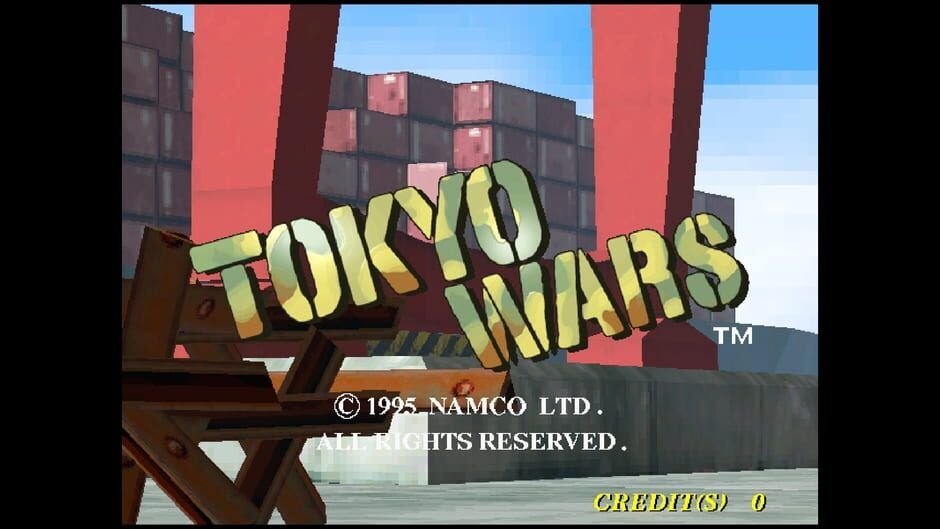
Arcade Archives: 2 Tokyo Wars on Switch 2 is a meticulous resurrection of Namco’s mid‑90s tank battler. Hamster once again delivers a museum‑grade port architected for accuracy, but this is a case where the original arcade context did as much heavy lifting as the game design itself. On a home console, the appeal becomes far more niche, especially if you come to it hoping for a BattleTanx‑style campaign or robust solo content.
Recreating the Tank‑Cabinet Without the Recoil
The original Tokyo Wars cabinets were all about presence. You sat in a chunky seat, grabbed a weighty stick, and felt the cabinet rumble when you fired or took a hit. Hamster’s Switch 2 version preserves the audiovisual side of that experience with sharp emulation, clean audio and the expected suite of display options, from scanlines to various softening filters. The sense of peering into a 1994 Namco screen is intact.
What you cannot replicate is the tactile feedback. Firing a shell now is just a sound and a flash, with no mechanical shudder traveling through a seat or stick. Switch 2’s rumble tries to stand in, but there is a clear disconnect between the original fantasy of driving a steel beast and the reality of nudging a thumbstick. The result is functional and readable, yet noticeably less visceral. Fans who remember the cabinets will feel the absence instantly, while newcomers may simply wonder why the gunfire feels so weightless.
Controls and Moment‑to‑Moment Play
Control schemes are mapped sensibly to modern pads. Twin‑stick driving and aiming feels natural within a minute, and the option to remap buttons or slightly tweak sensitivity helps fine‑tune the feel. The tanks have deliberate heft: acceleration is slow, turret movement takes commitment, and your survivability depends as much on positioning as on marksmanship.
This rhythm suits short, scrappy matches. You angle around corners, line up a shot, and trade blows in messy urban arenas. Enemy tanks telegraph enough to keep things readable even through the blur of explosions and debris. Against human opponents, especially on a couch with a few friends rotating in, it becomes a game of opportunism and nerve more than finesse. The handling is tight enough that the age of the design rarely gets in the way.
In single‑player, however, the simplicity catches up quickly. Enemy AI is serviceable but repetitive, content to trundle into predictable firing lanes. The basic loop of drive, peek, fire and retreat does not evolve across sessions, and without unlocks, progression hooks or scenario variety, Tokyo Wars can start to blur together after an hour of solo play.
Content, Modes, and Value
By design, Tokyo Wars was a link‑cabinet battle game, not a feature‑rich package. The Switch 2 port stays faithful. You get the standard Arcade Archives scaffolding: configurable difficulty and lives, high‑score and caravan style chase modes, online leaderboards and flexible visual settings. As a historical artifact, the wrapper is impressive and respectful.
The core game itself is thin. Maps are limited, objectives rarely deviate from straightforward tank skirmishes, and there is no campaign structure or meaningful escalation in challenge beyond basic difficulty bumps. For dedicated arcade historians, that simplicity is part of the charm. For players raised on BattleTanx or its contemporaries, it will feel like a very early sketch of that formula, missing the crazy weapons, story framing and mission variety that gave those console titles staying power.
Local multiplayer remains the strongest argument in Tokyo Wars’ favor. With two or more players, every match turns into a compact mind game, using alleys and sightlines to bait shots and spring ambushes. In that context, the minimalism works, because nobody is learning complicated systems; everyone is instantly dangerous. But there is no online play, and without a regular local group, you are largely left with short solo bursts and leaderboard chasing.
At its typical Arcade Archives price point, the value question becomes pointed. For players specifically nostalgic for Tokyo Wars, the emulation quality and convenience of having it on a portable hybrid system are easy to justify. For BattleTanx fans hoping this fills a similar niche, the lack of breadth, narrative and meaningful single‑player structure will be disappointing.
Verdict
Hamster’s work on Arcade Archives: 2 Tokyo Wars is hard to fault on a technical level. The original game looks and runs as it should, the options are thorough, and the controls adapt cleanly to modern hardware. What cannot be fully revived is the physical, communal arcade context that made this simple tank battler feel special.
If you are an arcade purist or have specific nostalgia for pounding shells across a noisy Tokyo Wars cabinet, this is a faithful, convenient way to revisit that experience, minus the seat‑rattling recoil. For most modern players and even many BattleTanx veterans, the shallow content and limited solo appeal make it more of a historical curiosity than a must‑buy.
Score: 6/10
Final Verdict
A solid gaming experience that delivers on its promises and provides hours of entertainment.