
Review

By Pixel Perfect
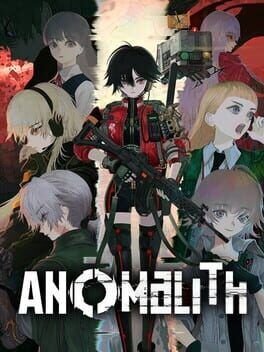
Image: IGDB
Store links: Anomalith on Steam
FuRyu’s Switch 2 experiment arrives with a split personality
Anomalith launched for Nintendo Switch 2 on October 28, 2026, with FuRyu listed as both developer and publisher by Nintendo Everything. The concrete pitch is immediately appealing: a third-person action-horror game about warped Anomaly Zones, dangerous mutated creatures, and a survivor whose body changes after a disastrous mission.
The tension is that Anomalith’s strongest hook and its most obvious problem appear to be the same thing. Nintendo Everything’s Switch 2 review argues that the game wants the unease of liminal horror but often undermines that atmosphere with its own systems. Shacknews, reviewing FuRyu’s release, frames the same design from the other side: less moody horror, more over-the-top third-person shooter with loot, monster blasting, and character customization.
That makes this Anomalith review a question of fit. If you are searching the Switch 2 library for a slow-burn horror game that lets empty spaces gnaw at you, Anomalith sounds compromised. If you want one of the stranger Nintendo Switch 2 indie games in spirit, a mid-budget action oddity with messy ambition and a loop built around dives, gear, mutations, and bosses, FuRyu’s game makes a more convincing case.
The premise has a sharper edge than the tone always allows
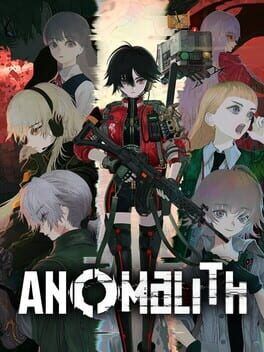
The setup is the part of Anomalith that most clearly knows what it wants. Nintendo Everything describes a world where Anomaly Zones have appeared, twisting small pockets of reality and filling them with dangerous creatures. Reona Minazuki, identified there as a seventeen-year-old survivor, joins the government’s Anomaly Zone Countermeasures Office while searching for her missing friend, Arisa Kato. Her first mission goes wrong, she returns as the only survivor, and she discovers a resistance to the zones’ bodily effects that allows her to mutate parts of herself.
Shacknews adds a slightly different emphasis, describing Reona as a young woman rescued from an Anomaly Zone who loses ten years of time, then becomes the sole remaining Diver after a mission in an anomalized office building kills her squad. The two accounts do not line up neatly in the limited source material provided, so the safest reading is that Anomalith’s chronology and character circumstances are more tangled than a simple missing-person rescue plot.
What is clear is the dramatic pressure around Reona. Nintendo Everything highlights her direct, abrasive personality and contrasts her rescue-first motivation with colleagues who treat Divers and civilians as expendable research assets. That is a strong genre engine: one person clinging to human stakes inside an institution already resigned to sacrifice. The issue, according to that review, is follow-through. The story begins with an intriguing mystery and a cast with potential, but the game’s broader design reportedly pulls attention toward action systems before the dread can fully settle.
Anomalith gameplay is at its best when it stops pretending to whisper
The most persuasive defense of Anomalith comes from its moment-to-moment action. Shacknews describes the combat as competent, snappy, and full of things to tinker with, with Reona and other Divers entering zones equipped with protective armor and military ordnance before her mutation powers become central. That is not the language of a precision character-action standout, but it is the language of a game whose basic loop works.
The Anomalith gameplay loop, as reported by Shacknews, revolves around entering anomalized buildings, fighting hostile creatures, collecting materials, managing loot, depositing items to free up space, and pushing toward boss encounters. The review compares the inventory element to Resident Evil 4, which is a useful signal for buyers: this is not only shooting corridors of monsters, but also making small, constant decisions about what to carry, what to keep, and when to cut a run short for the sake of resources.
Enemy discovery also seems to be part of the fun. Shacknews singles out basic foes that resemble human-shaped newspaper collages, which fits the game’s surreal premise without asking every encounter to be terrifying. Better still, the same outlet praises boss fights as genuinely impressive and says many include creative gimmicks that pull the player outside the normal third-person shooting loop. For a smaller action game, that matters. Boss design is often where limited enemy variety, shallow builds, or repetitive arenas are exposed. Anomalith appears to have enough encounter craft to keep its dives from becoming pure routine.
The horror works better as texture than as pressure
Anomalith’s biggest design conflict is tonal. Nintendo Everything opens its review by placing the game within the recent wave of liminal-space horror, then says Anomalith seems afraid to commit to the unease that those spaces can create. That criticism cuts deep because liminal horror depends on restraint. Familiar environments need time to feel wrong. Empty offices, bland corridors, and altered everyday spaces become scary when the player has room to notice how reality has bent.
Shacknews effectively confirms a different creative priority. Its review says Anomalith is interested in liminal horror as a cool setting rather than as a singular antagonistic force, and compares its action flavor to Resident Evil and Binary Domain. That is not inherently a flaw. Plenty of horror-adjacent action games trade sustained fear for momentum, spectacle, and power fantasy. But it means the game’s mood should be judged as pulp action with grotesque dressing, not as an atmospheric horror showcase.
For indie and niche-game players, that distinction is important. Anomalith’s spaces may intrigue you, and its monsters may have memorable visual ideas, but the sourced criticism suggests the mechanics keep handing you tools, loot, objectives, and forward drive whenever the premise threatens to become truly oppressive. The result sounds lively, sometimes stylish, and occasionally eerie, but not especially patient.
Switch 2 performance sounds serviceable, but the available sources leave gaps
Nintendo Everything reviewed Anomalith specifically on Nintendo Switch 2 and lists the platform as Switch 2, but the provided source excerpt does not include resolution, frame rate, loading, handheld battery impact, or docked-versus-portable comparisons. Shacknews comments that the action feels snappy and competent, while also calling the game rough around the edges. GameFAQs’ visible excerpt calls it a decent, breezy game that was fun and engaging enough to justify the reviewer’s time, but it likewise does not provide technical detail.
That leaves Anomalith in an awkward place for performance-minded Switch 2 buyers. There are no sourced red flags here such as crashes, severe frame pacing complaints, or unplayable handheld compromises. There is also no evidence in the supplied material that Anomalith is a technical showcase for Nintendo’s newer hardware.
My performance score reflects that middle ground. The available reviews suggest the game’s combat feel survives the platform transition, which is the most important baseline for a third-person shooter. Still, without sourced specifics on frame rate targets or visual modes, cautious buyers should not treat this as a proven Switch 2 benchmark. Treat it as a playable action release whose appeal rests on design, encounter variety, and weirdness rather than hardware spectacle.
Replay value comes from tinkering, not from endless depth
Anomalith appears built for players who like a loop they can chew on in repeat sessions. Shacknews points to random loot, material collection, inventory management, research goals, and even dress-up as reasons to keep engaging with the game after the initial novelty of the Anomaly Zones wears off. It also describes successful dives as pushing back an anomalous doomsday clock at headquarters, giving repeated missions a clear progression wrapper.
That structure suits Switch 2 play well in theory, especially for players who want something denser than a tiny arcade game but lighter than a giant RPG. The GameFAQs excerpt captures that appeal neatly by calling Anomalith breezy and engaging enough to stand out, while stopping well short of calling it exceptional.
The limitation is that the available source material does not point to deep buildcraft, major branching routes, or a campaign that radically changes on replays. The long tail seems to come from enjoying the combat feel, chasing better loot, handling compact resource decisions, and seeing the next odd boss idea. If those hooks work on you, Anomalith has replay value. If you need a system-heavy roguelite or a survival horror game where every bullet counts, it may feel thinner than the premise suggests.
Verdict: a scrappy, memorable action-horror pick for the right Switch 2 player
Anomalith makes its strongest case when judged as a FuRyu curiosity: rough, earnest, strange, and mechanically busy in a way that can be easy to like. The reported combat is snappy, the dive structure gives the game a clean rhythm, and the boss encounters sound inventive enough to lift it above routine monster shooting.
It makes a weaker case as horror. Nintendo Everything’s criticism that the systems work against the atmosphere is consistent with Shacknews’ more positive description of a game that uses liminal spaces as a stylish action backdrop. That does not sink Anomalith, but it narrows the audience. This is a better buy for players who enjoy offbeat third-person shooters with loot and mutation powers than for players chasing dread, silence, and restraint.
For Switch 2 owners browsing the early field of Nintendo Switch 2 indie games and niche releases, Anomalith is worth considering if you value discovery and can forgive uneven craft. Wait for a sale if you need technical certainty, deep replay systems, or pure horror. Jump in sooner if the idea of a breezy, bizarre action game about blasting through warped office spaces sounds like your kind of flawed gem.
Final Verdict
A solid gaming experience that delivers on its promises and provides hours of entertainment.