
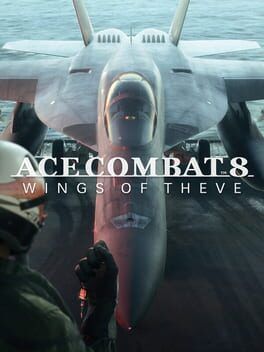
Review
By Headshot
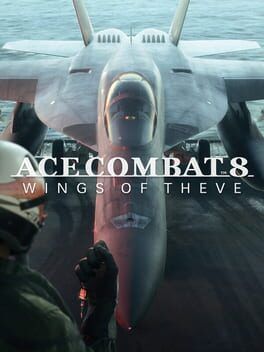
Image: IGDB
Store links: Ace Combat 8: Wings of Theve on Steam
The strongest move is putting the player inside the lie
Ace Combat 8: Wings of Theve makes its biggest change before it asks you to win the war. As detailed by PlayStation Blog contributor Phil Hornshaw, Project Aces shifts most of the story presentation into first-person cutscenes, putting the player on the carrier deck, in briefings, and in the middle of Joker Flight instead of keeping the war at arm’s length through detached cinematics. That is the hook, and it creates the review’s central tension: can Ace Combat get closer to its pilot without sanding down the oversized arcade spectacle that defines the series?
The answer is mostly yes. Ace Combat 8 is still an arcade flight combat game built around impossible missile counts, screaming lock-on tones, superweapon theatrics, and enemy aces who seem allergic to flying in a straight line. Push Square describes the fundamentals as familiar: hear the briefing, pick the aircraft, load up weapons, then tear through air and ground targets. That loop remains the engine. The difference is that Wings of Theve gives the campaign a tighter emotional spine by making the player inherit a symbol that was built as propaganda.
The setup, supported across PlayStation Blog, IGN, Push Square, Console Creatures, and other reviews, is direct and effective. The Federation of Central Usea has been invaded by the Republic of Sotoa. The FCU capital, Theve, has fallen. What remains of the FCU fights from the aircraft carrier Endurance. The player is rescued from the sea and eventually takes on the mantle of the Wings of Theve after Jan Cope, the public face of that legend, is killed. Multiple sources identify the twist the same way: the celebrated ace was never the unstoppable killer the public believed in. The image mattered because the FCU needed hope.
That gives Ace Combat 8: Wings of Theve a cleaner dramatic target than the series sometimes has. You are winning dogfights, but you are also feeding a story machine. Every successful sortie makes the lie harder to separate from the person flying the plane. That is where this sequel feels most current without turning into a lecture. The campaign is still melodramatic in classic Ace Combat fashion, but its focus on propaganda, morale, social media, and symbols gives the combat a sharper aftertaste.
First-person storytelling makes Joker Flight matter
The first-person approach is not a cosmetic camera trick. PlayStation Blog reports that players can look around during scenes, answer occasional yes-or-no prompts with the DualSense D-pad, and respond to certain moments with Triangle or Square. It also notes that haptic feedback is used to intensify scenes in and out of battle. Those interactions sound minor on paper, and they are not role-playing systems in the branching-narrative sense, but they help the silent protagonist feel present instead of absent.
That matters because Ace Combat has always had a strange relationship with its heroes. The player is usually a myth with a callsign, a person other characters talk about until the legend becomes larger than the pilot. Wings of Theve leans into that structure and then questions it. Cubed3 notes that the inherited “Rex” identity carries unusual weight for an Ace Combat protagonist because it arrives with a fabricated history attached. GamingBolt similarly frames the campaign around Rex taking over after Cope and carrying the consequences of that public symbol.
Joker Flight benefits the most from the new framing. Console Creatures highlights Jan Cope, Ellington Baxter, Tasha Severskaya, and William Coster as distinct squadmates, calling out Tasha’s morale-building presence, Baxter’s calm under pressure, and Coster’s music-driven personality. Monstervine also argues that the squadmates feel like real people with their own stakes and personalities. For a flight combat campaign, that is important. Your wingmen are constantly in your ear, and if they are flat, the whole game starts sounding like radio static with names attached.
Here, the squad works because the story spends time aboard the Endurance and lets the team exist between sorties. PlayStation Blog says Ace Combat 8 emphasizes time with Joker Flight through hangouts, briefings, and mission chatter. The carrier is not described as a glamorous base. IGN calls the Endurance an aging aircraft carrier that would probably have become a museum in better times. That detail is doing useful work. It makes the FCU’s war effort feel desperate and underfunded, which turns the usual Ace Combat power fantasy into something more uneasy.
The writing is not flawless. Push Square says the plot can become tangled in place names, allegiances, and confusing turns. GamingBolt also flags pacing issues around the midpoint. Those criticisms line up with what Ace Combat often struggles with: the series wants geopolitics, myth, personal tragedy, and superweapon escalation all in the same airspace. Wings of Theve handles the personal angle better than usual, but the broader war can still get noisy.
Ace Combat 8 gameplay still lives or dies by aerial feel
From a shooter perspective, the lock-on tone is the closest thing Ace Combat has to a headshot click. If the turn rate feels wrong, if missile timing feels mushy, or if targets do not create pressure, the whole campaign collapses. The critical consensus in the supplied reviews is that Ace Combat 8 gameplay lands hard where it needs to.
Push Square says Wings of Theve may be the best the series has felt, citing intuitive, responsive controls and smooth action. Analog Stick Gaming emphasizes the balance between accessibility and depth, saying the game is easy to pick up without burying players under hardcore simulation mechanics, while still making speed control, banking, positioning, and commitment to turns increasingly important. That is the sweet spot for this franchise. Ace Combat should make a new player feel dangerous in two minutes and make a veteran sweat when a hostile ace drags them into a bad angle.
The aircraft differences appear meaningful rather than decorative. Analog Stick Gaming reports that some planes feel agile and responsive while others demand more attention to positioning and momentum. Push Square notes the return of an aircraft tree, with progression tied to unlocking better planes for both the player and wingmen. Cubed3 adds that Joker Flight’s aircraft composition shapes combat expression, with fighters, attackers, and other roles affecting how sorties play. That gives the campaign loadout texture without turning it into a spreadsheet sim.
The best praise across the source material is about rhythm. Monstervine focuses on the tension of wrestling an enemy into lock-on range and the relief when missiles connect. Analog Stick Gaming highlights the satisfaction of dodging incoming fire, reversing the chase, and watching an enemy aircraft vanish moments after lock. That is the same competitive combat language I use when talking about good shooter pacing. Ace Combat 8 keeps players cycling through pursuit, pressure, release, and repositioning. The battlefield is huge, but the moment-to-moment fight stays readable.
It also helps that the game does not confuse arcade with shallow. Sources repeatedly describe the controls as approachable, but the campaign escalates. Weather returns as a tactical variable. Cubed3 reports that icing, lightning, and cloud cover are used more widely and carefully than in Ace Combat 7, with clouds functioning as cover or a way to shake pursuit. That is exactly the kind of environmental pressure that keeps dogfights from becoming circular target practice.
Mission variety keeps the campaign from becoming a target checklist
The mission structure is where Wings of Theve appears to make its strongest sequel argument. Push Square says the campaign spans 30 missions and stays varied despite the basic actions often returning to dogfights and bombing runs. Its examples include destroying enemy facilities, defending allies from attacks on all sides, and facing large-scale threats such as a land battleship. Cubed3 describes air, ground, and naval target balance across enormous campaign missions. IGN’s review headline-level framing also points to some of the series’ best mission design, while noting that its review initially covered the single-player campaign because pre-release multiplayer access was limited.
That matters for buyers because Ace Combat can live or die on mission objectives. A good sortie gives you a clear job, then complicates it with reinforcements, weather, terrain, air superiority shifts, or a boss-level threat. A weak one turns into missile cleanup. The supplied reviews indicate Wings of Theve mostly avoids the latter. It uses spectacle as pacing, not wallpaper.
There is a strong campaign identity here: the FCU is fighting from a weakened position, so sorties often carry the feeling of buying time, holding a line, or selling the Wings of Theve myth to people who need to believe it. That story context does useful work for mission variety. Protecting allies feels different when the carrier and squadron are already stretched thin. Attacking infrastructure feels different when the war effort depends on proving that the symbol in the sky is real.
The reported campaign length also suggests a fuller package than a quick arcade run. Cubed3 describes the story as 20-plus hours. Push Square’s 30-mission figure supports the sense that this is a substantial single-player campaign. That said, the scale has a cost. When GamingBolt points to midpoint pacing issues and Push Square notes occasional confusion, it suggests the campaign sometimes struggles to keep its political, corporate, and military threads as clean as its mission objectives.
For most players searching for an Ace Combat 8 review, that tradeoff is acceptable. The missions seem to carry the story better than the exposition does. In the cockpit, the game knows exactly what it is asking from you: manage speed, choose the right target, survive the missile warning, and make the next shot count.
PS5 presentation sells speed, weather, and the carrier war
For an Ace Combat 8 PS5 review, presentation is not a side category. This series needs scale. It needs clouds worth diving through, water worth skimming, cities that make altitude readable, and explosions that reward the shot without hiding the next threat. The supplied reviews are consistent here: Wings of Theve is a major visual step even if Console Creatures says it does not feel like a full generational leap over Ace Combat 7.
Monstervine calls the game jaw-droppingly beautiful, specifically praising the look of story scenes, high-altitude flight, and low passes over water. Cubed3 points to richly textured terrain, simulated weather, and the repeated thrill of breaking the sound barrier. Push Square credits improved presentation with making the action pop. Those are broad impressions, but they line up around a key point: the game appears to use visual detail in service of aerial readability and drama.
Audio also seems to be a major strength. IGN calls the soundtrack one of the year’s best in its review text. Push Square praises the voice acting as deliberately cheesy in the way Ace Combat fans expect. Console Creatures mentions Coster bringing music into the cockpit, including missions tied to his song choices. That blend of sweeping score, radio chatter, and over-the-top delivery is part of the series’ identity. If the performances were too restrained, the whole thing would feel wrong.
The PS5-specific texture comes through the DualSense details reported by PlayStation Blog. Haptics are used to make cutscenes and battle moments feel more intense, while D-pad responses and prompt interactions let the silent protagonist answer or react in small ways. Those features do not redefine the genre, but they support the review’s larger point: Project Aces is trying to make the player inhabit the myth, not simply watch it between missions.
Performance is the one area where the supplied source material is less technical than ideal. Push Square says the game feels smooth, and multiple reviews praise the visual presentation, but the provided excerpts do not include frame-rate targets, resolution modes, or detailed PS5 performance analysis. Based on the available material, there is no clear red flag, but buyers who care about exact performance metrics should look for post-launch technical testing before treating that as settled.
Verdict: a sharper sequel that keeps the arcade spectacle intact
Ace Combat 8: Wings of Theve succeeds because it understands what cannot change and what needed to. The planes still handle like high-speed arcade weapons. The missiles still deliver that fast dopamine hit. The missions still escalate into absurd military theater. The skies still belong to pilots with callsigns that sound like legends before they have earned them.
The improvement is that Wings of Theve makes the legend cost something. The first-person storytelling, the Endurance as a fragile home base, and Joker Flight’s larger presence all make the campaign feel more personal without grounding the series so hard that it loses its operatic scale. When the story is focused on the player inheriting Cope’s fabricated role and turning a morale campaign into battlefield reality, it is one of the stronger setups Ace Combat has had. When it starts juggling too many factions, geopolitical terms, and broader mysteries, it can drift.
As a buyer’s guide, the recommendation is clear. If you want a serious flight simulator, this is not aiming at you. If you want a single-player arcade flight combat campaign with strong mission variety, responsive aerial feel, big weather-driven set pieces, and a more intimate story presentation, Ace Combat 8 is an easy PS5 recommendation. If multiplayer is your main reason to buy, be cautious for now. IGN specifically noted that its initial review covered the single-player campaign because reviewers had limited time with multiplayer before release, and the supplied material does not provide enough live PvP evidence to judge netcode, balance, matchmaking, or meta.
For campaign players, though, Wings of Theve looks like the sequel Ace Combat 7 earned: bigger, more confident, more personal, and still loud enough to shake the canopy.
Final Verdict
A solid gaming experience that delivers on its promises and provides hours of entertainment.