
Review

By Night Owl
A roguelite FPS that finally commits to being underwater
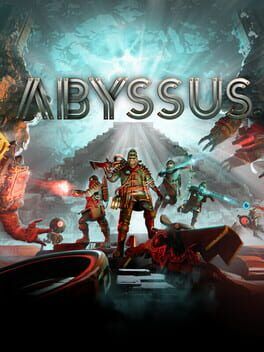
Abyssus bills itself as a co-op, brinepunk, underwater roguelite shooter, and for once the marketing is not overselling it. This is not just a normal arena shooter with a blue filter. Everything, from how you strafe to how enemies swarm and how guns kick, is built around the idea that you are fighting at crushing depth in heavy gear.
The closest comparison is something like a mash-up of Hades and a boomer shooter, then dropped to the bottom of the ocean. The question is whether that aquatic hook and the roguelite structure are enough to make it stand out in a year where FPS roguelites are everywhere.
For the most part, Abyssus swims more than it sinks, but it does not quite reach the surface of the genre’s best.
Movement under pressure
Underwater movement is the first thing Abyssus has to get right, and it mostly does. You are not sprinting or bunny-hopping across flat arenas. Instead, your diver glides and surges in three dimensions, with a short forward burst mapped to a dash that feels like firing a tiny torpedo from your own spine.
Verticality is constant. Enemies approach from above, below, and behind, and the level geometry takes advantage of that with shafts, cavern ceilings, and coral overhangs that actively block your line of sight. Z-axis awareness becomes as important as circle-strafing. In solo play this can be thrilling; you are weaving through thermal vents, cutting around rock pillars, then jetting upward through clouds of bioluminescent fish just to get a bead on a sniper crab.
The tradeoff is that inertia is baked into everything. Stop pushing and you continue to drift. That sells the fantasy, but it also introduces what will be a hard divide for players. If you love precise air-strafing and instant acceleration, the slight mushiness of Abyssus will feel like someone poured syrup into your mouse. There is a late meta upgrade that tightens braking and dash responsiveness, but until you unlock it, combat can feel slippery.
Co-op improves this dramatically. Having three other divers calling out angles, pinging threats above or below, and staggering enemies while you reposition makes the slow deceleration feel like a design choice instead of a flaw. Solo, especially in the opening hours, it can come off as simple sluggishness.
Enemies that understand they are in water
Enemy behavior is where the underwater design really pays off. The best roguelites use their foes as environmental hazards as much as damage sponges, and Abyssus takes that to heart.
Basic swarmer fish do not just run straight at you. They spiral and corkscrew, using momentum to slingshot around cover. Jelly-like mines drift in lazy arcs, redirecting in response to your wake. Crustacean snipers cling to walls and ceilings, repositioning vertically more than laterally, so you are often tracking movement above you rather than to your flanks.
A standout encounter type is the eel packs. They move in loose, pulsing formations, diving in and out of vents, and they are terrifying in three dimensions. When you dash to dodge one, you often collide with the wake of another, since their swim patterns leave behind turbulence that slightly pushes your diver. It is subtle, but it constantly reminds you that the battlefield is a fluid volume, not a flat plane.
Bosses lean even harder into this. A colossal angler-like creature will periodically reduce visibility with a cloud of luminescent plankton, forcing you to track it by light pulses rather than silhouette. Another fight takes place in a narrow trench where currents periodically reverse, flipping your sense of up and down as you cling to outcroppings and try to find safe angles.
Not every enemy design lands. A few tankier divers and mech-like drones could have walked straight out of a conventional sci-fi shooter, and they behave similarly. They shoot, they strafe, they occasionally jet to a new piece of cover, and they are the rare moments where the setting stops mattering. Thankfully, the more aquatic the foe, the more interesting the encounter.
Gunfeel in a place where bullets should not work
If the movement sells the water, the weapons sell the brinepunk vibe. Abyssus solves the underwater gun problem by throwing realism overboard. You are firing brine-powered cannons, pneumatic harpoon launchers, high-pressure shotguns, and coral-encrusted railguns that look like someone cross-bred Bioshock’s art team with Deep Rock Galactic’s chunky toolset.
Crucially, they feel good. There is solid recoil, distinct audio, and a meaty sense of impact when shots connect. The game uses a lot of volumetric particle trails and cavitation bubbles to sell bullet travel. When you fan the trigger on the base revolver-equivalent, the screen snaps and bucks in a way that is more old-school Doom than floaty underwater sim.
The twist is that you pick a single primary weapon before the run begins and commit to it. Everything that drops inside a run are mutators, attachments, and blessings that twist that one gun into something bizarre. A basic harpoon rifle might become a chain-lightning trident that detonates corpses, or a shotgun might start leaving behind bubbles that slow projectiles, giving you brief safe zones to dance inside.
The benefit is focus. You are encouraged to learn the nuances of each weapon over many runs, experimenting with different upgrade synergies. By the time you have a few hours with the game, you probably have a favorite gun and a sense of which blessing trees turn it into a room-deleting monster.
The downside is variety within a single run. Roguelite shooters often deliver excitement through constant loot churn. Here, the mid-dive loot game is about modifiers rather than new toys. If you are the kind of player who loves swapping between three wildly different weapons on the fly, Abyssus will feel a bit constrained.
That said, the modifiers do interact cleverly with water physics. Explosive rounds generate pressure waves that push enemies and slightly nudge your own position. Cryo shots supercool water pockets, slowing everything that moves through them, including your own dashes. One line of blessings literally thickens the water around you, giving you damage resistance and improved control at the cost of speed. These may not be realistic models of fluid dynamics, but they constantly tie your build choices to the sense that the ocean itself is part of your arsenal.
How deep is the meta-progression?
On the surface, Abyssus looks like a Hades-style carousel of permanent unlocks. You bring back resources from each dive and pour them into a central hub that offers new gear, passive boosts, cosmetic unlocks, and new paths deeper into the abyss.
Early on, this feels generous. You quickly unlock new weapons, a couple of active gadgets such as deployable sonar pings or decoys, and a raft of basic stat bumps covering health, dash charges, and resource gains. Runs get measurably easier over your first five or six hours, and the sense of forward momentum is strong.
The problem is that the meta-progress tree plateaus faster than it should. Once you have a few core survivability and movement nodes maxed, most of the remaining unlocks are small percentage tweaks. The most interesting stuff, like new blessing pools or radically different gun variants, is frontloaded. By the time you have beaten the second major biome a few times, you have seen the bulk of what progression has to offer.
There are long-term, run-altering unlocks, such as new starting curses that trade power for risk and alternate dive contracts that remix biome order or enemy compositions. These are welcome, and they do extend the game’s life, but they are spaced out behind fairly grindy resource thresholds. Compared with the way Hades or Risk of Rain 2 keeps surprising you deep into their unlock curves, Abyssus feels comparatively shallow.
Co-op progression helps, since shared resources and account-wide unlocks across a squad smooth the grind. If you have a regular group, you will hit the interesting thresholds much faster. Solo players will feel the treadmill more acutely.
Standing out in a flooded roguelite FPS market
The roguelite shooter space in 2025 is crowded with heavy hitters, from slick indie boomer shooters to co-op dungeon crawlers that already have thriving communities. For Abyssus to matter, it has to offer more than just a neat premise.
Its strongest differentiators are movement and atmosphere. No other current roguelite shooter leans this hard into being underwater. The way enemies drift, the slight delay on turns, the omnipresent verticality, and the way projectiles carve swirling wakes through the environment all give it a distinct feel. The brinepunk art direction, mixing rusted dive suits, luminescent fauna, and industrial altars to oceanic gods, helps it stand out visually too.
Gunplay, while solid, is less unique. It is excellent by indie standards, with strong feedback and a good sense of heft, but it does not completely outclass the genre’s best. What it does do is integrate with the setting more cleverly than most, especially once you begin stacking physics-altering modifiers.
Where Abyssus struggles to stand out is in its long-term structure. Runs are enjoyable, but the meta layer is not as endlessly compelling as its peers. There is no equivalent of a massive character roster that fundamentally shifts your approach, nor are there deep, branching narrative systems that reward dozens of completions. After mastering a handful of favorite weapons and blessings, you will likely feel that you have “solved” the game sooner than you would like.
Steam’s co-op focus does give it a niche. If you want a four-player roguelite shooter specifically built around underwater maps, Abyssus effectively has the field to itself. If you are mostly a solo player choosing between it and landlocked competitors with denser progression, its unique setting has a tougher fight.
Verdict
Abyssus is a stylish, confident underwater roguelite FPS that understands how much its setting should change the basics. Movement is weighty but expressive, enemy behavior leverages three-dimensional space in clever ways, and the brinepunk arsenal feels punchy in spite of the soggy backdrop. In moment-to-moment play, especially in co-op, it is frequently exhilarating.
What holds it back is the depth of its meta-progression and the limited run-to-run variety that comes from committing to a single weapon each dive. It is not shallow, exactly, but compared to the deepest roguelite shooters, you will reach the bottom of its reward pool a bit sooner than you might hope.
If you are craving something fresh in the genre and the idea of surfing cavitation trails through glowing trenches appeals to you, Abyssus is absolutely worth diving into. Just do not expect its long-term progression to be as bottomless as the abyss it is named after.
Final Verdict
A solid gaming experience that delivers on its promises and provides hours of entertainment.