
Review

By Pixel Perfect
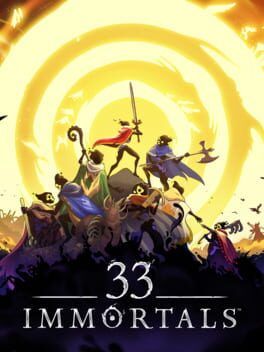
Image: IGDB
Store links: 33 Immortals on Steam
A raid-sized roguelike finally steps out of Game Preview
The strongest thing 33 Immortals has going for it is also the thing that makes it hardest to judge like a normal roguelike: Thunder Lotus built this as a 33-player cooperative action roguelike, then brought it out of early access into full release. Wikipedia lists the early access launch for Windows and Xbox Series X/S on March 18, 2025, followed by a full release on June 10, 2026. TheXboxHub, reviewing the post-Game Preview version, described it as having come out of that period “better and stronger,” and scored it 4/5.
That context matters for this 33 Immortals review because the game’s entire sales pitch depends on a fragile bargain. Most roguelike action games succeed by giving one player or a tight party absolute clarity: dodge here, punish there, build toward a busted run, die, improve, repeat. 33 Immortals throws that intimacy into a crowd. Its runs are built around dozens of damned souls pushing through divine punishment together, with the shape of a raid compressed into a roguelike session. When it works, it has a crackle that smaller games cannot fake. When it strains, the same scale can blur your sense of personal impact.
The 33 Immortals gameplay loop is smartly structured chaos
According to the public gameplay description summarized on Wikipedia, each 33 Immortals session lasts around 25 minutes and starts in the Dark Forest hub. From there, players choose archetypes such as melee, ranged, support, or tank before passing through the Eternal Gate into combat. The first major zone, Inferno, initially divides players into teams of six to explore, clear Torture Chambers, and collect Relics. Finishing a chamber triggers God’s wrath, which engulfs the map in fire, then surviving players are split again for Ascension Battles that can unlock Legendary Relics with bonuses for the wider team. A boss fight caps the run.
That is a strong skeleton. The run has a beginning, a middle, and a pressure valve instead of one long undifferentiated mob. The smaller six-player groups are especially important because they give the chaos edges. A 33-player screen can become visual weather, but a squad-sized chamber creates readable jobs: someone draws heat, someone commits to damage, someone supports recovery, everyone learns the rhythm of room hazards and enemy placements. Wikipedia notes that enemy placement, gameplay challenges, and rewards are randomly generated, which is the right fit for a game trying to make repetition feel like pilgrimage rather than homework.
The best 33 Immortals gameplay moments come from that push and pull between private survival and collective momentum. You are one body in a crowd, but the run keeps asking whether your group can finish its assignment quickly enough to feed power back into the whole rebellion. The structure gives the game a cleaner identity than “big Hades with friends,” which would undersell how much of its design is closer to a bite-sized MMO raid filtered through roguelike resets.
Teamwork lands best when the game narrows the crowd
The most impressive design choice here is that Thunder Lotus does not appear to rely on 33 players moving as one constant blob. The public description’s split into six-player teams, then three teams for Ascension Battles, is the piece that makes the concept playable rather than purely noisy. Large-scale co-op needs moments of delegation. Without them, the loudest player, the fastest player, or the biggest damage numbers tend to dominate the run’s personality.
33 Immortals is strongest when it gives you a legible shared task and enough time pressure to make hesitation costly. The archetypes support that idea on paper, with melee, ranged, support, and tank roles giving the crowd a familiar team-language before a run even begins. The Legendary Relic system also smartly turns success in one pocket of the map into value for everyone, which helps the game avoid a common co-op problem: players feeling as if they are completing errands in parallel rather than actually helping one another.
The tradeoff is that the game’s magic depends heavily on a healthy pool of players who understand the tempo. With friends, or with a matchmaking group that naturally clumps around objectives, 33 Immortals has a bright, communal snap. With scattered players, its raid-like framing can become less satisfying because the design asks for coordinated urgency without the slower planning tools of a traditional MMO raid. That tension does not break the game, but it is the main reason its ceiling and floor sit so far apart.
Progression is clear, though the long tail depends on appetite for repetition
Between runs, players return to the Dark Forest, where Wikipedia says they can change loadouts and interact with non-playable characters to unlock weapons, relics, and poetic perks that usually provide stat advantages. That is the kind of progression 33 Immortals needs: readable, useful, and immediate enough that a failed run does not feel wasted. The game’s loop is easy to explain. Try a run, earn tools, refine the build, return stronger, and chase cleaner execution with a larger group.
The clarity is welcome, but clarity is not the same thing as depth. Smaller roguelike action games often live or die on the intimacy of build discovery, where a single upgrade transforms your relationship with a weapon or enemy type. 33 Immortals has to split attention between personal buildcraft and communal survival. That makes progression feel practical first, expressive second. I like that choice for this game because too much individual complexity would fight the readability of a 33-player battlefield, but players who come to roguelikes mainly for intricate solo build theory may find the advancement less intoxicating than the scale.
TheXboxHub’s positive full-release review suggests Thunder Lotus improved the experience across Game Preview, and that tracks with the kind of game this is. A design this networked and this dependent on encounter flow benefits from public iteration. Still, the lasting appeal will come down to how many players remain excited to rerun the same broad structure after the novelty of the headcount fades.
The community signal is positive, but matchmaking is the buyer’s risk
For a 33 Immortals co-op roguelike, population is a gameplay feature. That makes the available reception data worth reading carefully. UMA Technology cited a 2026 Steam snapshot that listed the game as Mostly Positive across 945 English reviews, while the 25 recent reviews were Mixed. The same summary reported a Metacritic score of 71 from four critic reviews, which is too small a sample to treat as a settled critical consensus. Itechguides, comparing 33 Immortals with Hades II for co-op-minded players, reported Steam’s last-30-day average at 31.68 players in October 2026.
Those figures should not be overread as a verdict on quality, especially because they are reported snapshots rather than live store data in the provided material. They do, however, point to the practical question every prospective player should ask: are you bringing friends, using Game Pass or Xbox matchmaking, or relying on a small PC audience at off-peak hours? Xbox’s public cloud gaming page also lists 33 Immortals, which helps availability for players in that ecosystem, but the source material here does not provide pricing or subscription specifics beyond that listing.
If your plan is to play mostly with a group, 33 Immortals is easier to recommend. If you are a solo queue player who wants consistent full-scale chaos months after launch, the population question is part of the purchase decision. The design can stand out from smaller roguelike action games, but it needs bodies to fully become itself.
Presentation supports readability, but scale limits precision
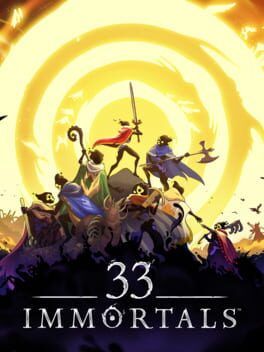
Thunder Lotus games tend to be associated with strong visual craft, and 33 Immortals’ published cover art leans into a bold, mythic identity. Based on the provided gameplay information, though, the more important presentation question is not prettiness. It is readability. A top-down action game with 33 players, randomized enemy placements, fire spreading across the map, relic effects, and boss encounters has to communicate danger fast.
The game’s structure helps. Separating players into smaller teams reduces screen overload, and the 25-minute run length keeps sessions from overstaying their welcome. The mythic framing, fighting through Hell, Purgatory, and Heaven as damned souls rebelling against a cruel God, gives the chaos a clean thematic spine. The story setup is striking, but the available source material points to a game driven more by run architecture than narrative performance. Do not come expecting a character-led Thunder Lotus emotional odyssey in the mode of Spiritfarer. Come for the ritual of repeated uprising.
On performance, the supplied sources do not give enough hard evidence for a platform-by-platform technical breakdown. The game is listed for Windows and Xbox Series X/S, and Xbox’s site has a cloud gaming page, but there are no frame-rate targets, resolution details, or documented technical problem lists in the material provided. My performance score reflects that absence of confirmed red flags rather than a claim that every setup is flawless.
33 Immortals verdict
33 Immortals earns its hook. The large-scale co-op is not a cosmetic gimmick layered onto a standard roguelike template. The six-player chambers, shared relic rewards, map-wide pressure, Ascension Battles, and boss finale give the game a rhythm that feels meaningfully different from smaller action roguelikes. Its best runs have the energy of a crowd discovering a ritual together, with enough structure to keep the swarm from dissolving into nonsense.
The weaknesses are tied to the same ambition. Individual expression can feel secondary to the group machine, matchmaking health is a real concern for a 33-player game, and the long-term loop depends on whether repeated raid-like sessions continue to feel fresh once the premise stops surprising you. For players who want solo precision above all else, there are sharper roguelikes. For players who want cooperative pressure, shared failure, and a run structure that compresses MMO raid ideas into a shorter action format, 33 Immortals has a distinct place.
My 33 Immortals verdict: recommended for co-op-first roguelike players, especially those with friends or a reliable matchmaking ecosystem. Approach with caution if you will play only at odd hours on a low-population platform. Score: 7.5/10.
Final Verdict
A solid gaming experience that delivers on its promises and provides hours of entertainment.