
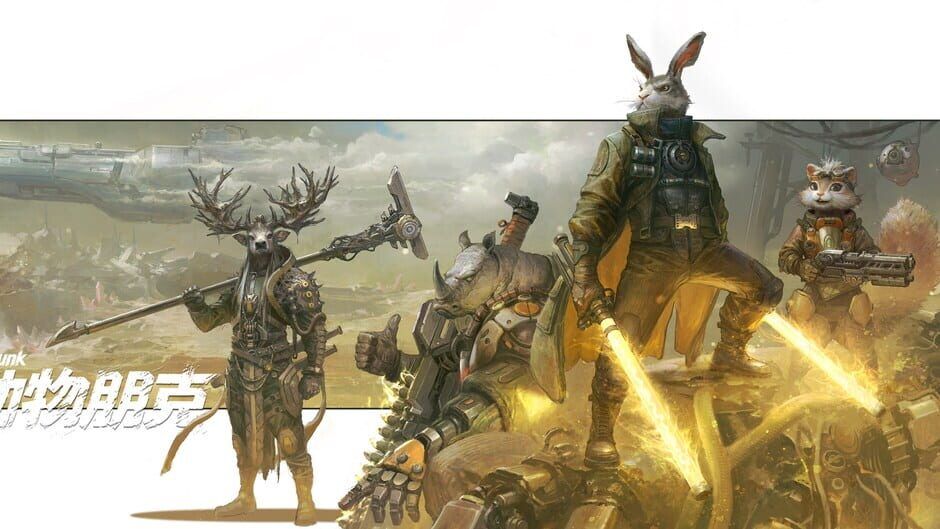
TiGames’ Zoopunk is a PS5 prequel to F.I.S.T.: Forged in Shadow Torch that dives deeper into Torch City’s animal uprising, sharpens combat and traversal, and stakes out a controversial stance on player‑generated AI content.
Zoopunk is TiGames’ return trip to Torch City, but this time the studio is not just building a bigger Metroidvania. It is rolling the clock back, changing how you fight and move, and wading directly into one of the most contentious tech debates in modern game development: how far generative AI should go.
A Prequel That Rewinds Torch City
Set before the events of F.I.S.T.: Forged in Shadow Torch, Zoopunk positions itself as a prequel that digs into the roots of Torch City’s diesel‑punk dystopia. F.I.S.T. dropped players into the aftermath of an occupation, with Rayton and his resistance buddies already battered by years of struggle. Zoopunk shifts the lens to an earlier point in the conflict, focusing on the escalation that turned Torch City from industrial animal metropolis into a war‑scarred battleground.
TiGames is leaning on familiar pillars: anthropomorphic animals bristling with metal, a city that fuses neon‑soaked alleys with towering smokestacks, and a focus on the collision between organic life and heavy machinery. Where F.I.S.T. told a story about survival and reclamation, Zoopunk is shaping up as a tale about how Torch City lost itself in the first place. Expect more insight into the political fractures that allowed the Machine Legion to rise, along with new factions and personalities who were only hinted at in F.I.S.T.
As a PS5‑targeted project, Zoopunk has the room to reimagine Torch City at a broader scale. Early footage shows wider streets, vertical plazas, and vehicle‑centric hubs, suggesting a layout that is still interconnected but framed more like a series of large combat spaces linked by traversal routes rather than a single 2D labyrinth. For returning players, it looks less like revisiting a familiar map and more like stepping into an earlier, more crowded version of the city before it was completely broken.
From Metroidvania To Combo‑Heavy Action
F.I.S.T. built its reputation on tight Metroidvania fundamentals and chunky mechanical fists that felt great to swing. Zoopunk keeps the animal‑mech fantasy but pushes harder into character‑action territory. The camera is no longer locked to a pure side‑scrolling perspective, which lets TiGames lean into broader arenas, enemy swarms, and visually loud super attacks.
Combat appears to have three main goals: increased speed, greater crowd control, and clearer expression of each character’s role. Where Rayton was a lone brawler who gradually unlocked new weapons, Zoopunk’s cast fights more like a small squad of specialists. Combat footage highlights rapid air juggles, cancel windows that let you flow from dodges into counterattacks, and enemy groupings that practically demand you keep moving.
Weapons and abilities still retain that industrial heft, with whirring saw‑arms, overclocked gauntlets, and transforming tools that double as traversal gear. TiGames seems to be taking the readability and impact that made F.I.S.T.’s hits satisfying and marrying it with a more layered combo system. Expect launchers, aerial strings, and supers that clear the screen when you manage your resources properly.
For Metroidvania fans, this pivot raises an obvious question: is Zoopunk sacrificing exploration for action spectacle? Structurally, it looks closer to a mission‑driven action game wrapped around a persistent city rather than a single seamless maze of rooms. TiGames is effectively betting that players who loved F.I.S.T.’s combat will follow them into a more aggressive, combo‑forward design, as long as progression and environmental storytelling still scratch that exploratory itch.
Traversal That Treats Torch City Like A Playground
The original F.I.S.T. treated Torch City like a dense stack of alleyways, air ducts, and hidden caverns. Movement upgrades mostly fell into classic Metroidvania categories like double jumps, wall climbs, and charge dashes that opened new paths.
Zoopunk, at least in early showings, reframes traversal as something much flashier. Characters are constantly grappling from points in the environment, chaining air dashes, and surfing across debris or vehicles as fights spill across multi‑tiered arenas. The city’s verticality is dialed up, with platforms, cranes, and broken highways that double as shortcuts and combat stages.
Traversal tools now feel more woven into combat flow. A grappling hook might yank you to a higher ledge one second, then pull an enemy into a juggle the next. Vehicle segments suggest short bursts of high‑speed movement that tie major districts together, almost like Torch City is stitched from a series of combat playgrounds instead of discrete rooms.
For fans of F.I.S.T.’s slower, secret‑laden exploration, this could be a mixed blessing. On the one hand, movement looks more dynamic and expressive, which fits nicely with faster combat. On the other hand, the shift toward big set‑piece spaces may mean fewer of those tightly packed, puzzle‑like rooms that rewarded meticulous backtracking. The key will be whether TiGames can layer optional paths and hidden corners into its more open arenas without breaking the new pace they are chasing.
The AI Question: Human‑Made Game, AI‑Assisted Mods
As exciting as Zoopunk’s combat and setting look, much of the early conversation has been dominated by a different topic entirely: generative AI.
Months before Zoopunk’s broader reveal, the game appeared in a Stable Diffusion tech demo that showed rough hand‑drawn gear concepts being turned into in‑game 3D models. Around the same time, an NVIDIA announcement linked Zoopunk to AI‑powered NPC features. Metroidvania and action‑game fans who had just fallen in love with F.I.S.T. understandably worried that TiGames might be leaning on AI for core art and design work.
In an update to that coverage, TiGames clarified its position. According to the studio, all of Zoopunk’s shipped game content is created by human artists. The diesel‑punk cityscapes, character designs, animations, and story are described as original, human‑driven work. Generative AI is reserved for one specific domain: optional player‑generated content.
The plan is to let players use AI‑assisted tools to create cosmetic items like vehicle skins and clothing color schemes, along with other surface‑level tweaks that fit under the banner of user‑generated content. TiGames frames this as an attempt to make “secondary creations” cheaper and more accessible, particularly for modders and players who are full of ideas but lack the skills to build custom assets from scratch.
How AI‑Powered UGC Might Land With Metroidvania Fans
Whether this approach will be embraced or rejected is an open question. The Metroidvania community tends to prize handcrafted worlds, painstaking art, and coherent visual storytelling. Part of F.I.S.T.’s appeal was precisely that it felt like a carefully built place, each alley and factory floor shaped by human intent.
TiGames is clearly trying to draw a line between that core, authored content and the optional layer of AI‑assisted customization. For some players, especially those already wary of generative AI, even that limited use could be a deal‑breaker. They may view any AI pipeline connected to a game’s assets as a compromise of artistic integrity or as tacit support for technology that has raised serious ethical questions around training data.
Other players might take a more pragmatic view. If Zoopunk delivers a strong, fully authored main experience and walls off AI tools to clearly labeled UGC slots, it could become a test case for whether AI can coexist with human‑centered design in a way that feels additive. For creative fans who have always wanted to dress their animal resistance fighters in custom gear or personalize their vehicles without digging into complex mod tools, AI‑assisted creation could be a powerful draw.
The risk is perception. If marketing blurs the line between human art and AI‑assisted creations, or if user‑generated skins flood public lobbies with off‑brand designs that clash with Torch City’s carefully tuned aesthetic, it might reinforce fears that the technology dilutes rather than enriches the game’s personality.
A Prequel Under A Microscope
Zoopunk arrives in a tougher landscape than F.I.S.T. enjoyed. Metroidvania and adjacent action fans now have a crowded slate of premium 2D and hybrid releases to choose from, and generative AI has become a flashpoint throughout the industry. That puts TiGames’ PS5 prequel under a microscope in two ways at once.
As a follow‑up, Zoopunk must prove it can expand Torch City’s lore in satisfying ways while evolving combat and traversal enough to avoid feeling like a retread. As a high‑profile title openly experimenting with AI‑assisted player content, it will also serve as an early test of how far the community is willing to let this technology sit alongside the crafted worlds they love.
If TiGames can thread that needle, Zoopunk could be remembered not just as a strong action prequel to F.I.S.T.: Forged in Shadow Torch, but as one of the first big Metroidvania‑adjacent games to define a workable boundary between human‑authored worlds and AI‑augmented creativity.