
How scanned physical miniatures, real Czech urban history, and small‑scale planning make Zlin City: Arch Moderna one of the strategy genre’s most distinctive upcoming city builders.
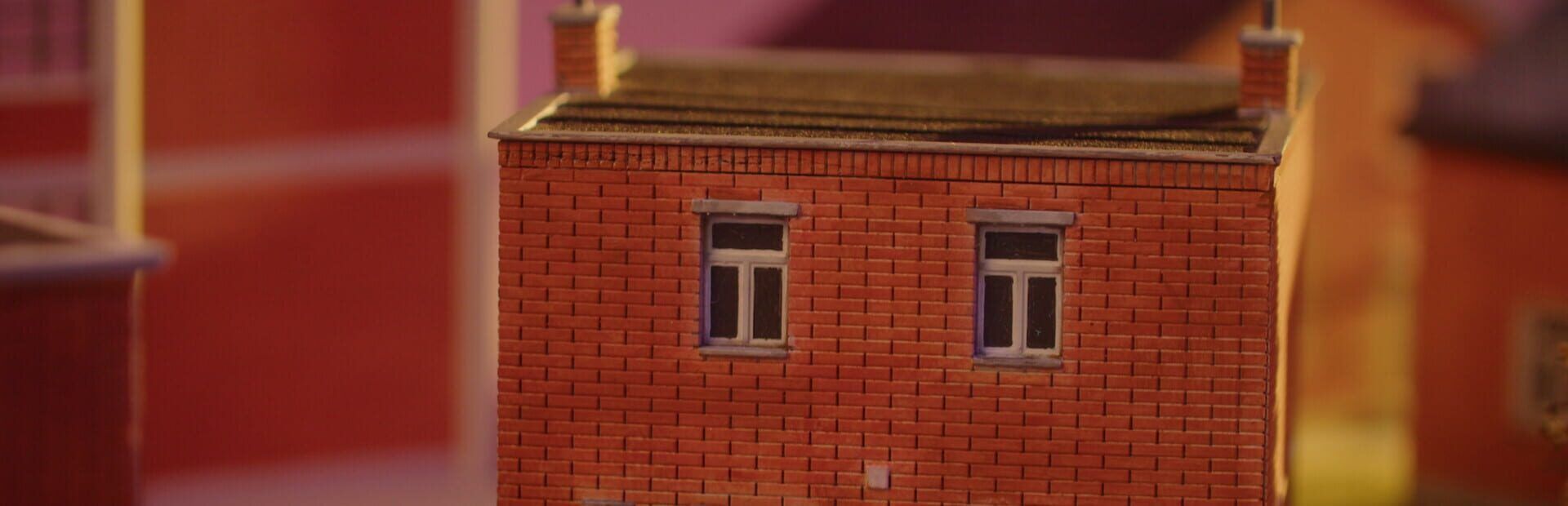
Zlin City: Arch Moderna is a city builder that first exists on a workbench before it ever appears on your monitor. Developer polyperfect is literally printing, gluing and painting tiny buildings, then scanning them into Unreal Engine 5 to form a digital city that still looks like it could be sitting on a plywood tabletop.
For a genre usually defined by efficient pipelines and infinitely tileable assets, that choice gives Zlin City an identity the moment you see it. But the physical process is only half of what makes it interesting. The game also draws heavily from the real Czech city of Zlín, whose interwar functionalist architecture and tightly planned factory town layout shape how you build, expand and even think about success.
This is a preview based on early information, trailers and hands off coverage, so details may change. What is already clear is that Zlin City is trying something unusual: a cozy, small scale city builder that cares less about conquering maps and more about the feel of a single, lived in place.
A city that starts as plastic and paint
Most games fake miniatures with shaders and depth of field. Zlin City does it the hard way. The team designs buildings as physical models, produces them via 3D printing, then hand paints and assembles them like traditional scale kits. Those pieces are arranged into tiny districts, weathered and detailed until they read like a real tabletop model.
Only then are they captured with photogrammetry. That process involves taking a dense set of photos from every angle, reconstructing them as high resolution 3D meshes, and baking all the tiny surface variations into textures. Glue smudges, brush strokes, uneven edges and slight warping survive the trip into Unreal. Instead of being cleaned up, those flaws are the point.
In motion, the result looks less like a glossy digital cityscape and more like something you could bump with your elbow. Roofs have just a bit of wobble, paint colors shift subtly from building to building, and streets have the slight fuzziness of cardboard edges. It is strongly reminiscent of model railway layouts and old stop motion sets, and it immediately sets Zlin City apart from the sterile perfection of many modern strategy games.
The trade off is obvious. This is never going to be a game about endlessly repeating the same generic tower until your skyline looks like a sci fi wallpaper. Asset variation is limited by what the team can physically build, paint and scan. Rather than fight that constraint, Zlin City leans into it. Districts are smaller and more curated, so that each printed block can be distinct and recognizable.
How Zlín’s real urban plan shapes the game
Under the cozy surface is a very specific inspiration. Zlín was a company town for the Baťa shoe empire, planned aggressively in the 1920s and 30s around modernist principles. Housing, factories, transport and green spaces were laid out in rational, repeated grids that promised order and efficiency.
Zlin City channels that history directly into how you play. Instead of abstract generic zones, you are encouraged to think in terms of industrial districts, standardized housing blocks and clearly separated civic spaces. Factory complexes want their own neatly organized plots, rail lines prefer gentle curves and straight connectors between hubs, and housing is designed as repeating but carefully placed modules.
The game also folds in historic milestones from Zlín’s development. Early information points to scenarios that nudge you through interwar expansion, industrial growth and the social ambitions of a planned company town. Decisions about where to place worker housing, how close it should sit to production lines, and how much green space you carve out are all tied to that real world context.
It is not trying to be a one to one reconstruction or a stiff historical sim. Instead, Zlin City uses Zlín’s blueprint as a kind of narrative and mechanical spine. The buildings you place are fictionalized cousins of real functionalist blocks, the tram routes echo actual Czech rail lines, and event text calls back to industrialization, labor shifts and architectural experiments from the period.
That grounding matters. Many cozy city builders float in a vague storybook Europe without ever saying where they are. Here, the mix of historical cues and specific architecture gives the miniature diorama something to latch onto. When you zoom in on a row of identical brick houses or a stern glass fronted factory, it feels like part of a real place with a timeline, not just a pretty collection of props.
Small cities by design, not by limitation
Most modern city builders sell you on scale. Maps stretch to the horizon, populations climb into the millions, and the endgame is usually a battle with traffic overlays and CPU usage. Zlin City goes the other way. It is built explicitly for small scale urbanism, where a single neighborhood can be a satisfying project and a handful of rail lines feel like a complete network.
The diorama format almost demands this approach. A layout that looks perfect as a physical board would feel empty if stretched to cover an entire continent. By embracing compact cities, the game can keep every inch dense with detail. A few warehouses by the tracks tell a more legible story than an abstract logistics sprawl.
That design choice also influences the pacing. You are not racing to unlock skyscrapers or hit arbitrary population caps. Progress appears to come from refining and connecting small modules: getting a tram loop to thread cleanly through a factory district, aligning rows of housing with shared courtyards, or nudging a rail yard until it looks like something you could photograph for a hobby magazine.
The planning challenge becomes one of composition rather than conquest. You are more curator than mayor, concerned with how each block sits in relation to its neighbors. When growth does happen, it is more like adding another board to a model railway than sprawling to swallow an entire region.
Where it fits in a crowded genre
The city building and strategy space is full right now. You can chase realism in Cities: Skylines 2, explore survival logistics in Frostpunk and its imitators, or relax with cozy, low pressure fare like Dorfromantik and Townscaper. Zlin City has to do more than look nice on a Steam page to get noticed.
Its first advantage is the unmistakable visual identity. Plenty of games brand themselves as cozy and diorama like, but few are built out of actual dioramas. That difference is more than a marketing bullet point. The imperfections of the scanned models create a kind of visual noise that our brains associate with physical objects, which makes screenshots and trailers instantly readable.
The second is its historical focus. Zlín’s specific architecture and story separate it from the generic medieval, fantasy or anonymous modern settings that dominate the genre. If the game leans into that with well written events, tooltips and scenario framing, it could scratch the same "learn a bit of real history while you play" itch as titles like Workers & Resources: Soviet Republic, but in a much more relaxed package.
The biggest question mark is depth. Cozy city builders sometimes struggle to hold attention once the novelty of their presentation wears off. Zlin City’s small scale planning is promising because it naturally suggests clear constraints and interesting spatial problems. Tight plots, pre formed blocks and deliberate rail geometry can all make for satisfying optimization puzzles.
If polyperfect can layer meaningful simulation under the toy like surface, the game could sit comfortably between deep management sims and purely aesthetic toys. Detailed citizen needs, supply chains, or time based scenarios rooted in Zlín’s historical phases would all help keep the planning engaging without overwhelming players who are here for the diorama vibe.
A promising niche for players who love cities as objects
Zlin City: Arch Moderna is not trying to be your forever city builder. It reads more like a love letter to a specific city, a specific era of architecture and the tactile joy of miniatures. You are not building megacities as much as crafting a series of lovingly arranged boards that happen to simulate citizens, trains and daily life.
That might be exactly what the genre needs. In a landscape crowded with bigger, more complex, more systems heavy strategy games, a title that narrows its scope to one carefully modeled place, grounded in real history and realized through actual glue and paint, has room to stand out.
Whether it can turn that strong identity into long term engagement will depend on how smartly it uses Zlín’s real world blueprint and how satisfying its small scale planning loop feels after a few hours. But from what we have seen so far, Zlin City already earns attention simply by existing somewhere between tabletop model and digital city, and by treating urban planning as both a puzzle and a craft project.