
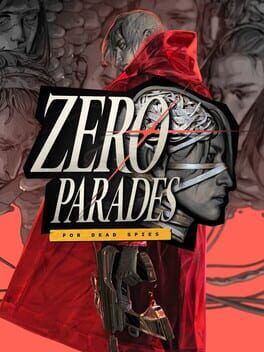

With a May 21 PC release date and a moody new trailer, Zero Parades: For Dead Spies positions itself as a spiritual follow up to Disco Elysium. Here is what the footage tells us about tone, mechanics, and how much of Disco’s audience it might realistically win over.
ZA/UM Steps Back Onto The Stage
Zero Parades: For Dead Spies now has a date: May 21 on PC via Steam, Epic, and GOG. For most RPG fans that would just be another exciting release to pencil into the calendar. For ZA/UM, it looks more like a referendum.
This is the studio’s first new game since Disco Elysium, arriving after years of public legal disputes and the departure of many of that game’s most visible creators. The announcement coverage from GameSpot, GamingBolt, and TechRaptor all lean on the same framing: Zero Parades comes from the studio behind Disco Elysium, but not the exact same creative brain trust.
That makes May 21 less about a simple launch and more about whether ZA/UM can prove that the style, density, and strangeness of Disco Elysium can survive a turbulent changing of the guard.
A New Kind of Collapse
The release date trailer leans into espionage paranoia and personal ruin rather than Disco’s hungover cop noir. You play as Hershel Wilk, codenamed CASCADE, a brilliant but wrecked operant dragged back for one final assignment after a catastrophic failure. Portofiro, a tense city state at the brink of a three way ideological and cultural clash, becomes the new Revachol: a pressure cooker of competing powers, where every conversation feels like a wiretap waiting to happen.
Visually, the trailer and early gameplay footage keep the painterly isometric framing, but trade Disco’s crumbling urban surrealism for brutalist safehouses, harborside fog, and dimly lit bureaucratic offices. It is still stylized and strange, but this is a world of briefcases, dossiers, and coded language rather than union banners and cryptids. Where Disco Elysium opened with a primal scream from the void, Zero Parades opens on hushed voices in cold rooms.
Tonally, the writing samples in the trailer sound dense and literary, but a little more focused on classical spy fiction rhythms. There are hints of gallows humor and self loathing, yet the vibe is more slow burn thriller than ardent existential spiral. If Disco Elysium was about a man collapsing under history, Zero Parades positions itself as a spy trying to thread a path through it.
Dice, Exertion, And The Cost Of Being A Spy
Mechanically, the new footage confirms what the previews have been suggesting: this is still a dialogue driven CRPG built on skill checks, but the designers are layering in new systems tied to the specific anxieties of espionage.
The core of it still revolves around checks where you roll dice against your skills, but the trailer and subsequent coverage talk about an Exertion system. You can push yourself to roll an extra die, improving your odds in a crucial moment, but at the cost of damaging invisible pressure bars like Anxiety or Fatigue. Failures do not simply block progress. Much like Disco Elysium’s “fail forward” philosophy, they splinter the story, opening up new complications, humiliations, or improvised opportunities.
What gives Zero Parades its own mechanical identity is how those resources are framed. You are not just misusing your body and mind the way Harry did in Disco. You are carefully burning your cover, fraying contacts, and running down your ability to keep lying effectively. The trailer shows tense standoffs, interrogation style scenes termed Dramatic Encounters, and quiet investigative walks across the docks of Portofiro, all punctuated by on screen dice clacks and cascading internal readouts.
Previews also reference new stats beyond simple health and morale, such as delirium, anxiety, and other mental or emotional conditions that fluctuate as you press your luck. That plays directly into the fantasy of an agent whose most dangerous opponent is their own fraying psyche.
How Much Of Disco’s Audience Can It Actually Capture?
The marketing leans heavily into the “from the creators of Disco Elysium” line, but the reality is messier. Coverage around the release date makes a point of underlining that many original leads, including writer Robert Kurvitz and artist Aleksander Rostov, are no longer with ZA/UM. For many players, Disco Elysium is synonymous with those names as much as with the studio’s logo.
Realistically, that splits the potential audience into at least three camps.
There is the broad group of Disco players who mainly remember an extraordinary story driven RPG. The trailer’s familiar isometric viewpoint, wordy skill checks, and dense dialogue should be enough to bring a sizeable portion of them back, provided the reviews say the writing holds up.
Then there are the fans who closely followed the legal battles and studio turmoil and strongly associate Disco Elysium with the departed team. Some of them will show up purely out of curiosity, to see what ZA/UM looks like without its original public faces. Others may ignore Zero Parades altogether on principle. It would be unrealistic to expect the game to capture all of them.
Finally, there is the audience that never quite clicked with Disco but is hungry for espionage fiction in games. The spy fantasy, with its dossiers, false identities, and moral gray zones, has a broader pull than “amnesiac alcoholic cop in a failed revolution.” If Zero Parades is marketed well outside the immediate Disco orbit, it could reach players who bounced off the earlier setting but are ready for a slower, talky spy thriller.
Taken together, Zero Parades is positioned to capture a meaningful slice of Disco’s audience rather than its entirety. Its ceiling is high, but a perfect one to one handoff is unlikely, both because of the changed creative roster and because the new game’s thematic focus is more grounded.
Voice Acting: Carrying The Weight Of Paranoia
One of the most striking elements of Disco Elysium’s Final Cut was the sheer volume and quality of voice work, especially the inner voices in Harry’s head. The release date trailer for Zero Parades suggests a different emphasis.
We hear Hershel’s voice in muttered asides and barbed exchanges, along with a small handful of supporting characters. The delivery leans toward low key, controlled, and guarded, which fits the idea of a professional trying very hard to keep their inner turmoil just below the surface. Instead of a chorus of personified thoughts constantly bickering, Zero Parades seems to favor fewer, better defined internal and external voices, each cutting in at measured moments.
This is where the game faces a tricky balancing act. If the performances are too subdued, the emotional texture could flatten into monotone seriousness, especially across dozens of hours of conversations. But if they swing too broad or theatrical, the delicate spy thriller tone collapses into camp.
For anyone watching the launch closely, keeping an ear on how varied and flexible the VO feels across early hours will be key. Are there subtle shifts as Hershel grows more desperate or more compromised? Do recurring NPCs sound distinct enough to carry entire questlines through dialogue alone? Those questions will matter as much as framerate or bugs.
Writing Under A Giant Shadow
Writing is where the comparison to Disco Elysium will be sharpest. The trailers and previews show a script that is still verbose and metaphor rich, but not trying to simply imitate the earlier game’s intoxicated, baroque style.
The setting of Portofiro helps. Whereas Revachol felt like a monument to failed revolution and decaying ideology, Portofiro comes across as a place defined by surveillance and soft power. Conversations carry layers of implication about whose side you are on, what you are willing to trade, and how much of your past you can afford to reveal. Ideology is still present, but refracted through the lens of intelligence agencies and international maneuvering rather than street level politics.
Expectations should be calibrated accordingly. If you go in looking for the exact flavor of Disco’s Thought Cabinet monologues, you may be disappointed. But if the promise of a dense, reactive web of intrigue, with multiple factions and competing worldviews shaped through dialogue, appeals to you, Zero Parades is lining up to deliver its own kind of literary RPG.
Launch Expectations: Cautious Optimism On May 21
The PC only launch on May 21 is deliberately contained. ZA/UM is focusing on Windows storefronts first, likely with an eye toward stability and rapid patching before any potential console versions appear later. That should temper expectations around sheer scale, but it also puts more pressure on the state of the build at release.
Given the company’s turbulent recent history, Zero Parades cannot afford a messy technical launch. Disco Elysium built its reputation on writing and structure, not graphical spectacle, and players will likely extend the same grace here, as long as save corruption, memory leaks, or major progression bugs are not part of the conversation.
What you should watch for on day one is straightforward. Early impressions of performance across a range of PCs, especially low to mid range hardware, will signal how stable the foundation is. Reactions to the first few hours of writing, particularly the introduction of Hershel and Portofiro, will hint at whether ZA/UM has found a new voice instead of chasing its own legend.
More than anything, the game will be judged on whether it feels like a natural evolution of the studio’s strengths or a hollow imitation of a masterpiece it can never quite escape. The new trailer, with its brooding docks, tense interrogation rooms, and crackling dice rolls, suggests a team trying to stake out fresh territory within a familiar framework.
On May 21, we find out whether Zero Parades: For Dead Spies is the start of ZA/UM’s second act or simply a footnote to Disco Elysium’s towering legacy.