
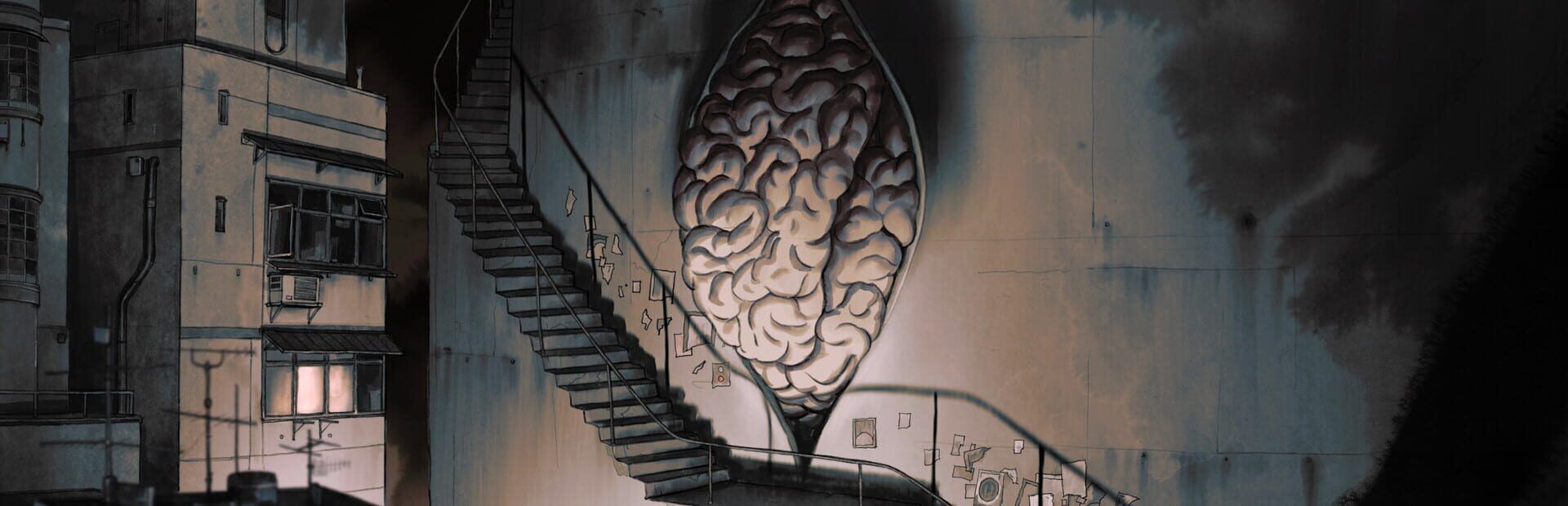

ZA/UM’s spy-thriller RPG cannot escape comparisons to Disco Elysium, but its espionage framing, political focus, and cascading choices show a studio wrestling with its own legacy as much as with its scandals.
ZA/UM was never going to make a follow up to Disco Elysium without dragging a storm in behind it. Zero Parades: For Dead Spies arrives after years of public legal disputes, accusations about who really authored Disco Elysium’s success, and deep mistrust around the studio’s leadership. At the same time, critics have met Zero Parades with near-uniform respect, often landing on that same 8/10 sweet spot. The tension between those two realities is baked into the game itself.
Zero Parades is a work about institutions that hollow themselves out while keeping the brand intact, about secret services that run on myth long after the true believers are gone. It is hard not to read that as ZA/UM processing its own reputation while building a game that is structurally, visually, and mechanically inseparable from Disco Elysium.
A spy thriller that starts where Disco Elysium left off
You wake in a grimy room, disoriented, next to a body that may as well be a mirror. For Harry Du Bois it was a hangover and a corpse. For Hershel Wilk, codenamed Cascade, it is the aftermath of a blown espionage operation and a partner whose fate defines the mystery to come. Zero Parades makes no attempt to hide that it is echoing Disco Elysium’s iconic opening, but it bends that structure toward paranoia instead of failure.
Disco Elysium was about piecing together the past of a ruined cop and a ruined city. Zero Parades is about surviving the present tense of a spy network already in freefall. Portofiro, the new setting, replaces the post-revolution sprawl of Revachol with a coastal city caught between a communist superstate and a techno-fascist empire. The city is saturated with propaganda, conspiracy media, and imported culture, all of it reflecting a world that has supposedly reached an “end of history” but cannot stop staging ideological reruns.
That genre shift matters. Where Disco Elysium leaned into existential hangover noir, Zero Parades leans into John le Carré: tradecraft, cut-outs, burn notices, and the creeping realization that the service you work for is perhaps the least trustworthy presence in the room. It is less about solving a murder and more about deciding what kind of spy, and what kind of subject, Cascade will be in a system that eats its own.
Political tone in the shadow of a scandalized studio
Disco Elysium’s politics were front and center and proudly combative. It was an RPG that asked you outright what you believed about communism, fascism, liberalism, and the grinding reality of neoliberal decay. Zero Parades carries that same instinct for ideological argument, but it wraps it in the language of intelligence work and information control.
Reviews consistently describe Portofiro as a city built from competing fictions. State media, foreign influence campaigns, black market broadcasters, and culture industries are all trying to rewrite the same reality in their own image. Cascade’s work is not just to gather intelligence but to choose which version of the truth will be allowed to stick. The espionage framing lets ZA/UM ask a new angle on familiar questions: if power is mostly about who controls the narrative, then what does it mean to be a professional liar inside a world already drowning in managed realities?
This is where the controversy around ZA/UM and the political tone of the game collide. Rock Paper Shotgun calls Zero Parades a “spirited interrogation of fake culture,” a phrase that could just as easily describe the public perception of a studio accused of turning real creative labor into a brand it no longer embodies. When the game digs into hollow institutions coasting on their own myth, or spies who are more invested in preserving a legend than telling the truth, it is nearly impossible not to project ZA/UM itself into the frame.
Unlike Disco Elysium, which delighted in giving players explicit ideological skill checks and entire internal monologues built from political theory, Zero Parades is more ambivalent. It still carries the scars of revolution and authoritarianism, but its main target is a culture where everything, including resistance, is processed as aesthetic. As critics note, Portofiro’s politics feel designed to mimic how we experience geopolitics now: through stylized feeds, aestheticized dissidence, and carefully curated leaks. The game’s anger is quieter, filtered through tradecraft, but it is still unmistakable.
Cascading choices and the evolution of the Disco formula
Mechanically, Zero Parades is very nearly a reprise of Disco Elysium. There is still no combat in the traditional RPG sense. You move through an isometric cityscape, click through conversations, and let skill checks decide whether you talk, think, or bluff your way forward. Internal voices still cut across Cascade’s consciousness, offering commentary and nudging you toward certain interpretations.
The crucial evolution is how Zero Parades treats failure and pressure. Skills are grouped into three faculties: Action, Relation, and Intellect, each bound to a form of strain: Fatigue, Anxiety, and Delirium. You can “exert” Cascade to gain an extra die on crucial checks, at the cost of pushing those stress tracks toward collapse. Failures and breakdowns do not close doors so much as they reroute the mission into stranger alleys.
Critics describe this as a system of cascading choices, where a bad roll produces new leads or unexpected allies instead of a dead end. In practice, that fits the spy fiction far better than Disco Elysium’s detective story frame. Espionage is about improvisation inside constraints, about missions that drift wildly away from the original brief but still somehow land on useful intelligence. When a lie goes sideways in Zero Parades, it often reveals more about the city than perfect success would have.
At the same time, the game does inherit some of Disco Elysium’s growing pains. Reviews repeatedly call out the internal “skill voices” for feeling flatter and less distinct than Harry’s famous chorus of Inland Empire, Authority, and Electrochemistry. Where Disco’s psyche felt like a bickering writers’ room trapped in a single skull, Cascade’s faculties sometimes blur into a shared register. The result is a protagonist whose interiority is more subdued, perhaps appropriate for a trained operative, but also less explosively memorable.
That relative restraint, though, matches the game’s larger design. Zero Parades wants to be reactive and systemic in a way Disco Elysium only gestured toward. Portofiro’s interconnected quests, NPC networks, and overlapping investigations underline the idea that every operation is part of a larger web. If Disco Elysium was a character study that happened to sit inside a city, Zero Parades tries to be a full dossier on an entire political ecosystem, with Cascade as only one of many agents moving through it.
Bootleg Disco Elysium or deliberate self interrogation?
Rock Paper Shotgun’s phrase “bootleg Disco Elysium” hangs over almost every critical discussion of Zero Parades. The interface looks familiar, the perspective and painterly art style return, the structure of waking up as a mess and clawing back your purpose is nearly identical. To a lot of players, the similarities will feel uncomfortably close.
There are moments where that sense of imitation is hard to shake. Several reviewers point out surreal or comedic beats that land as if they are there because Disco Elysium did it, not because Zero Parades needs them. Where Harry’s conversations with his tie or his doomed inner communist felt like genuine risks taken by a team with nothing to lose, Cascade’s stranger episodes sometimes read as a studio replicating its own quirks.
Yet the spy framework pushes the team to turn that imitation back on itself. Zero Parades is obsessed with counterfeits, with bootlegs, with fake culture replacing the real thing until the fake is all that is left. In that light, looking like Disco Elysium is not only a commercial calculation but a thematic move. You are playing something that feels like a copy of a modern classic in a world overflowing with copies of everything. The discomfort becomes part of the text.
This is where the divide between the controversial studio and the well received game sharpens. Zero Parades has been praised for its writing, its quest design, and its willingness to let disaster be a valid route through the story. At the same time, players and critics are arriving with a backlog of lawsuits, public statements, and open letters in mind. It is not possible to separate the art from the conditions of its production, especially when the art is fixated on compromised institutions and stolen narratives.
What saves Zero Parades from feeling like pure appropriation, at least for many reviewers, is its willingness to sit with that discomfort rather than pretend the lineage is clean. It is both a continuation and a critique of the formula that made ZA/UM famous, a game that asks what a spy story looks like after everyone has already read the file.
Living with, not outrunning, Disco Elysium
Zero Parades: For Dead Spies does not topple Disco Elysium from its pedestal, and it rarely seems interested in trying. Instead it accepts that any new ZA/UM RPG will be compared to that earlier lightning strike and asks what it would mean to build inside that shadow rather than outside it.
Through Portofiro’s tangled politics, its emphasis on information as a weapon, and its cascading, failure-friendly choice design, Zero Parades feels like a studio arguing with both its own legacy and its public record. The critical response reflects that nuance: respect for the craft, unease about the context, and a recognition that this is not a clean sequel but a messy, potent echo.
Disco Elysium was about staring directly at the wreckage of history and personal failure. Zero Parades is about operating inside that wreckage with your eyes half open, choosing which lies to uphold and which truths to leak. It may never step out of Disco Elysium’s shadow, but it does something more interesting. It teaches you how to navigate the shade.