
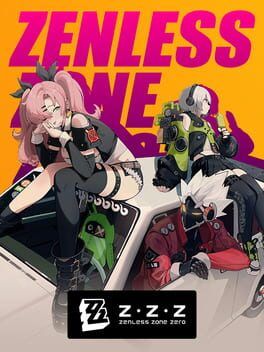
HoYoverse used The Game Awards 2025 stage to unveil dual‑form Agent Ye Shunguang, spotlight rabbit‑eared Agent Zhao in combat, and tease the sinister Angels of Delusion faction. Here’s what those reveals might mean for Zenless Zone Zero’s future combat meta, team comps, and story arcs.
Zenless Zone Zero walked onto The Game Awards 2025 stage with a trailer that was short but loaded with implications. HoYoverse finally showed real gameplay for Ye Shunguang, unveiled new Agent Zhao in proper combat, and closed with a sharp tonal swerve into a first look at the Angels of Delusion faction.
For a live service action RPG that already leans heavily on synergy between agents, elements, and swap timing, every big new character reveal nudges the meta. This package looks like much more than a simple banner rotation. Ye’s dual‑form kit, Zhao’s niche, and a faction that appears built around deception and distortion together hint at a future where current “safe” comps might start to feel outdated.
Ye Shunguang: Zenless Zone Zero’s First Dual‑Form Agent
The headline reveal is Ye Shunguang, introduced in the trailer as a Void Hunter and the game’s first dual‑form agent. That single label suggests a lot for how she might play.
The footage cuts between two clearly distinct combat stances. In one, Ye moves with quick, close‑range slashes and agile dodges that resemble a conventional melee DPS. In the other, her animations slow and widen as purple‑tinted effects and void‑like distortions fill the arena, implying a heavier, more control‑focused mode.
Even without a full kit breakdown, that visual language points to a character who can pivot on demand between burst damage and battlefield control. Current Zenless Zone Zero play leans on clean role separation, where your stun applier, main DPS, and support rotate in a predictable pattern. A dual‑form agent threatens that rhythm by compressing roles into a single slot.
If Ye brings a stance swap on a short cooldown, she could erase the need for a second offensive slot in many teams. Instead of building around a dedicated breaker and a dedicated carry, players might run Ye as an all‑in hybrid supported by two strong buffers or defensive specialists. That kind of shift would make current double‑DPS compositions feel overly rigid.
The animation emphasis on void distortions also ties directly into her Void Hunter title. It seems likely Ye will interact with anomalies or corrupted space in some way, perhaps gaining bonuses when enemies are affected by new Delusion‑style debuffs. That would make her not just a stat stick but a bridge between today’s Hollow‑centric combat and whatever warped mechanics the Angels of Delusion bring in future patches.
Zhao’s Combat Role: A Support Disguised as a Mascot
Next up in the trailer is Zhao, the small, rabbit‑eared agent who has floated around in fan circles for months but finally gets a meaningful spotlight. HoYoverse leans into her cute, mascot‑coded design, yet the actual gameplay clips look more technical than comedic.
In battle, Zhao appears to drop gadgets or sigils that linger on the field. Enemies that wander into their radius are either pulled, slowed, or marked, while allies gain subtle buffs during her camera cuts. The effect density in those scenes suggests she will not be a pure damage dealer. Instead, she is shaping up as a utility‑heavy support or sub‑DPS who manipulates positioning and timing.
Current live teams often run a straightforward trio: one hypercarry, one breaker or sub‑DPS that feeds stun, and one buffer or healer. Zhao’s kit looks like it could encourage more experimental control‑focused builds. If her deployables can cluster mobs or delay elite attacks, she naturally pairs with agents who benefit from stacked hitboxes and reliable windows for their big chains.
Her small frame and quick, hopping movement also make her look like a natural dodge‑reset specialist, someone you tag in when you need to burn through a boss’s pattern without losing tempo. That kind of role is scarcely explored in the existing roster, which is why Zhao stands out. Rather than fighting for the main DPS slot, she could carve out a new identity as a tempo controller that keeps your key actions lined up with enemy vulnerability.
Angels of Delusion: A Sweet Shell Around Something Sinister
The trailer saves its most intriguing tease for last. After Ye and Zhao get their time in the spotlight, the tone shifts. Color palettes soften and then fracture, character silhouettes framed in bright, almost idol‑like lighting, while the narration and title card make it clear this is something darker than the sugary presentation suggests.
The Angels of Delusion are only barely shown, yet everything from the name to the framing screams double life. These are characters and foes that look disarmingly pleasant yet hint at reality‑warping powers and moral ambiguity. For a game that already revels in urban style and secret underworlds, they feel like a natural next step.
From a combat design standpoint, “Delusion” practically begs for mechanics that distort standard rules. You can imagine enemies that split into mirrored copies, debuffs that invert controls or timing windows, and boss phases where safe zones and danger zones constantly swap. Even if HoYoverse reins in the more frustrating possibilities, it is clear they want combat to become less about rote memorization and more about adaptation.
For the story, the Angels present a faction that is likely embedded in the city’s entertainment or influencer scene, projecting an image of purity while quietly exploiting the hollows for their own gains. Their presence could push the narrative into heavier territory as existing agencies and street crews are forced to decide whether to ally with them or expose them.
That duality lines up neatly with Ye’s dual‑form identity and Zhao’s deceptive appearance. The entire TGA 2025 package seems focused on blurring clear‑cut categories and asking players to adapt to characters and enemies that operate in more than one mode.
How These Reveals Could Reshape Team Compositions
Looking at the current live meta, most effective teams still conform to a familiar template. You run a main damage dealer whose kit is built around a specific damage type, a breaker or secondary DPS tuned for rapid hits or high stun output, and a third slot that flexes between healing, shielding, or basic buffs. The strongest comps are usually the ones that align element and faction synergies while covering all three roles.
Ye Shunguang directly challenges that framework. If her dual forms independently excel at burst and control, she compresses two jobs into one. Instead of pairing a traditional breaker with a carry, players might turn Ye into a self‑contained offensive package supported by:
A high‑value buffer who amplifies both of her stances at once, and a defensive or tech‑heavy agent whose job is to keep enemies in the right spot and Ye alive long enough to cycle her forms.
Even without seeing exact cooldowns, this sort of slot compression historically leads to meta shifts in similar action RPGs. Players gravitate toward characters who free up team space. Ye’s presence could push older, single‑purpose DPS units into more niche roles where they excel only in specific boss fights or challenge stages.
Zhao, meanwhile, feels like the missing piece in a control‑centric archetype. If her gadgets can group enemies or stall their actions, she becomes the ideal partner for agents who need tightly clustered targets to land their highest value skills. Imagine Ye swapping into her heavier, void‑charged stance while Zhao’s traps keep enemies inside a small damage zone. That synergy is exactly the sort of interaction HoYoverse designers like to reward.
Her likely flexibility as a sub‑DPS or pure support also gives breathing room to players who want more defensive security. Instead of feeling forced into a fragile three‑DPS race, teams could adopt a more technical composition built on control chains and safe punish windows. In practice, that would mean longer fights but lower risk, a playstyle that often appeals to mobile players who deal with inconsistent inputs or latency.
Finally, the Angels of Delusion hint at an upcoming wave of content that will punish static, inflexible squads. If their enemies toy with positioning, perception, and timing, teams that rely on a single scripted rotation might struggle. In contrast, lineups that can quickly swap forms, adapt to crowd control, or rebuild their setup mid‑fight will shine.
That is where Ye and Zhao naturally fit. A dual‑form carry supported by a dynamic controller is exactly the sort of party that can deal with enemies that refuse to stand still or follow familiar patterns. Once Angels of Delusion units start headlining events and boss rotations, expect the meta discourse to pivot toward adaptability and mid‑fight role shifting.
Story Arcs and Thematic Future
Beyond numbers and rotations, The Game Awards trailer also gestures at where Zenless Zone Zero’s story is headed. Up to now, the narrative has focused on the tension between everyday city life and the existential threat of the hollows. Ye Shunguang, with her explicit Void Hunter identity, looks like a character who lives in that tension every day.
Her dual nature hints at a personal narrative built around sacrifice and compartmentalization, someone who must constantly toggle between civilian self and hunter self. That plays neatly against Zhao, whose playful exterior hides a deeply technical, perhaps morally grey toolkit. Together they mirror the Angels of Delusion themselves, who likely present a polished, marketable face while entangling the city in deeper, less visible risks.
Future arcs might explore how these agents and factions manipulate public perception. Are the Angels selling safety while quietly escalating hollow incidents behind the scenes, or are they a misguided attempt to weaponize delusion as a protective force? The trailer does not answer those questions, but the framing suggests that upcoming chapters will dig into propaganda, curated personas, and the cost of living in a city that survives by ignoring the horrors at its edge.
For players, that blend of stylistic flair and creeping dread is exactly what made Zenless Zone Zero stand out at launch. The Game Awards 2025 showcase does not reinvent that formula, but it does sharpen it. Combat is leaning toward flexibility and layered roles, while the story aims to undermine the comfort of clear heroes and villains.
Looking Ahead
In practical terms, the TGA 2025 trailer means roster planning just got more complicated. If you are hoarding currency, Ye Shunguang looks like a safe long‑term investment, the type of dual‑role unit that can anchor several different team styles. Zhao, by comparison, seems destined to become a favorite of players who enjoy technical setups and precise timing.
And the Angels of Delusion are the wild card. Their eventual arrival as enemies, story drivers, and potentially playable agents will likely usher in a phase of combat where delusion and distortion are not just aesthetics but mechanical pillars. Teams that adapt early, experimenting with flexible roles and control‑heavy builds, will probably find themselves ahead of the curve when that future finally materializes.
For now, all we have is a trailer and a tease. But taken together, Ye, Zhao, and the Angels of Delusion sketch a clear direction for Zenless Zone Zero: a future where the strongest agents are the ones who can be more than one thing at once.