
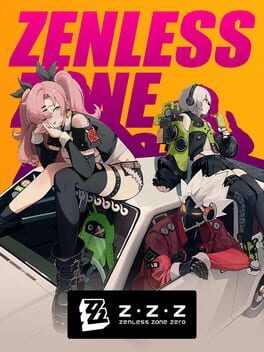

A deep‑dive look at Zenless Zone Zero Version 2.6 “Encore for an Old Dream,” breaking down who the Angels of Delusion are, how the interlude structure reshapes the story flow, and why the new idol‑management and event systems push HoYoverse further into slice‑of‑life live‑service design.
A New Kind of Holiday Special
Zenless Zone Zero Version 2.6, “Encore for an Old Dream,” is HoYoverse’s most overt step yet toward turning New Eridu into a lived‑in, always‑on city rather than just a hub between boss fights. Instead of a straight continuation of Season 2, 2.6 is framed as an interlude: a holiday‑themed return to Sixth Street during the Gilded Carrot Day festivities, with the spotlight on the long‑teased idol faction Angels of Delusion.
That framing matters. Earlier arcs in Zenless have followed a clear escalation, moving through serial Hollow incidents, faction politics, and big seasonal climaxes. “Encore for an Old Dream” pauses that escalation. It pulls the camera back from world‑ending stakes and asks you to do something surprisingly mundane for a Hollow‑hunting Proxy: help an underground idol group survive their debut.
Who Are the Angels of Delusion?
Angels of Delusion, or A.O.D., have floated around Zenless Zone Zero’s lore for a while as a virtual‑idol faction occupying the hazy border between real‑world performers and digital avatars. Version 2.6 finally drags them fully into the spotlight, turning what used to be background flavor into the centerpiece of the patch.
Lore‑wise, A.O.D. are framed as an underground idol unit built on dreams, parasocial devotion, and the promise that they will “reunite in the delusions of dawn” with their fans. They are not corporate pop stars with pristine image control. They are scrappy, slightly dangerous, and deeply entangled with New Eridu’s virtual culture, which always had one foot in Hollow‑generated unreality.
Two of their members become playable in 2.6: Sunna and Aria.
Sunna functions as the squad’s backbone, a support‑leaning S‑Rank who leans into control and team buffing. In combat she is pitched as the idol who keeps the stage under control, enabling the rest of the group to shine. Narratively she feels like the one who understands the grind behind the dream, and that reads cleanly through her emphasis on setups, amplification, and coordination.
Aria is the face. She is the lead vocalist whose entire kit is built around switching forms and spiking damage when enemies are already suffering from anomalies. In mechanical terms she loves exploiting status, deleting weakened targets in short bursts. In story terms she is the point where the group’s performance fantasy collides with the danger of the Hollows, a literal star whose power only fully manifests when someone else has done the groundwork.
Wrapped around them are small touches that sell the idol fantasy without leaving Zenless’ urban‑fantasy tone behind. Their Bangboo support, Biggest Fan, exists as both a gameplay tool and a joke about obsessive fandom. Their stage identity, the covenant of “love and dreams” they keep repeating in trailers and PR, feels at once aspirational and a little unsettling, which fits a series where reality and entertainment are always overlapping.
An Interlude That Actually Feels Different
HoYoverse already has a template for “event patches” in its other games, but 2.6 tweaks the structure in ways that matter to Zenless’ pacing. Officially this is a Season 2 interlude chapter rather than a full new season, but it is denser and more character‑driven than a simple filler detour.
Instead of pushing deep into new corporate conspiracies, the main story takes you back to familiar ground on Sixth Street, layered over with Gilded Carrot Day decorations and festival energy. You are not the secret hero of New Eridu this time. You are backstage staff. The core loop trades the usual Proxy‑as‑problem‑solver angle for Proxy‑as‑support‑worker, giving the Angels’ story room to breathe without having to one‑up Season 2’s bigger arcs.
Structurally, the interlude hangs several systems off a central storyline rather than scattering isolated minigames around the city. Where earlier events felt like side attractions you dipped into between story quests, “Encore for an Old Dream” blends them into a single throughline about preparing for a debut show, surviving public reception, and dealing with the logistics of being an idol unit in a city that treats everything as content.
There is still combat, of course, including Hollow Zero updates and regular battle stages built to showcase Sunna and Aria’s team synergies. But pacing is noticeably softer. The narrative keeps circling back to rehearsal, preparation, and downtime instead of jumping from crisis to crisis. It is a holiday special in the literal sense, a seasonal check‑in with the city and its culture rather than a step toward a new cataclysm.
Becoming an Idol Manager by Accident
The real shake‑up in 2.6 is the idol‑management layer. The centerpiece event, “A Harmony of Delusions,” has you managing Angels of Delusion from behind the scenes. Official descriptions make it clear that Proxies will plan training schedules, handle social‑media interactions, and track the group’s growth, interspersed with rhythm‑game‑style performance segments.
On paper this sounds like a detached side mode, but mechanically it pushes against the traditional rhythm of a gacha ARPG patch in a few key ways.
First, planning matters. Training sessions, schedules, and fan‑engagement choices influence how well the group performs during stage sequences, which in turn affects event rewards and story beats. Instead of just burning resin‑equivalents and claiming a currency dump, you are choosing how to balance rehearsal, rest, and promotion. It is a light system rather than full‑fat strategy, but it introduces the idea that your relationship to an in‑game group is built over weeks of small choices, not just pulling them from a banner.
Second, social media is no longer just flavor text on the Inter‑Knot. A Harmony of Delusions turns those scrolling, diegetic feeds into a mechanic. You are deliberately amplifying posts, managing lives, and reacting to fan chatter to nudge group momentum. HoYoverse has been flirting with this kind of thing since Honkai’s in‑universe networks and Genshin’s mail‑based events, but 2.6 is more explicit about casting the player as a social‑media manager.
Third, performances are no longer just pre‑rendered cutscenes. The event uses rhythm‑game elements and timing‑based segments tied to Angel Assist bonuses unlocked through training. It is still accessible, but it treats concerts as something you participate in rather than just watch, which sells the idol fantasy far more effectively than passive cinematics.
It all fits snugly into Zenless’ UI and tone. You are still using the same terminals and urban‑chic menus, just repurposed for managing a girl group instead of a Hollow operation. It makes the world feel more flexible and more modern in a way straight dungeon events struggle to match.
Event Design as Slice‑of‑Life Infrastructure
Alongside the headline idol systems, 2.6 comes packed with the kind of festival content HoYoverse has been increasingly leaning on across its portfolio. There is the expected slate of combat challenges and resource events, but the big hooks are things like Inter‑Knot Membership giveaways, massive Polychrome lotteries, and multi‑week training campaigns that keep you logging in for small daily tasks.
The broad goal is familiar: make New Eridu a place you feel compelled to visit every day, even if you are not pushing high‑end Hollow Zero or chasing meta‑defining W‑Engines. In that sense, “Encore for an Old Dream” continues the transition of Zenless from a pure action showcase into a lifestyle game.
Login campaigns and lucky‑draw prize pools, especially the headline “4 billion Polychrome” pot touted in promotional material, are less about raw generosity and more about reinforcing that festival atmosphere. You are not just grinding for your own stash. You are participating in a citywide celebration where everyone theoretically has a shot at something big. The psychology is the same as a real‑world idol raffle, recontextualized into digital gacha economics.
Crucially, the event infrastructure is wrapped in character narratives. Training Angels of Delusion is not only a progress bar toward a free reward. It is a weekly check‑in with their anxieties, rivalries, and ambitions. Side activities fold back into dialogue rather than being mechanically siloed. Even Hollow content gets themed around the festival where possible, to keep the emotional tone consistent.
HoYoverse has already experimented with this style of event storytelling in its other titles, but Zenless’ dense, contemporary setting makes it especially effective. Sixth Street can change decorations, NPC dialogue, and ambient details patch by patch, so piling a full idol‑debut script on top feels natural instead of contrived.
HoYoverse’s Long Game: From Combat Game to Life in New Eridu
Stepping back, Version 2.6 illustrates where HoYoverse seems to be steering Zenless Zone Zero in the long term.
First, it validates the idea that interludes are not just filler. By using the interlude banner to debut a long‑teased faction and bake a full management sim into the event layer, 2.6 arguably does more to expand the game’s day‑to‑day identity than a conventional story chapter would have.
Second, it locks in slice‑of‑life as a pillar, not a garnish. Acting as event planner, scheduler, and social‑media wrangler for Angels of Delusion reframes what being a Proxy means. You are not just the person who dives into Hollows and saves the city at the last second. You are also the gig worker who keeps New Eridu’s idols on schedule. That mundane, grindy realism is what makes the festival feel lived in.
Third, it doubles down on live‑service continuity. Gilded Carrot Day is not just a one‑time party. It becomes a reference point the game can return to each year, with evolving characters and traditions. Angels of Delusion slot neatly into that plan as a recurring fixture, the kind of idol unit that can host future concerts, collaborations, and cross‑event cameos without needing new heavy lore justification every time.
Combat‑focused players still get what they came for: Sunna and Aria bring fresh team archetypes, Hollow Zero sees new layers, and the usual challenge ladders return. But the soul of 2.6 lives in the small things: juggling rehearsal times, refreshing feeds, checking in on nervous idols before a show.
If earlier seasons were about proving that Zenless Zone Zero can stand as a premium‑feeling action game, “Encore for an Old Dream” is about proving that New Eridu can carry a slice‑of‑life calendar. Angels of Delusion, fittingly, are the bridge between those two ideas. They fight in the Hollows at night and trend on the Inter‑Knot by morning, and Version 2.6 asks you to care about both.