
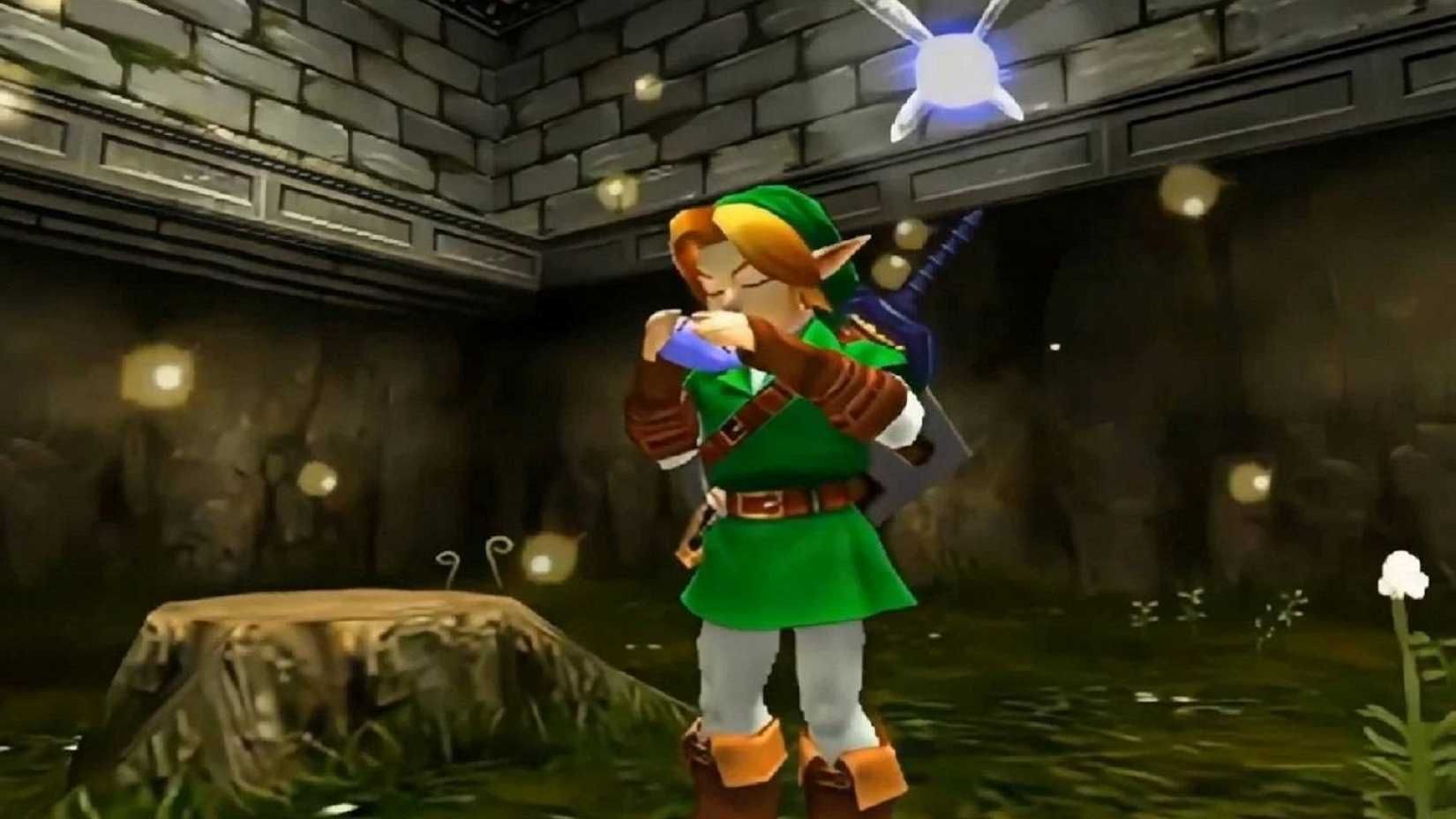

Nintendo’s US store page now lists an E10+ ESRB rating for The Legend of Zelda: Ocarina of Time on Switch 2. Here is what that suggests about timing, and what remains unconfirmed.
Image: cbr.com
A new rating appears while Nintendo stays quiet
The strongest new sign of movement on The Legend of Zelda: Ocarina of Time for Nintendo Switch 2 is now sitting on Nintendo’s own US store page: the remake is listed with an ESRB rating of E10+ for Everyone 10 and older, with “Animated Blood” and “Fantasy Violence” cited as content descriptors. Nintendo Everything, Nintendo Life, My Nintendo News, GoNintendo, Vice, and Nintendo Wire all spotted the updated listing after Nintendo’s brief June reveal left the game with little more than a 2026 window.
That creates the current tension around Zelda Ocarina of Time Switch 2. A ratings update is concrete, visible, and tied to the official Nintendo storefront, but it is still not the same as a release date, a gameplay blowout, a price, or a full technical breakdown. Nintendo Life notes that the rating was not live on the ESRB’s own website at the time of its report, even though the Nintendo store page was already showing it. Nintendo Wire framed the change as an ESRB rating appearing through the eShop listing and added Wayback Machine context, saying the page was still marked “RP,” or Rating Pending, on July 14, 2026, and had not clearly changed to E10+ in an archived July 22 capture.
For Switch 2 owners waiting on official details, that makes the Ocarina of Time remake ESRB listing meaningful without making it definitive. It suggests Nintendo has advanced the product page beyond placeholder status. It does not, by itself, reveal when players will step back into Kokiri Forest, how the remake handles the original’s combat cadence, or how far Nintendo is willing to rebuild one of the most scrutinized adventure games ever made.
The E10+ rating lines up with Ocarina of Time 3D, not the N64 box
The rating also clarifies which historical version of Ocarina of Time the new classification most closely resembles. Nintendo Everything points out that the 1998 Nintendo 64 release was rated E for Everyone, while The Legend of Zelda: Ocarina of Time 3D on Nintendo 3DS later received an E10+ rating. Nintendo Life adds an important caveat: E10+ did not exist until 2005, so the N64 rating is not a clean one-to-one comparison with modern ESRB categories.
The Switch 2 remake’s listed descriptors, “Animated Blood” and “Fantasy Violence,” place it in the same broad lane as Ocarina of Time 3D. That makes sense for a game built around sword strikes, monsters, boss encounters, and dark fantasy imagery, even if Nintendo has not shown enough of the remake to judge how those scenes are staged visually. The original game’s rhythm moves from childlike discovery to adult-world ruin, with enemies and dungeons growing sharper as Link crosses time. A modern remake can intensify lighting, animation, creature detail, and impact without necessarily changing the underlying rating category.
One detail is different. Nintendo Everything, Nintendo Life, GoNintendo, and Nintendo Wire all note that Ocarina of Time 3D’s ESRB classification included “Suggestive Themes,” while the Switch 2 store listing currently does not. That absence is confirmed only at the level of the visible Nintendo store-page descriptor. It does not prove Nintendo has cut or altered specific scenes, characters, designs, or dialogue. It could reflect revised presentation, updated classification language, a difference in the content submitted, or simply what appears on the current listing. Until Nintendo shows more footage or the ESRB publishes its own full listing, the missing descriptor is a signal to watch rather than evidence of a specific edit.
The timing signal is real, but it is not a launch date
The practical question is whether this Zelda Switch 2 remake is now close. The answer is cautiously yes, but only within limits. My Nintendo News argues that age ratings generally happen when development is nearing completion, and Vice similarly reports that an ESRB rating often suggests a game is within months of launch. Those are useful industry readings, especially with Nintendo’s page still pointing to a 2026 release window, but neither source can turn the rating into a calendar date.
Nintendo has not announced a day or month for The Legend of Zelda: Ocarina of Time on Switch 2. Nintendo Everything says the game remains planned for sometime this year. Vice reports that the updated Nintendo product page still shows a 2026 release. Nintendo Life says Nintendo’s announcement trailer offered only an initial glimpse at Link, while prior store-page language described the remake as featuring “stunning visuals, updated designs, and timeless gameplay.” Those phrases confirm Nintendo’s public positioning, not the scope of the rework.
The rating therefore narrows the feeling of uncertainty without closing it. It makes a 2026 release look more active than a dormant placeholder page would. It also keeps pressure on Nintendo to explain how it intends to sell this remake to an audience that can already play Ocarina of Time in other ways. A release-date trailer, a dedicated presentation, or a broader Nintendo Direct could answer that. None has been announced in the supplied source material.
What the listing still does not confirm
The current store-page change leaves several buyer-facing questions unanswered. Nintendo has not confirmed the final price in the provided source material. My Nintendo News previously linked to a report that retailer PlayAsia listed the remake at $59.99, but that is a retailer listing, not an official Nintendo price. For anyone budgeting around Nintendo Switch 2 Zelda releases, that distinction matters.
Nintendo also has not detailed performance targets, resolution, frame rate, control changes, accessibility features, save-transfer options, upgrade paths, or whether any content from Ocarina of Time 3D is being carried forward. GoNintendo reminds readers that the original version of Ocarina of Time is playable now on Switch and Switch 2 through Nintendo Switch Online + Expansion Pack, and that Ocarina of Time 3D remains available to those with access to a 3DS. That context raises the key value question Nintendo has not yet answered: what exactly makes this remake the preferred way to play?
The phrase “updated designs” is doing a lot of work on the official page as reported by Nintendo Everything and Nintendo Life. It could refer to character models, environments, user interface, dungeon presentation, animation, or some combination of those elements. “Timeless gameplay” suggests Nintendo wants to preserve the spine of the original adventure rather than market a complete reinvention, but that phrase is broad. Until Nintendo shows uninterrupted gameplay, players cannot judge how Z-targeting, item swapping, sword combat, boss tells, and dungeon navigation feel on Switch 2 hardware.
Why the rating matters to Switch 2 owners
For Switch 2 owners, the listing matters because Ocarina of Time occupies a different space than a routine catalog update. This is one of Nintendo’s defining action-adventure templates, built around the lock-on combat language, puzzle-box dungeon pacing, and set-piece escalation that shaped years of 3D Zelda design. A remake landing early in the Switch 2 era would give Nintendo a familiar but powerful showcase for how it wants classic adventures to look and move on new hardware.
That is why small storefront changes attract attention. A rating update suggests the project has moved through at least one formal public-facing checkpoint. It also gives parents and younger players an early content expectation: E10+ rather than E, with animated blood and fantasy violence. That matches the more modern treatment of Ocarina of Time 3D better than the original N64 package, though the original’s E rating came before the ESRB introduced E10+.
There is also a platform-strategy angle. Nintendo Life and My Nintendo News both frame the remake as a Nintendo Switch 2 release, and My Nintendo News calls it a Switch 2 exclusive. If Nintendo is positioning Ocarina of Time as part of Switch 2’s first-year identity, then a rating surfacing in late July makes the silence around gameplay more conspicuous. Players are not waiting to learn whether Ocarina of Time is important. They are waiting to learn how Nintendo is rebuilding the tempo of its world, from the first Deku Tree crawl to the later boss arenas where the game’s age, atmosphere, and combat clarity will be tested under modern expectations.
The safest read for players waiting to preorder
The safest read is this: the Ocarina of Time remake ESRB listing is a meaningful sign of progress toward Nintendo’s stated 2026 window, but it should not be treated as a release-date announcement. The confirmed facts are limited. Nintendo’s US store page lists E10+ with “Animated Blood” and “Fantasy Violence.” The game remains associated with a 2026 release window in the reporting. The rating resembles Ocarina of Time 3D’s E10+ classification, minus the “Suggestive Themes” descriptor currently visible for that older version. Nintendo has still not provided a firm date, official price, deep gameplay footage, or technical specifications.
If you already own a Switch 2 and want the remake specifically, waiting for Nintendo’s next official update is the sensible move before committing money, especially with pricing still unconfirmed. If you want to play Ocarina of Time now, GoNintendo notes that the original is available through Nintendo Switch Online + Expansion Pack on Switch and Switch 2, while the 3DS version remains an option for players with the hardware.
The rating tells us the gate is opening, but not how far. Nintendo has placed a clearer label on the adventure. Now it has to show the remake in motion, where Ocarina of Time’s real test has always lived: the timing of a sword swing, the shape of a dungeon room, the silence before a boss door, and the moment Hyrule changes around Link.