
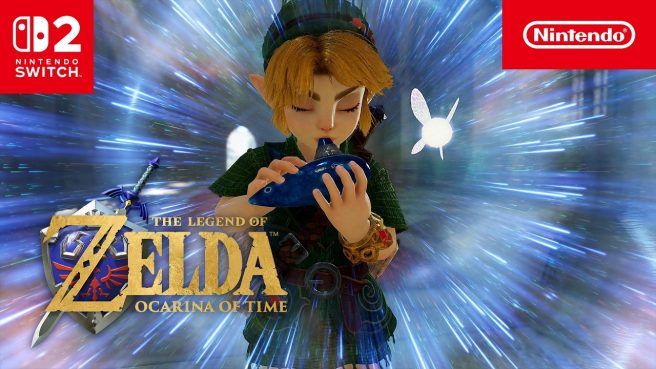
Nintendo's Switch 2 remake of The Legend of Zelda: Ocarina of Time is being made internally by the modern Zelda team, while Eiji Aonuma says added warp points were tested and removed to preserve the original game's sense of discovery.
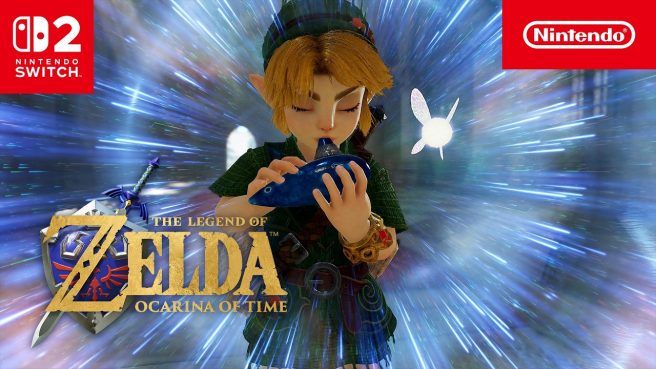
Image: nintendoeverything.com
Nintendo’s Zelda team is handling Ocarina of Time on Switch 2
Nintendo has pulled back the curtain on the Zelda Ocarina of Time remake in a way that changes the shape of the conversation around it: this is an internal Nintendo project from the modern Zelda team, and one of its biggest tested conveniences has already been cut.
In Nintendo’s new Ask the Developer interview, as reported by Nintendo Life and other outlets, The Legend of Zelda: Ocarina of Time on Nintendo Switch 2 is being developed by Nintendo’s Entertainment Planning & Development Production Group No. 3, the group associated with the series’ major modern entries. That matters because some observers expected a faithful remake of a 1998 classic might be outsourced or handled as a preservation exercise. Instead, Nintendo has placed it inside the same institutional pipeline that has shaped Zelda across the Breath of the Wild and Tears of the Kingdom era.
The revealed leadership gives the project a clear profile. Nintendo Life reports that HokWai Ng is directing the remake after previously working on Tears of the Kingdom, with Aya Shida serving as art director, Hiroki Taguchi as program director, and Masato Ohashi as music lead and one of the sound directors. Series veterans Eiji Aonuma and Hidemaro Fujibayashi are producers on the project.
That team reveal lands alongside a design decision that will be immediately recognizable to anyone who ever crossed Hyrule Field by repeatedly rolling Link forward. Aonuma said Nintendo experimented with adding new warp points to Ocarina of Time’s Switch 2 remake, then removed them after playtesting because they damaged the game’s rhythm of incidental discovery.
The cut warp points show where Nintendo is drawing the remake’s line
Aonuma’s explanation, published through Nintendo’s Ask the Developer interview and quoted by Nintendo Everything, Siliconera, Eurogamer, and IGN, is unusually direct. He said Breath of the Wild has many warp points that let players move quickly through its vast world, while the original Ocarina of Time often pushed players into “doggedly rolling across Hyrule Field” when they were in a hurry. His first instinct was to address that in the remake.
According to Aonuma, he asked the team to add warp points that did not exist in the original game, creating shortcuts through Hyrule. The idea made sense on paper. Modern open-world Zelda has trained players to expect frequent fast travel, and Ocarina of Time’s field spaces can feel slow by current standards. But once the team played the game with those additions, Aonuma said they realized they were losing the moments where a player stops, notices something, and wonders what it might be. He concluded that those moments are part of the structure of Ocarina of Time, so he had the team remove the new warp points.
That is the tension at the center of this remake. Nintendo is not treating the original as untouchable, since the Switch 2 version is already known to include modern movement changes such as sprinting and a dedicated jump button, according to IGN. At the same time, the removed Zelda remake warp points show Nintendo identifying a boundary: convenience cannot flatten the route between set pieces if the route itself is doing narrative and mechanical work.
For longtime players, this is more specific than a general nostalgia argument. Ocarina of Time’s pacing is built around repeated crossings, changing time of day, looming landmarks, and the slow conversion of empty-looking space into remembered geography. Rolling across the field was a workaround, but the length of those trips also gave the world its scale. Cutting across that space too freely risks turning Hyrule into a menu of destinations rather than a place the player gradually learns.
Aonuma frames the remake as training for future Zelda development
The remake is also being positioned internally as a learning project. Eurogamer, citing Nintendo’s Ask the Developer discussion, reported that Aonuma saw revisiting Ocarina of Time as an opportunity for younger developers, some of whom may not have played the original when it launched 28 years ago, to gain insights they could carry into future Zelda work.
That framing is important because Ocarina of Time sits at a very different design point from Nintendo’s recent Zelda successes. Breath of the Wild and Tears of the Kingdom are built around broad systemic freedom, layered traversal, and player-authored solutions. Ocarina of Time is more deliberate. Its dungeons, fields, villages, item gates, camera language, and boss rhythms come from the moment when Zelda was being translated into 3D action-adventure grammar.
Aonuma’s warp point anecdote reads like a practical lesson for a younger team. A modern solution solved a visible friction point, but it also exposed how the older game uses friction as pacing. In action-adventure terms, the walk to the next objective is not dead air if it establishes orientation, dread, curiosity, or anticipation. Ocarina’s set pieces depend on that approach. The first long view of Hyrule Field, the approach to Death Mountain, the return to familiar places after time has shifted, these beats need room to breathe.
That does not mean every old inconvenience survives because it is old. It means Nintendo’s team appears to be testing changes against the original’s dramatic structure. Aonuma’s comments suggest the remake is being used to ask a sharper question than whether Ocarina of Time can be modernized: which parts of its age are obstacles, and which parts are load-bearing design?
The development team reveal narrows expectations for the remake
Knowing that EPD Production Group No. 3 is leading Ocarina of Time Switch 2 helps clarify what kind of remake Nintendo is making. Nintendo Life noted that there had been reason to think another studio might handle the project, especially because the remake has appeared faithful to the Nintendo 64 original in broad structure. The Ask the Developer credits instead point to an in-house Zelda production with newer leads working under veteran producers.
That combination explains the remake’s apparent balancing act. HokWai Ng, described by Nintendo Life as taking his first director role at Nintendo, is tied by credits to Tears of the Kingdom. Aya Shida’s background includes Tears of the Kingdom, Mario Kart 8 Deluxe, and Pikmin 3, according to Nintendo Life. Hiroki Taguchi is associated with Breath of the Wild, while Masato Ohashi’s listed work includes Animal Crossing: New Horizons and Splatoon 3 Expansion Pass content. The lineup is not a museum crew. It is a cross-section of Nintendo developers who have worked on recent, high-polish Switch-era projects.
Noisy Pixel’s summary of the Nintendo interview adds that the team established an early principle: the visuals could change, but the gameplay experience should remain familiar. That principle fits the warp point reversal. It also explains why the remake can adopt modern controls and presentation while resisting some modern assumptions about speed.
The result, at least from Nintendo’s public comments so far, is a project with two audiences inside it. Players are getting a Switch 2 remake of one of the series’ defining games. Nintendo’s developers are getting a hands-on study of how a foundational 3D Zelda is assembled, paced, and protected when updated for a new platform.
Visual changes aim for theatrical texture rather than realism
The remake’s visual direction adds another layer to Nintendo’s preservation problem. Noisy Pixel reports that art director Aya Shida discussed an approach inspired by puppet shows and practical-effects films, while Eurogamer quoted Shida saying the team used phrases such as “a puppet-show feel” and “the analog feel of practical effects films” early in production.
That choice is revealing. Ocarina of Time’s original look was shaped by Nintendo 64 limitations, but it also had a strange, storybook unease: stiff character poses, theatrical spaces, exaggerated faces, eerie temples, and an undercurrent of menace beneath its heroic frame. According to Noisy Pixel, Shida said the art team wanted to retain the original game’s slightly unsettling atmosphere while updating environments and characters for modern hardware.
The puppet-show and practical-effects references suggest Nintendo is avoiding a purely realistic rebuild. That matters for a game whose drama often works because its world feels staged, symbolic, and a little haunted. A hyper-real Hyrule could make some scenes heavier, but it could also erase the clean silhouettes and dreamlike transitions that give Ocarina its identity.
Noisy Pixel also reported that the artists researched physical materials, including historical textiles, while considering how Young Link’s clothing might plausibly have been produced. That kind of detail points to a remake trying to create tactile believability without surrendering to full realism. It is a visual parallel to the warp point decision: modern craft is being applied selectively, with the original’s mood acting as a constraint.
Release timing, availability, and the open questions before launch
Siliconera reports that The Legend of Zelda: Ocarina of Time remake comes to Nintendo Switch 2 on November 5, 2026. The same outlet says players can get the game digitally through the eShop at or around midnight, and that Best Buy plus the U.S. and San Francisco Nintendo Store locations are holding midnight launch events. Nintendo’s Ask the Developer series is also continuing, with Siliconera reporting that parts three and four are scheduled for November 3, 2026.
The confirmed platform in the provided sources is Nintendo Switch 2. The sources here do not provide pricing, upgrade-path details, file size, performance targets, or whether any edition differences exist, so those remain outside the confirmed record for this piece. What Nintendo has confirmed through the interview, as reflected across Nintendo Everything, Nintendo Life, IGN, Eurogamer, Siliconera, and Noisy Pixel, is the development leadership, the internal EPD Production Group No. 3 involvement, the tested and removed warp point idea, and the design philosophy behind preserving Ocarina’s structure.
For players deciding whether to revisit Hyrule immediately, the most useful signal is that Nintendo is neither presenting this as a simple visual pass nor as a total redesign in the Breath of the Wild mold. The remake is adding modern touches, but Aonuma’s cut warp point story shows Nintendo is willing to remove a convenient feature if it weakens Ocarina of Time’s pace.
That is the practical takeaway from the latest Nintendo Switch 2 Zelda details. The remake’s biggest risk is not whether Hyrule can look new. It is whether the space between objectives can still carry tension, curiosity, and memory after nearly three decades of action-adventure evolution. Nintendo’s answer, at least on fast travel, is that some journeys across the field still need to happen the long way.