
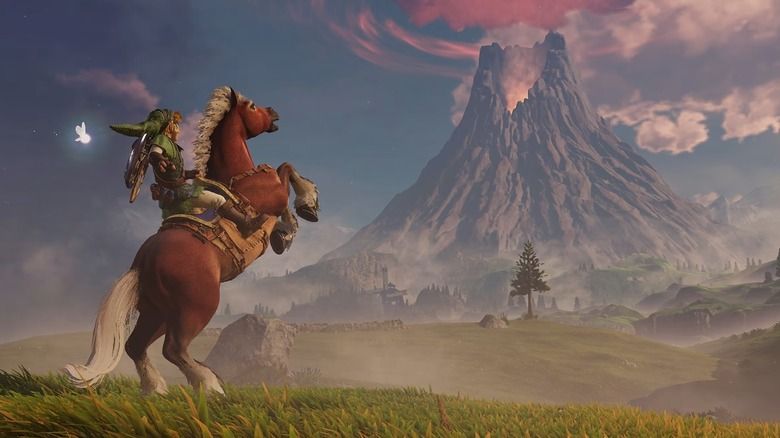
Nintendo’s new Ocarina of Time Switch 2 previews confirm Hall of Fallen Foes, timed Zelda boss rematches, modern controls, and Zelda Notes features, while leaving some mode details unanswered.
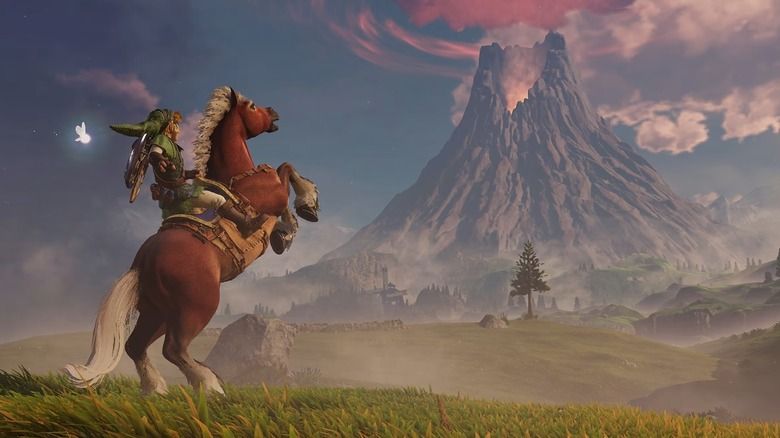
Image: engadget.com
Ocarina of Time’s remake finally shows its new fight-after-the-fight mode
The clearest new addition in Nintendo’s latest The Legend of Zelda: Ocarina of Time remake showing is the Hall of Fallen Foes, a museum-like space that turns defeated monsters and bosses into records, models, and repeatable encounters. Siliconera, GamingBolt, and Kotaku all report that Nintendo’s new overview trailer shows Link examining enemies he has already beaten, reading descriptions and location information, then challenging major foes again from within the Hall.
That is the concrete development cutting through the nostalgia. This is still Ocarina of Time, with Kokiri Forest, King Dodongo, Hyrule Field, Adult Link, Sheik, and Ganondorf presented through a modern Switch 2 production. But the remake is also building systems around memory and mastery. The Hall of Fallen Foes lets the player look back at the creatures that once defined the journey, then step back into selected boss fights with a timer attached.
The confirmed example, according to Siliconera, is King Dodongo. The rematch screen shows how long the second attempt took, and GamingBolt describes the mode as letting players aim for the best time. Kotaku similarly reports that the game tracks a best time for boss rematches. That makes the Hall of Fallen Foes less like a passive bestiary and closer to a combat rehearsal room, a place where Ocarina’s old set-piece bosses can be replayed with the confidence, speed, and cleaner inputs of a player who already knows the pattern.
What the Hall of Fallen Foes confirms, and what it does not
Nintendo’s trailer, as covered by Siliconera and other outlets, confirms three practical functions for Hall of Fallen Foes. It displays statues or models of defeated enemies, it provides descriptive and location information, and it allows bosses to be fought again. For readers searching for Hall of Fallen Foes details, that is the confirmed feature set from the preview coverage.
There is one important limit. GamingBolt notes that Ocarina of Time 3D on Nintendo 3DS already included a comparable boss challenge feature, including the ability to face all bosses in sequence. The Switch 2 remake’s trailer and the current preview reports do not confirm that an all-boss gauntlet returns. GamingBolt explicitly says it is unclear whether the remake offers that version of the challenge. So the safe reading is simple: Zelda boss rematches are confirmed, timed boss rematches are shown, but a full boss rush has not been confirmed in the supplied material.
That distinction matters because Ocarina’s bosses were originally paced as dungeon climaxes rather than repeatable trials. Queen Gohma teaches the player to read an arena. King Dodongo turns bomb timing into spectacle. Later bosses lean harder on tools, positioning, and rhythm. A rematch mode changes the way those encounters sit inside the game. They can become skill checks rather than one-time dramatic punctuation. The remake appears to recognize that players now treat classic boss fights as performances to refine, not scenes to clear once and leave behind.
Switch 2 gameplay previews point to a remake with deeper control changes
The newly shown Ocarina of Time remake gameplay is not limited to prettier rooms and character models. Nintendo’s official store page says this version is built from the ground up for Nintendo Switch 2 and includes enhanced controls, modern camera movements, jumping and dashing, overhauled visuals, voiced cutscenes, expanded dialogue, and symphonic orchestral music. That is Nintendo’s own framing, and it positions the remake as a mechanical rebuild rather than a simple visual pass.
Hands-on previews suggest those changes are immediately felt. In Nintendo Life’s round-up of preview coverage, GameSpot is quoted praising the new jump button, saying it helps the game control in a more modern way and makes platforming judgment clearer during early Kokiri objectives. That is a large change for Ocarina of Time remake gameplay because the 1998 original’s automatic jumping was part of its identity. It shaped how players approached ledges, gaps, and dungeon geometry. Giving Link direct jump control changes the combat rhythm at the edges too, since spacing and traversal now sit more firmly in the player’s hands.
Nintendo Life also published more than 20 minutes of gameplay footage from roughly two hours with the remake, while noting that capture was limited to over-the-shoulder gameplay. Its report calls out visible changes to the world, including a ladder leading toward the Kokiri Sword that was not present in earlier versions. That kind of adjustment may sound minor, but in Ocarina terms it is meaningful. The original was a tightly staged opening act where movement, item acquisition, and environmental reading taught the player how Hyrule works. A new ladder is a small piece of level design evidence that Nintendo is smoothing or redirecting the opening flow, not tracing every old step exactly.
A lavish new Hyrule is winning previews, with some caution around visual density
Across the preview round-ups, the remake’s art direction is drawing strong reactions because it preserves Ocarina’s storybook proportions while packing the world with far more texture and surface detail. Nintendo Life’s own preview, quoted in its round-up, highlights carts and boxes in Hyrule’s backstreets, foliage across Hyrule Field, rocks, ruins, fairy lore, and animation as details that help sell an older-style kingdom in a modern context. The Guardian, also quoted by Nintendo Life, says Hyrule Field may never recreate its 1998 sense of awe, but puddles, grass, and environmental detail help mask the artificiality of the space when compared with Breath of the Wild’s open continent.
NPR’s hands-on report is more ambivalent, and useful for that reason. James Perkins Mastromarino writes that the remake keeps the original’s cartoony aesthetic while adding intricate detail, including embroidered fabrics and leathers on Link’s tunic and fairies reimagined with furry bodies and mosaic wings. NPR also reports that the ornate environments could confuse as well as dazzle during a 90-minute New York preview session. That is the tension with this kind of remake: the old Ocarina was readable partly because the Nintendo 64 could not fill every surface with information. The Switch 2 version can, and readability becomes a design challenge.
For an action-adventure game, that is not cosmetic. Combat in Ocarina depends on clear silhouettes, enemy tells, lock-on positioning, and clean arena composition. Exploration depends on knowing which texture is decoration and which one is a path, puzzle clue, ladder, cracked wall, or climbable edge. The previews so far largely praise the new look, but NPR’s caveat is worth carrying into launch: a more ornate Hyrule may be beautiful in motion while still asking players to relearn how to read spaces they thought they knew by heart.
Zelda Notes, ocarina input, and the remake’s second-screen layer
Nintendo’s official product page confirms that the Ocarina of Time Switch 2 release connects with Zelda Notes through the Nintendo Switch App on compatible smart devices. Nintendo describes it as a game-specific service that can show accomplishments for the day, provide image-based location challenges, and let players play an ocarina on a smart device. Siliconera’s trailer report lists the shown Zelda Notes menu options as map, gossip quests, Hall of Fallen Foes, Today’s Record, My Play Data, Global Play Data, Photo Studio, Threads of Time, amiibo, Play Ocarina, and the Ocarina of Time Quiz.
Polygon adds more detail from Nintendo’s presentation, reporting that Today’s Record tracks chronological accomplishments with screenshots and data such as play time, enemies killed, deaths, hearts lost, rupees earned, grass cut, and time spent in areas. Polygon also reports that Gossip Quests use photos of locations players must find, with points exchangeable for ocarina scores and optional hints for harder prompts. These features appear designed to give Ocarina’s familiar geography a scavenger-hunt layer, asking returning players to inspect Hyrule rather than autopilot through it.
The ocarina itself is getting multiple input paths. Siliconera reports that players can actually play songs in-game and can hum notes using a microphone. Polygon reports that Nintendo showed a physical ocarina interacting with the game so Link performs the notes played on the instrument, while standard controller input remains available. Nintendo’s store page confirms the smart-device Play Ocarina support through Zelda Notes, but the broader instrument feature should be read through Polygon’s report unless Nintendo publishes fuller compatibility details. The key practical point is that song performance is being treated as a tactile pillar of the remake, not a menu relic.
Release date, platform limits, file size, and the questions still open
Nintendo’s official listing says The Legend of Zelda: Ocarina of Time releases on November 5, 2026 for Nintendo Switch 2. The same listing labels it exclusive to Nintendo Switch 2, gives an estimated file size of 27 GB, and shows an ESRB rating of Animated Blood and Fantasy Violence. The page also lists TV mode and tabletop mode under supported play modes in the supplied source text. No price is included in the provided Nintendo listing, so there is no confirmed price to report here.
Siliconera reports that select Best Buy stores in the United States will hold a midnight launch at 12:00 a.m. local time on November 5, 2026. Siliconera also notes that the 40th Anniversary The Legend of Zelda Switch 2 and Pro Controller debut on October 29, 2026. Nintendo’s product page separately points to a special edition Nintendo Switch 2 system and says existing Legend of Zelda series amiibo figures grant in-game extras. It also states that new Young Link and Young Zelda amiibo figures are coming in 2027 and will unlock masks that evoke a retro graphical style.
Several major buyer questions remain unanswered in the provided sources. There is no confirmed performance target such as resolution or frame rate. There is no confirmed upgrade path from any previous version, which is significant because Ocarina of Time has already existed across Nintendo 64, GameCube collections, Virtual Console, Nintendo Switch Online, and Nintendo 3DS. There is also no confirmation in the supplied material of whether Hall of Fallen Foes includes every boss, whether it unlocks immediately or gradually, or whether timed records are local only or connected to the Global Play Data features shown in Zelda Notes.
For now, the safe read is that Zelda Ocarina of Time Remake is a Switch 2 exclusive remake with modern controls, a rebuilt presentation, Zelda Notes integration, and confirmed timed boss rematches through Hall of Fallen Foes. The previews point to a careful but assertive re-staging of a familiar adventure: smoother movement, denser scenes, more ways to play the ocarina, and a new space where Hyrule’s old monsters can be studied before they are challenged again.