
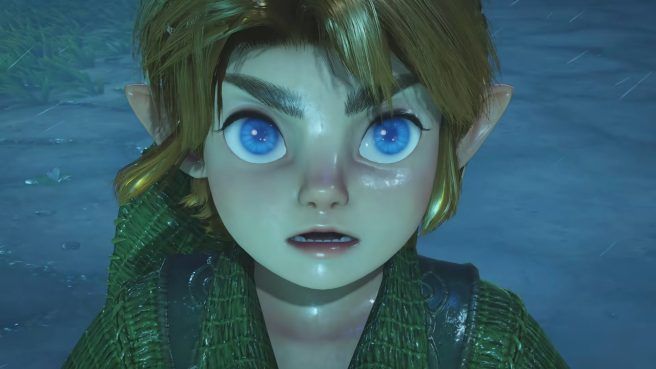
The Zelda Ocarina of Time Remake is reportedly the UK’s second-biggest Zelda launch on physical sales, setting up Nintendo’s clearest late-2026 Switch 2 test as players react to changed puzzles, new guidance systems, and a rebuilt classic.
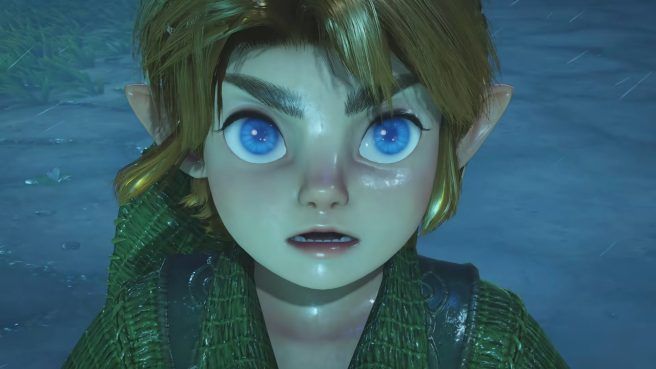
Image: nintendoeverything.com
A huge boxed launch, with one important caveat
The Legend of Zelda: Ocarina of Time Remake has reportedly delivered the UK’s second-biggest Zelda launch ever at retail, immediately turning Nintendo’s late-2026 Switch 2 exclusive into the platform’s most revealing holiday test. According to reporting relayed by Nintendo Everything and attributed to Christopher Dring of The Game Business, the remake’s first week of UK physical sales came in 35 percent above The Legend of Zelda: Breath of the Wild’s 2017 launch across Switch and Wii U, while landing at roughly half of The Legend of Zelda: Tears of the Kingdom’s first-week physical sales.
Twisted Voxel also attributes the UK data to Dring, citing Nielsen IQ sales data, and reports that the remake is the UK’s biggest physical game launch of 2026 so far. Nintendo Everything says the game beat physical launches from Resident Evil, Call of Duty, EA Sports FC, and other major releases this year.
That is the concrete headline, but it needs the qualifier up front: this is physical sales only. The available source material does not include Nintendo’s official sell-through numbers, digital sales, global totals, or eShop performance. Nintendo has only said, according to Nintendo Everything’s linked coverage, that Ocarina of Time is off to a “very strong start.” Until Nintendo publishes figures, the strongest supported claim is narrower and still significant: at UK retail, this is an unusually large Zelda launch for a remake, and it is currently the biggest boxed game debut of 2026 in that market.
The Switch 2 comparison makes the result sharper
The UK Zelda launch ranking is striking because the comparison points are uneven. Breath of the Wild launched in March 2017 at the start of the original Switch generation, while also arriving on Wii U. Tears of the Kingdom released in 2023 into a far larger Switch audience. Nintendo Everything notes that Switch had sold around 125 million units by the time Tears of the Kingdom debuted, while Switch 2 is currently at over 26 million. Notebookcheck similarly frames install base as a major factor, pointing out that the remake is targeting a much smaller pool of potential hardware owners than Tears of the Kingdom did.
That makes the reported Ocarina of Time Remake sales performance less about beating every Zelda record and more about proving how hard Nintendo’s early Switch 2 audience will show up for a premium first-party revival. It did not match Tears of the Kingdom’s UK physical opening, but the reported half-scale comparison looks different when the available Switch 2 audience is far smaller than the Switch audience was in 2023.
There is also a useful distinction between Breath of the Wild and Ocarina of Time Remake. Breath of the Wild was a new, system-defining Zelda with a launch-window aura. Ocarina of Time Remake is a rebuilt version of a game whose broad structure many players already know. If UK retail demand is 35 percent ahead of Breath of the Wild’s opening physical sales, as Dring’s reported figures state, the draw is not surprise alone. It is the force of Ocarina’s reputation meeting a still-young console that needs tentpole software in the back half of 2026.
Familiar Hyrule, altered rhythm
The early Zelda remake impressions picture is less about players discovering Hyrule for the first time and more about testing how far Nintendo has pushed a classic without breaking its cadence. Nintendo Everything’s impressions prompt calls the Switch 2 release a full remake that updates the graphics, adds “a few smaller things,” and makes “various adjustments.” Twisted Voxel reports that the remake rebuilds the Nintendo 64 original with high-definition graphics, a fully free-moving camera, quality-of-life improvements, and a remastered soundtrack, while keeping the original story and dungeon layouts intact.
That last pairing is the core design tension. Ocarina of Time’s old power came from tempo: the forest opening, the first descent into the Deku Tree, the steady widening of Hyrule Field, and the way each dungeon turned a new item into both a key and a combat idea. A remake that keeps the story and dungeon layouts intact can preserve that pacing, but even small changes to puzzles, camera behavior, and hinting can change the feel of a room.
Video Games Chronicle’s walkthrough hub gives the clearest evidence that the remake is not a straight visual pass. VGC says classic puzzles and objectives have changed in subtle ways, with “a fair few brand new challenges and brain teasers.” It also notes that the remake includes more hints than the original and introduces a quest menu of sorts called Threads of Time, where important main and optional challenges receive additional detail.
For returning players, that is likely part of the demand. The promise is not simply seeing Kokiri Forest in sharper detail. It is walking into a remembered space and realizing the timing is slightly off, the solution is not exactly where muscle memory left it, or a side quest now has clearer framing. For new players, the added hints and quest tracking lower the friction of a 1998 adventure design without, based on the available reports, replacing its underlying route through Hyrule.
Early response is enthusiasm mixed with practical searching
The public player response documented in the provided sources is early and fragmentary, so it should not be inflated into a consensus. Nintendo Everything opened a “[Let’s Talk]” impressions thread on November 8 after the remake landed that week, asking players how they felt so far. The site describes Ocarina of Time as beloved, “one of the highest-rated titles of all time,” and “undoubtedly one of the biggest games on Nintendo Switch 2 this year,” but the excerpted source text does not provide a broad set of post-launch reader verdicts.
What the sources do show is anticipation rolling directly into guide-seeking. In Nintendo Everything’s highlighted comments from the prior week’s playing thread, one reader wrote that “the rest of the month” would be “pretty much just Ocarina of Time,” while another said they were hoping to play Ocarina of Time soon alongside other Switch 2 releases. VGC, meanwhile, has already built and is updating a dedicated walkthrough hub for the remake, covering changed Gold Skulltula locations, Kakariko Village Cucco locations, mask trading, Biggoron’s Sword, bottle locations, Scarecrow’s Song, and more.
That is a useful kind of early signal. The first wave is not only buying the remake for nostalgia. Players are also running into altered routes, renamed or newly framed systems, and collectible changes that make old knowledge incomplete. VGC explicitly says its hub is meant for both new players and returning fans because “things have changed” in the Switch 2 remake. When a 26-year-old adventure needs fresh puzzle and collection documentation within launch week, it suggests the remake’s demand is being fed by curiosity as much as reverence.
Nintendo’s late-2026 pressure point
This Switch 2 Zelda launch arrives at a moment where Nintendo needs software that can sell hardware confidence as much as game copies. The UK physical result gives Nintendo a strong talking point, but it also raises the bar for the company’s late-2026 slate. A remake of Ocarina of Time is safer than an untested new property, yet it carries a special kind of risk: players know the tempo, the item gates, the dungeon silhouettes, and the emotional beats. If the remake modernizes too timidly, it can look like an expensive memory exercise. If it changes too much, it risks sanding away the very structure people came back to revisit.
The reported feature set aims for the middle path. A free-moving camera changes how combat and navigation are read, especially in enclosed rooms designed for Nintendo 64-era lock-on framing. Quality-of-life improvements and Threads of Time can make side content easier to track. Subtly changed puzzles and moved collectibles can slow down veterans who might otherwise sprint through from memory. In action-adventure terms, those are pacing tools. They decide how long the player spends observing a room, how often they check the environment, and whether combat encounters feel like preserved choreography or newly staged scenes.
The commercial result suggests that enough players accepted that pitch at launch, at least in boxed UK sales. It also shows Nintendo can still convert its back catalog into a frontline Switch 2 event when the remake is treated as a platform release rather than a minor archival product. That will matter for how future Nintendo remakes are positioned, but the sources do not confirm any follow-up remake plans, DLC sales data, or broader global strategy from Nintendo.
What buyers can safely take from the first week
For players deciding whether to jump in now, the confirmed and reported details point to a clear profile. The Legend of Zelda: Ocarina of Time Remake is a Nintendo Switch 2 release, and Twisted Voxel reports that it launched on November 5, 2026 after an official September 2026 Nintendo Direct announcement. The provided sources describe it as a full remake with updated graphics, a free camera, quality-of-life changes, a remastered soundtrack, and adjustments to puzzles and objectives. VGC’s guide coverage indicates that returning players should expect some classic solutions and collectible routes to differ from the Nintendo 64 original.
If you are buying based on sales momentum, remember that the UK data is limited to physical copies. It says a lot about boxed demand and collector behavior, especially for a franchise with strong retail pull, but it does not tell us the total audience yet. Twisted Voxel notes that Nielsen IQ figures do not include digital downloads, and Nintendo has not provided official sales figures in the material available here. Nintendo Everything expects additional Japan sales data from Famitsu, but those figures are not included in the current source set.
If you are buying based on design, the strongest evidence favors a remake that preserves the old spine while changing enough room-to-room detail to make guides relevant again. That is probably the engine behind the early demand: Ocarina of Time remains familiar enough to carry decades of affection, yet altered enough that players cannot entirely sleepwalk through the Forest Temple, the trading quests, or the hunt for Gold Skulltulas. Nintendo’s biggest late-2026 Switch 2 test is therefore a delicate one. The first UK retail report says the audience showed up. The longer test is whether those early Zelda remake impressions keep converting nostalgia into sustained play after the opening weekend glow fades.