
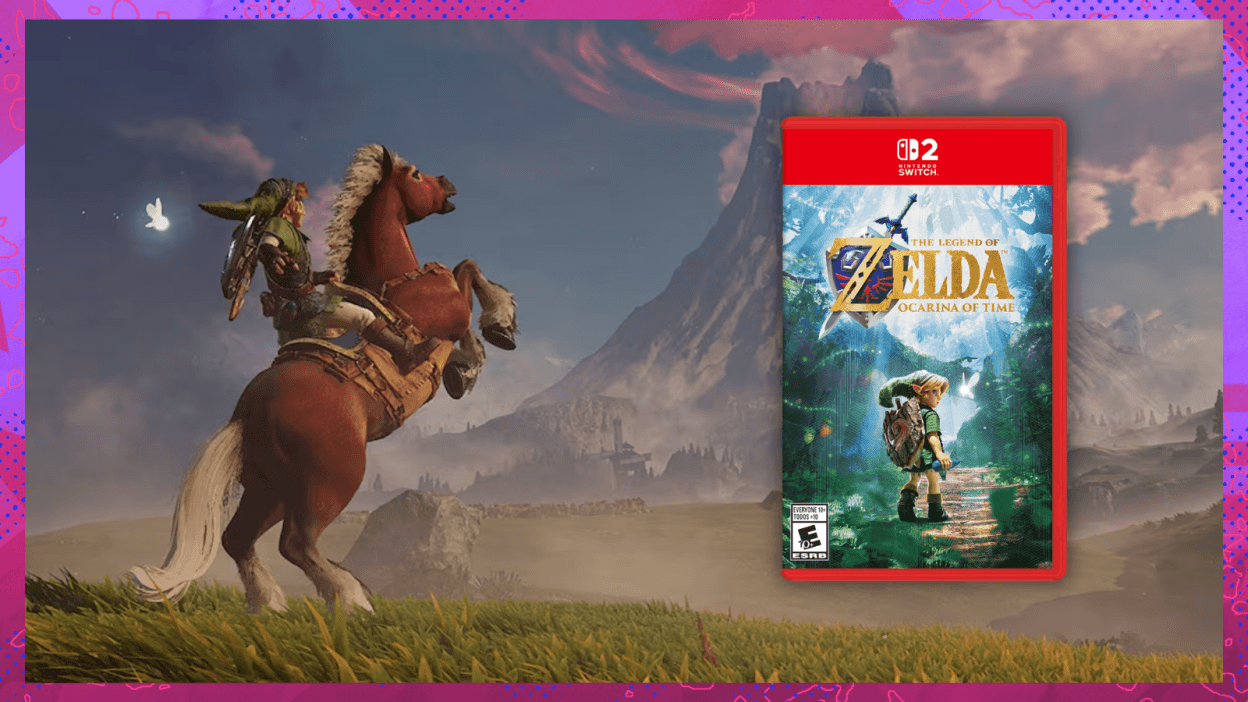
The Nintendo Switch 2 Zelda remake has become 2026's best-selling physical game in the US after one week, according to Circana, but GTA 6's code-in-box release creates a strange year-end caveat.
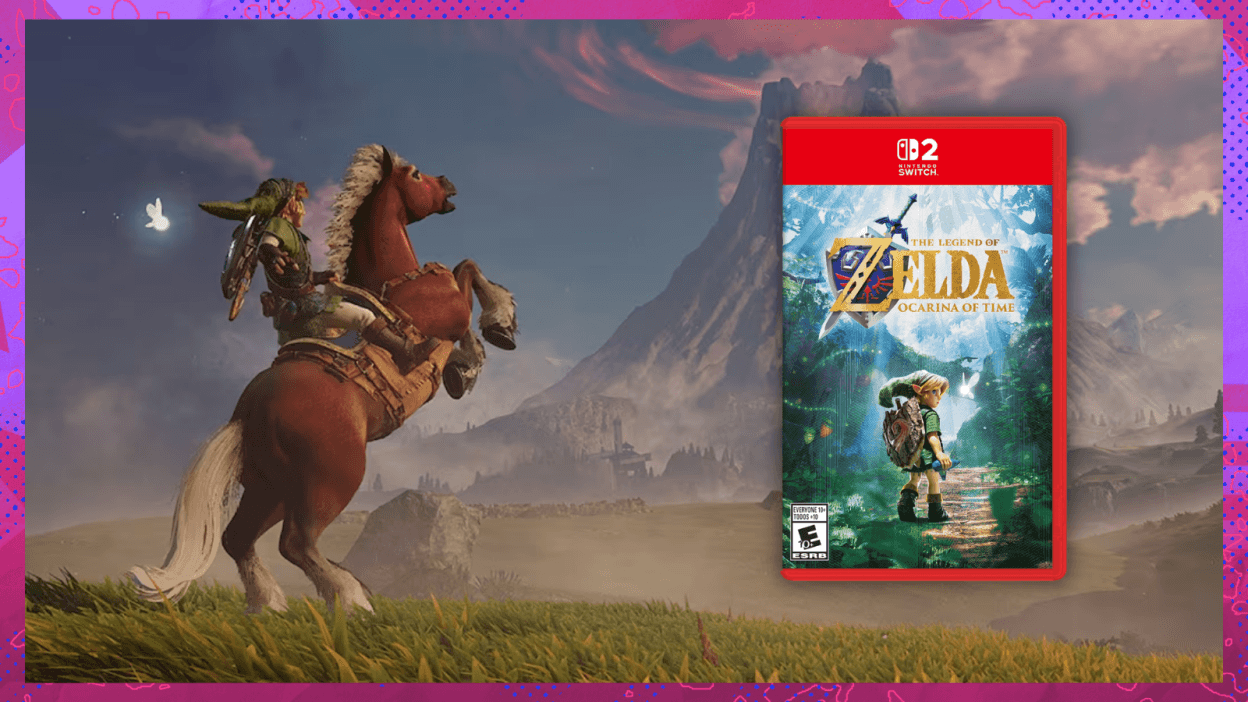
Image: mashable.com
Ocarina of Time has taken the US boxed-game crown, for now
The Legend of Zelda: Ocarina of Time remake is now 2026's best-selling physical video game in the US after one week on sale, according to Circana senior director and video game industry advisor Mat Piscatella, as reported by Nintendo Life and other outlets tracking the Circana post. That is the concrete sales beat: a Nintendo Switch 2 Zelda remake of a 1998 Nintendo 64 game has moved enough boxed copies in days to lead the entire year's US physical chart.
Circana's Retail Tracking Service data, as relayed by Twisted Voxel and Nintendo Life, also puts the launch above one million physical units in the US during its first week. Piscatella noted that it is the first US physical launch to clear that threshold since The Legend of Zelda: Tears of the Kingdom in 2023. The remake launched on November 5, and Twisted Voxel cites Circana data through November 7, which underlines how compressed the opening rush was.
There is a tension baked into the headline. Circana's chart concerns physical sales in the US, while Nintendo's own broader figure says the game sold roughly 5.2 million copies worldwide in its first four days across formats. Those numbers should not be stacked as if they measure the same thing. One is a US boxed-game ranking from an industry tracker. The other is a worldwide Nintendo sales announcement that includes digital purchases. Together, though, they tell a sharper story than either figure alone: Zelda Ocarina of Time remake sales are strong globally, and the US audience still showed up heavily for a cartridge release.
The boxed-game signal is real, but the chart has a code-in-box trap
For Nintendo, this is the cleanest kind of physical-sales win because the product at the center of it is an actual boxed Nintendo Switch 2 game. That distinction matters in a year when the definition of physical software is increasingly messy. Nintendo Life points out one technical caveat that could affect the year-end language: Circana counts code-in-box products as new physical video game sales.
That matters because Grand Theft Auto 6's retail release is reportedly a code-in-box product, according to Nintendo Life's framing of the retail situation. If GTA 6 posts a huge boxed-retail number, Circana's physical chart may treat those retail code cards as physical sales even though buyers are not receiving a traditional disc or cartridge. Nintendo Life notes that GTA 6 pre-orders have already outperformed Take-Two's expectations, so Ocarina of Time may not keep the Circana crown once the full holiday season is counted.
That caveat does not weaken the Switch 2 result so much as clarify it. If the phrase best selling physical game 2026 ends up complicated by code-in-box accounting, Ocarina of Time's launch still provides evidence of demand for a boxed game that players can put on a shelf. Tbreak makes the same practical point in its coverage, saying that with more than a million boxed copies sold in the US in a week, physical clearly still sells for Nintendo's biggest games. The responsible read is narrower than a physical-media revival and stronger than a one-off collector novelty: Nintendo can still move boxed software at blockbuster scale when the game, platform, and franchise memory line up.
Nintendo's Switch 2 strategy gets a prestige win beside Mario Kart World
Nintendo's official data, as reported by Nintendo Life, places Ocarina of Time as the second-highest-selling Switch 2 game globally. Mario Kart World remains far ahead with 16.48 million sales, while the Zelda remake has moved past Donkey Kong Bananza's 5.05 million lifetime total. Tbreak adds that the 5.2 million four-day global figure is the highest first-four-days worldwide sales total for any Nintendo-published Switch 2 game, while also noting that Nintendo has not provided a regional split beyond Japan.
The Japan figure is important because it keeps the US chart in perspective. Tbreak and Twisted Voxel both report that 810,000 of the first four days' sales came from Japan. The US boxed number, by contrast, is a physical-only launch-week achievement. The UK also appears to be part of the larger opening surge, with Tbreak citing Nintendo Everything's report that the remake had the biggest physical launch of 2026 in the UK and the second-biggest Zelda launch of all time in that region.
This gives Nintendo something valuable during the Switch 2's early library-building phase: a prestige release that behaves like a frontline system seller rather than a museum piece. Mario Kart World has the mass-market lane. Ocarina of Time gives the platform an action-adventure tentpole with critical gravity, nostalgia pull, and a reason for players to buy into Nintendo's new hardware without waiting for the next wholly original 3D Zelda. The Ocarina of Time Switch 2 launch also shows how Nintendo can use its back catalog aggressively without making the platform feel dependent on simple ports, at least when the remake carries enough craft and visibility.
The remake's appeal is tied to design preservation and modern readability
The sources point to a remake that has been received as a careful modernization rather than a loose reinterpretation. Pure Nintendo describes The Legend of Zelda: Ocarina of Time for Nintendo Switch 2 as a remake of the 1998 Nintendo 64 release, still developed and published by Nintendo, with the original story intact. The same review says the remake adds old and new cutscenes with voiceovers and new lines of dialogue, overhauled graphics, and symphonic music.
That balance is central to why the sales number lands differently from a typical remaster spike. Ocarina of Time's structure still has the rhythm that made it a landmark: the first stretch as young Link, the Temple of Time pivot, the seven-year leap, and the broken future Hyrule that reframes earlier spaces as haunted ground. Pure Nintendo notes that players can still move between young and adult Link through the Temple of Time, with progression relying on actions across both periods, such as planting magic beans as young Link to benefit adult Link later.
The modernization appears aimed at removing friction without erasing that cadence. Pure Nintendo reports that Hyrule Field, Lon Lon Ranch, and Lake Hylia now connect without loading screens, making Hyrule feel more expansive without adding new locations. Twisted Voxel reports that the remake includes free camera movement using the right analog stick, an updated quest-tracking system, fully voiced cutscenes, and manual jumping through a dedicated button rather than the original's automatic ledge-jumping. Those changes target the places where a 1998 adventure can feel stiff to new players, while preserving the dungeon-to-overworld tempo that gives Ocarina its sense of escalation.
Critical reception reinforces the sales story without explaining all of it
Nintendo Life says it scored the Switch 2 remake 9/10 and called it the best way to play one of the most seminal games of all time. The outlet also reports that the game returned to a 96/100 Metacritic score after a brief dip to 95, while My Nintendo News separately notes that the remake currently stands at 96 on Metacritic. Strong reviews do not automatically create million-unit boxed launches, but they reduce the buyer hesitation around paying new-release prices for a game many players have already finished in other forms.
The broader developer conversation also matters. My Nintendo News reports that Final Fantasy Resonance producer Keisuke Nakashima said, via machine translation, that clearing the remake was a truly amazing experience and a learning opportunity for understanding how to make remakes. That is one creator's public reaction rather than a market study, but it matches the early critical consensus: the remake is being discussed as a craft object, not only as a nostalgia delivery system.
For an action-adventure audience, that distinction is significant. Ocarina of Time's legacy has always rested on the timing of its encounters, the readability of its lock-on combat, the steady reveal of tools, and the way each dungeon teaches a rule before bending it. A remake that modernizes camera control, presentation, and movement while leaving the core arc legible gives returning players a reason to revisit familiar rooms and gives first-timers a version that does not ask them to fight the interface before they fight the boss.
Price, platform, and the practical buying question
The release is exclusive to Nintendo Switch 2, according to Twisted Voxel and the broader reporting around the launch. Tbreak reports that the game launched on November 5 at $69.99 physically and $59.99 on the eShop in the US, with UK pricing listed at £58.99 physical and £49.99 digital. That price gap makes the US physical sales result even more telling: buyers chose the more expensive format in large numbers, likely because the boxed edition carries collector value, gift value, or simple preference for a cartridge release.
Readers weighing a purchase should separate three questions. If you want the cheapest confirmed version, Tbreak's reported pricing points to the eShop version. If you want the version driving the Zelda Ocarina of Time remake sales story, the boxed copy is the one Circana is tracking and the one now leading the US physical chart. If you are waiting for additional content, be careful: Tbreak says it has reported a Master Quest datamine and covered the remake's Master Quest omission, but Nintendo has not announced Master Quest DLC in the provided source material.
There is also a timing question for people following the chart race. Tbreak reports that Circana's full November report is expected on December 17, which should clarify how the physical lead looks once the month is fully counted. Until then, the confirmed claim is already large enough: after one week, the Nintendo Switch 2 Zelda remake has crossed a US boxed-sales milestone no game had reached since Tears of the Kingdom, while also sitting near the top of the Switch 2 global software list.
Classic Zelda still has commercial force when Nintendo treats it like an event
The enduring lesson from this launch is not that every classic remake can sell like this. Ocarina of Time has a rare place in the medium, and Nintendo paired it with new hardware, a holiday window, modern production values, and a retail edition that players clearly wanted. The result is a release that feels staged like a major new Zelda rather than a side catalog project.
That is the larger consequence for Nintendo. The company now has evidence that a foundational Zelda can carry premium pricing, critical attention, and physical retail momentum on Switch 2 when rebuilt at sufficient scale. It also has a template with risks: change too little and the remake can feel like archival housekeeping; change too much and the pacing, combat rhythm, and quiet dread of the original may be lost. Based on the cited reviews and early sales data, Ocarina of Time appears to have found the line Nintendo needed for launch-window impact.
The year-end crown still has an asterisk because of Circana's treatment of code-in-box releases and the pending GTA 6 retail wave. But even if another product overtakes it on a reporting technicality, the central fact remains unusually strong. A nearly three-decade-old adventure, rebuilt for Switch 2, has become the US physical chart leader after one week and has sold millions worldwide in days. For Nintendo, boxed games, and the long afterlife of classic Zelda, that is the kind of opening that resets expectations without needing to pretend the market is simple.