
Nintendo has dated The Legend of Zelda: Ocarina of Time Remake for Switch 2. Here is what is confirmed about the November launch, Adult Link trailer, box art, and price.
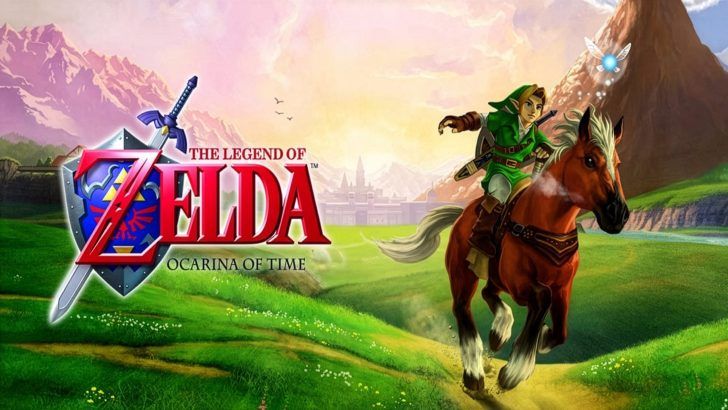
Image: wccftech.com
Ocarina of Time Remake lands November 5, with a familiar problem to solve
Nintendo has confirmed The Legend of Zelda: Ocarina of Time Remake will launch on November 5 for Nintendo Switch 2, according to coverage of the Zelda 40th Anniversary Direct from GamingBolt, IGN, The Verge, ComicBook, and Nintendo Wire. That gives the remake a firm holiday-season position and, as IGN and The Verge both noted, places one of Nintendo’s biggest Switch 2 releases in the same month as Grand Theft Auto VI.
The date is the cleanest part of the reveal. The harder question is how Nintendo is threading the needle between preservation and modernization. GamingBolt reported that series producer Eiji Aonuma presented the remake as a “faithful interpretation” made with modern technology. The Verge similarly cited Aonuma’s framing while noting that this is being positioned as the first Zelda release exclusive to Switch 2.
That exclusivity is worth underlining because none of the provided source material mentions a Switch 1 version, a cross-gen upgrade path, or any other platform. For readers searching for the Zelda Ocarina of Time Remake release date, the answer is November 5, 2026, but the currently reported platform answer is narrower: Nintendo Switch 2 only.
The Adult Link trailer widens the remake beyond Kokiri Forest
Nintendo’s Direct presentation, as described by GamingBolt, focused first on Young Link moving through Kokiri Forest, Hyrule Field, and Hyrule Castle Town. The separate trailer then pulled the camera back to show the larger arc of the game, including Adult Link, Sheik, Ganondorf, classic bosses, and later locations.
For anyone tracking the Zelda Ocarina of Time Remake trailer, the key reveal is that Nintendo is not only showing the opening hours. GamingBolt specifically cited Adult Link, Sheik’s redesign, Ganondorf’s imposing presentation, Phantom Ganon, Twinrova, Princess Ruto interactions enhanced by voice acting, and the return of the Water Temple. ComicBook also reported that the footage covered moments from both Young Link and Adult Link’s portions of the story, with new looks at bosses and characters across the adventure.
That matters for pacing. Ocarina of Time changes shape when Link draws the Master Sword and wakes into a ruined future. The trailer’s Adult Link, Sheik, and Ganondorf material suggests Nintendo wants players to see the remake as a full reconstruction of that tonal turn, not only a prettier opening village and field. The old rhythm of childhood discovery giving way to temple-driven escalation appears intact, but now staged with higher-detail character work and more cinematic cutscenes.
Modern controls change the feel without turning it into an open-world Zelda
The remake is not being framed as Breath of the Wild in old Hyrule. GamingBolt reported that loading screens between areas such as Hyrule Field remain in place to preserve the original structure, and IGN also said the main structure appears largely unchanged, with Hyrule’s regions still divided by transitions.
Inside that preserved structure, Nintendo is changing how Link moves and fights. GamingBolt reported a fully rotatable camera, including in towns and villages, plus a dedicated jump button, single-button item switching in the style of Breath of the Wild and Tears of the Kingdom, gyro aiming, snappier combat, and the ability to dash by holding A after rolling. IGN also cited manual jumping, dashing, quick item switching, and motion aiming among the remake’s modern additions.
Those changes are practical rather than cosmetic. A free camera alters how you read temple rooms. A dedicated jump button changes the timing of traversal instead of leaving every ledge to contextual automation. Faster item access could make combat encounters less menu-bound, especially in boss fights that originally asked players to swap tools under pressure. The concern, still unanswered by the sources, is balance: Nintendo has not yet detailed whether enemy behavior, damage tuning, dungeon timing, or boss patterns have been adjusted to match Link’s expanded control set.
Voice acting, humming songs, and Threads of Time point to a remake with new texture
Nintendo is also adding features that change how the story is delivered and how players track progress. GamingBolt reported that normal conversations do not have voice acting, but cutscenes are fully voiced and include new dialogue. NintendoEverything’s rundown likewise says the remake features new dialogue and fully voiced cutscenes, with the classic quest rebuilt with reimagined visuals, a refreshed soundtrack, and modernized gameplay.
The Ocarina itself is also being reconsidered. GamingBolt said the remake supports microphone input that lets players hum songs to play them in-game, including support for an upcoming ocarina replica. IGN and The Verge also reported the humming feature, with IGN noting that a physical Ocarina accessory will be available.
The other quality-of-life addition is Threads of Time. GamingBolt described it as a journal for tracking progress. IGN called it a menu feature that acts as a quest log and tapestry-like record of your exploits, while The Verge said it helps players see where, and when, their next destination is. That last phrase matters for Ocarina of Time in particular, because its two-era structure can leave returning players with a strong memory of individual dungeons but a weaker sense of sequence. Threads of Time sounds designed to reduce friction without changing the route itself, though Nintendo has not yet shown how intrusive or optional that guidance will be.
The Ocarina of Time Remake box art is official, with limited special packaging noted
NintendoEverything reported that Nintendo has shared the official box art for The Legend of Zelda: Ocarina of Time Remake on Nintendo Switch 2. The listing coverage says the package shown includes special packaging while supplies last.
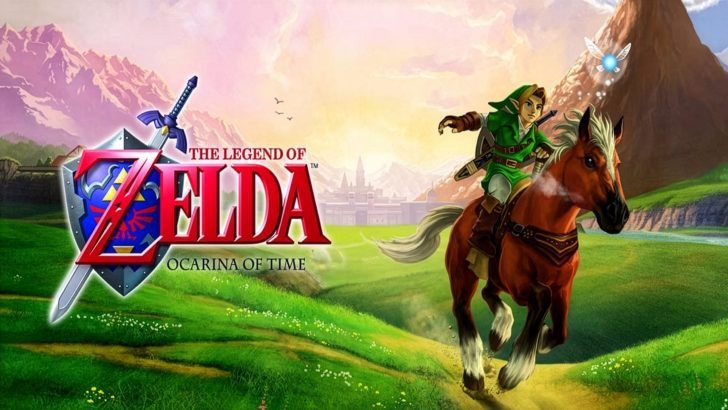
The required promotional image circulating with the story shows Link riding through a green field with a castle in the distance, a composition that leans into the remake’s most legible promise: the old sense of crossing Hyrule Field, now rendered with denser scenery and a more painterly level of detail. NintendoEverything’s accompanying rundown describes Hyrule Field as the central meadow connecting towns, a volcano, a lake, a desert, and other locations.
For collectors, the unresolved point is important. “Special packaging while supplies last” is not the same as a fully detailed collector’s edition. The provided sources do not confirm pack-in extras, a steelbook, soundtrack, art book, preorder bonuses, or whether the special packaging applies to all first-run physical copies in every region. If the Ocarina of Time Remake box art is the main thing you care about, the safest reading is that official art exists and limited packaging is planned, but the exact retail rollout still needs Nintendo’s regional store pages to fill in the blanks.
Price reporting points to $59.99 digital and $69.99 physical in the U.S.
The clearest U.S. pricing in the provided material comes from ComicBook, which reported that The Legend of Zelda: Ocarina of Time Remake will sell for $59.99 digitally on the Nintendo eShop and $69.99 physically. NintendoEverything separately reported that the Australian Nintendo Store listed the digital version at $94.95 AUD, with the physical version expected at $109.95 AUD, and tied that split to Nintendo’s Switch 2 pricing approach in which digital releases can be cheaper than physical copies.
That gives readers searching for Ocarina of Time Remake price a practical starting point: expect the digital copy to be cheaper than the boxed copy in at least the regions covered by these reports. NintendoEverything also compared the Australian listing to Yoshi and the Mysterious Book, which it said was priced at $60 digital and $70 physical in the United States.
There are still gaps. The supplied sources do not include a direct U.S. Nintendo Store listing text, do not confirm whether the physical premium is tied to cartridge cost, special packaging, or Nintendo’s broader Switch 2 pricing policy, and do not spell out international prices beyond Australia and reported U.S. pricing. ComicBook also reported that a Special Edition Nintendo Switch 2 console tied to Zelda’s 40th anniversary will be available, while Nintendo Wire reported a 40th Anniversary Edition Switch 2 console and Pro Controller launching October 29. None of the provided material confirms that the game itself is bundled with that hardware.
Should you preorder, buy digital, or wait?
If the date and platform are enough for you, the confirmed path is simple: The Legend of Zelda: Ocarina of Time Remake is dated for November 5 on Nintendo Switch 2. If price is the priority, the reported split favors digital, with ComicBook citing $59.99 on the eShop versus $69.99 physical in the U.S.
If you care about ownership, display value, or first-run packaging, the physical version has the stronger pull because NintendoEverything says special packaging will be available while supplies last. That also makes waiting risky if the special box becomes limited by retailer allocation. The tradeoff is cost: based on current reporting, the boxed copy carries a $10 premium in the U.S.
If you want technical certainty, wait. None of the provided sources confirm frame rate, resolution, file size, accessibility options, save transfer support, preorder timing, or performance targets. Nintendo has shown the shape of the remake, including Adult Link, Sheik, Ganondorf, modern controls, voiced cutscenes, and the November date. It has not yet answered every buyer-level question. For a game built around time, that leaves the next few weeks doing some of the work.