
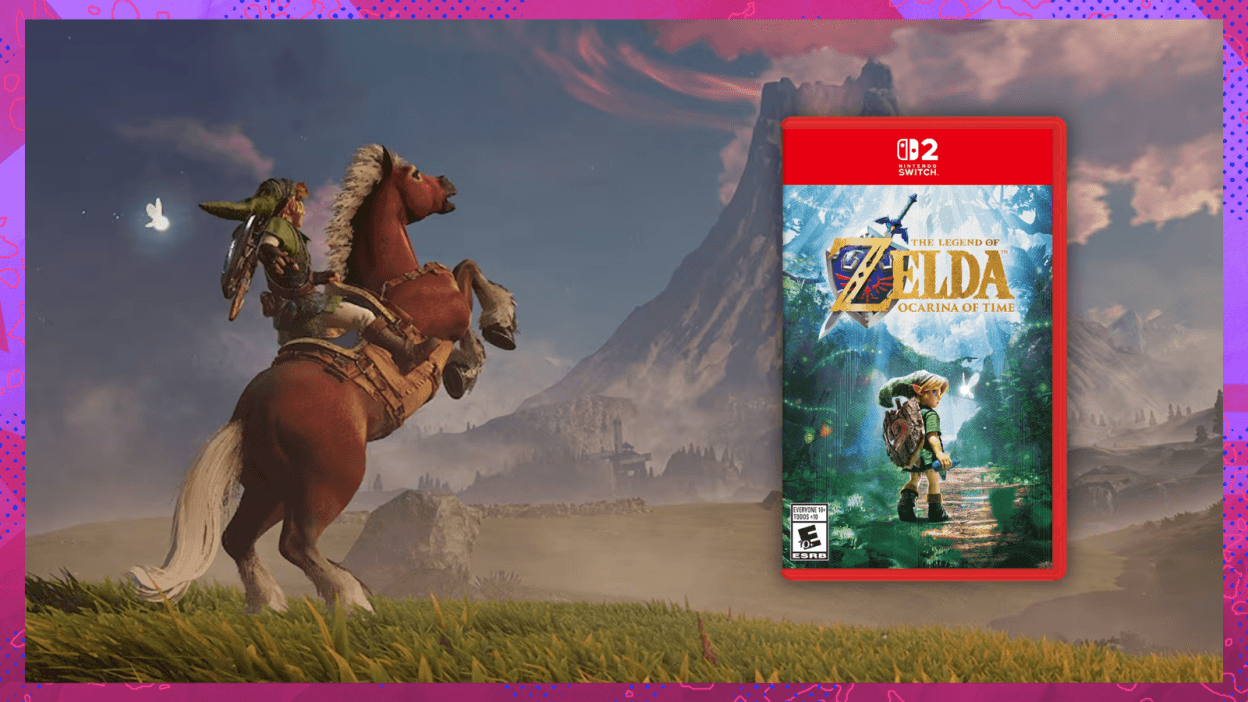
Eiji Aonuma says he is nervous about the Zelda Ocarina of Time remake as Switch 2 preorders, foil-cover demand, discounts, and bundle shortages turn launch week into a careful buyer’s watch.
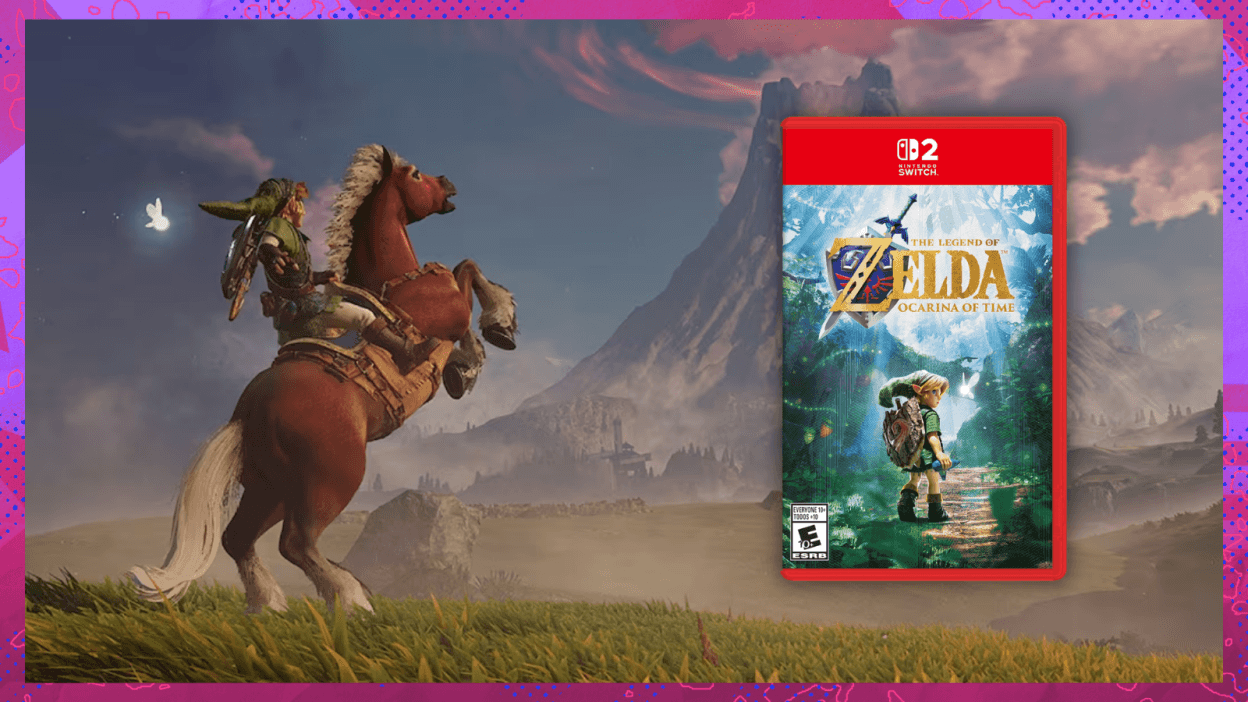
Image: mashable.com
Aonuma’s nerves put the remake under sharper scrutiny
Eiji Aonuma’s latest comments land at exactly the wrong, or right, moment for Nintendo: the Zelda Ocarina of Time remake is one week from its November 5, 2026 launch on Nintendo Switch 2, and the conversation has already shifted from announcement excitement to buyer anxiety.
In comments reported by Japan Today and relayed by My Nintendo News, the longtime Zelda producer said he is “all nervous” about releasing the remake because he does not know how it will be received and “can’t stop thinking about it.” He also credited younger staff for thinking through “how to adapt the game in the best possible way” and how to make it fun “once you have the controls in your hands.”
That is the key line. Aonuma is not framing the challenge as a museum problem, where the goal is simply to polish a revered 1998 Nintendo 64 release. He is describing a feel problem. Ocarina of Time’s reputation was built on timing, spatial readability, dungeon pacing, and the clean combat cadence of Z-targeting in a world that suddenly made 3D adventure legible. A remake can keep the story beats and still live or die on whether Kokiri Forest, Hyrule Field, the Forest Temple, and the Ganondorf climb feel natural in modern hands.
That pressure is now colliding with the practical rush around Ocarina of Time preorders. Multiple outlets are tracking discounts, physical packaging, launch events, and a limited Zelda-themed Switch 2 console. The clean version of the story is that a landmark game is coming back. The messier version is that the remake is arriving with a collector economy already in motion, and Aonuma’s caution gives players a reason to separate nostalgia from purchase timing.
The remake question is control, pace, and what Nintendo chooses to modernize
The current public entry for The Legend of Zelda: Ocarina of Time’s 2026 remake describes it as a Nintendo-developed and Nintendo-published action-adventure game for Nintendo Switch 2, scheduled for November 5, 2026. It says the remake retains the story and broad structure of the original, with Link exploring Hyrule across two time periods to face Ganondorf, while updating the presentation with what it describes as “stylized realism.”
The listed gameplay changes are where Aonuma’s nerves become easier to understand. The entry describes a running ability, faster swimming, motion-control aiming, full camera control, item scrolling similar to Breath of the Wild, and a change from automatic jumps to button-based jumping. It also lists fully voiced cutscenes, an expanded Hyrule Castle Town, a “Threads of Time” objective log, continuous time passage in towns and buildings, microphone-based ocarina song input, and a Hall of Defeated Foes for enemy information and boss rematches.
If those details reflect the final retail experience, Nintendo is touching systems that affect the rhythm of almost every scene. Full camera control changes how players read rooms. Button jumping changes traversal confidence. Faster swimming can reduce friction, but it can also reshape the tempo of water traversal. Expanded towns and voiced scenes can make Hyrule feel less like a sequence of iconic spaces and more like a contemporary adventure hub.
For action-adventure players, those are not cosmetic choices. Ocarina of Time’s set pieces were built around a specific control vocabulary: lock-on duels, deliberate item swapping, scripted approach lines, and dungeons that taught the player to think in rooms rather than in open-world routes. A Nintendo Switch 2 Zelda remake has to decide when to preserve that stop-and-start texture and when to let modern movement smooth it out. Aonuma’s comment about “controls in your hands” suggests Nintendo knows the reception will turn on that tactile judgment.
Ocarina of Time has always been resold through memory and format
Nintendo Life’s retrospective places the remake inside a long rerelease history rather than treating it as a clean break. The outlet notes that Ocarina of Time first launched on Nintendo 64 in Japan on November 21, 1998, followed by North America two days later and Europe on December 11. It also points out that the game has appeared on every Nintendo home console since, in addition to other releases, and says the Switch 2 version marks the second time Nintendo has rolled out a remake on different hardware.
That history matters because Ocarina of Time has never been frozen in one definitive commercial form. Nintendo Life notes that the original N64 release itself had multiple revisions, including changes tied to the Fire Temple chanting, Ganondorf’s blood, and small text edits, citing The Cutting Room Floor for granular version differences. On GameCube, the game returned as part of a Wind Waker preorder bonus that included Master Quest, a remixed version tied to the long-discussed 64DD-era “Ura Zelda.” Another GameCube compilation, The Legend of Zelda: Collector’s Edition, was distributed through hardware bundles and promotions rather than normal retail shelves, according to Nintendo Life.
That pattern explains the intensity around the new physical release. Ocarina of Time’s afterlife has always mixed play access with format collecting: cartridges, bonus discs, compilations, remakes, subscription libraries, and now Switch 2 packaging. The remake is being judged as a game, but it is also being hunted as an object. That creates a split audience before launch. Some players want the safest way to play on day one. Others want the version that will sit on a shelf as the next chapter in a 28-year buying history.
Ocarina of Time preorders are already split by price, packaging, and access
For players watching Ocarina of Time preorders, the confirmed practical details depend on retailer and format. Forbes reported on October 14 that preorders were live, with the Switch 2 remake launching November 5 and priced at $59.99 digital and $69.99 physical. Nintendo Wire reported the next day, with an October 16 update, that Amazon and Walmart were offering $10 off physical preorders, bringing the price down from $69.99 to $59.99. Mashable listed a slightly different deal price, saying Amazon and Walmart had physical preorders at $59.88, a $10.11 discount from $69.99.
Those small differences are normal in live retail coverage, but readers should treat them as time-sensitive listings rather than permanent pricing. Mashable explicitly notes that deal pricing and availability can change after publication. Nintendo Wire similarly warns that Switch 2 preorder discounts often disappear shortly before or on launch day. If the discount is your reason to buy early, verify the checkout price rather than relying on an article timestamp.
The bigger collector hook is the foil cover. Kotaku reported that, according to Nintendo, the first print run of the physical game comes in a foil-gilded box. Kotaku also noted that Nintendo has not specified how long that run will last or when standard packaging will replace it. That makes the physical preorder a calculated bet: it may improve your chance at the launch packaging, but it does not remove retailer fulfillment risk.
Launch-night access appears uneven. Kotaku reported that the New York Nintendo Store’s reservation-based midnight release was already full. The same outlet said Best Buy would allow shoppers to purchase the game at launch events while supplies last, even without a preorder, while a local GameStop contacted by Kotaku appeared to be limiting its midnight launch to preorders at the time of reporting, with the possibility of change closer to November 5. That is useful guidance, but it is also local. Call your store if a midnight pickup matters.
The Zelda Switch 2 console is the real shortage warning
The most volatile preorder story around the remake is not the game card. It is the Zelda-themed Switch 2 console. Kotaku reported that demand for the special console was high and quantities were low or unavailable, then separately reported that several Walmart customers said their orders for the Triforce-adorned Switch 2 were canceled a day before expected delivery.
According to Kotaku, affected buyers received messages saying the delivery order was “out of stock.” The outlet cited customer-service accounts claiming Walmart oversold preorders, while also noting that the console was still listed as out of stock on Walmart’s site and appeared at $700, nearly $200 above the initial bundle listing. Kotaku cautioned that the $700 price may have been from a third-party seller using Walmart’s marketplace.
That distinction matters. The reported cancellations concern the limited Zelda-themed Switch 2 hardware, not standard copies of the game. Still, the episode is a warning for anyone treating a preorder receipt as a guarantee for scarce Zelda merchandise. A retailer can take an order, then fail to fulfill it. A marketplace page can mix first-party retail stock with third-party listings. A sold-out limited console can reappear at a higher price without that higher price reflecting Nintendo’s launch MSRP.
If your goal is to play the Zelda Ocarina of Time remake on launch day, the digital version is the least exposed to packaging shortages. If your goal is the foil cover, choose a retailer with clear pickup or shipping status and keep a backup plan. If your goal is the Zelda-themed Switch 2 console, treat any marketplace listing above the original bundle price with caution and check who is actually selling it before entering payment details.
Players should decide whether they are buying a keepsake or a new version of a classic
Aonuma’s anxiety is a useful check on launch-week momentum. It reminds players that the central question is not whether Ocarina of Time is important. Nintendo’s own rerelease history, as documented by Nintendo Life, already answers that. The question is whether this remake’s modernizations respect the pressure, pauses, and dramatic spacing that made the original work.
The sources available now support several firm takeaways. The remake is listed for Nintendo Switch 2 with a November 5, 2026 release. Retail coverage places the digital version at $59.99 and the physical version at $69.99 before discounts, while Amazon and Walmart deal coverage has shown physical preorder prices around $59.88 to $59.99. Kotaku reports that Nintendo’s first physical print run uses foil-gilded packaging, but there is no sourced end date for that run. There is no source material here confirming a Switch 1 version, an upgrade path from older releases, final performance metrics, or review scores.
That leaves three sensible paths. Players who want the cleanest launch access can go digital and avoid the foil-cover chase. Collectors who want the first-print physical box should move quickly, but only after checking the current retailer price, seller, delivery method, and cancellation policy. Players who are most sensitive to control changes, camera feel, voiced cutscenes, and pacing should consider waiting for full technical impressions or reviews, because Aonuma’s own comments point directly at the hands-on feel as the remake’s decisive test.
Ocarina of Time is a game about returning to places that have changed while you were gone. Nintendo is now asking players to do the same thing with one of its most protected adventures. Preorders can secure a box, a discount, or a launch-night plan. They cannot answer the harder question Aonuma is worried about: whether this version of Hyrule still moves with the right weight when the sword comes out.