
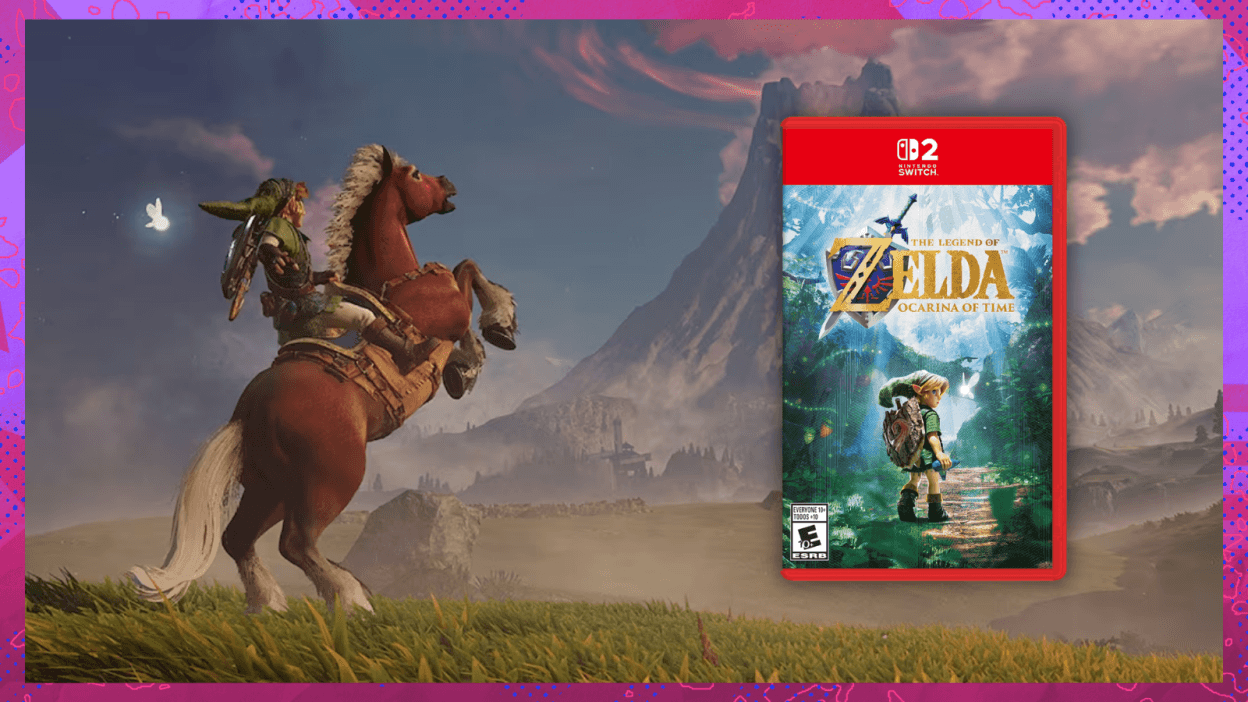
The Ocarina of Time remake for Switch 2 has region-locked preorder bonuses, no announced U.S. retailer bonus yet, and a growing debate over how much Nintendo should change a classic.
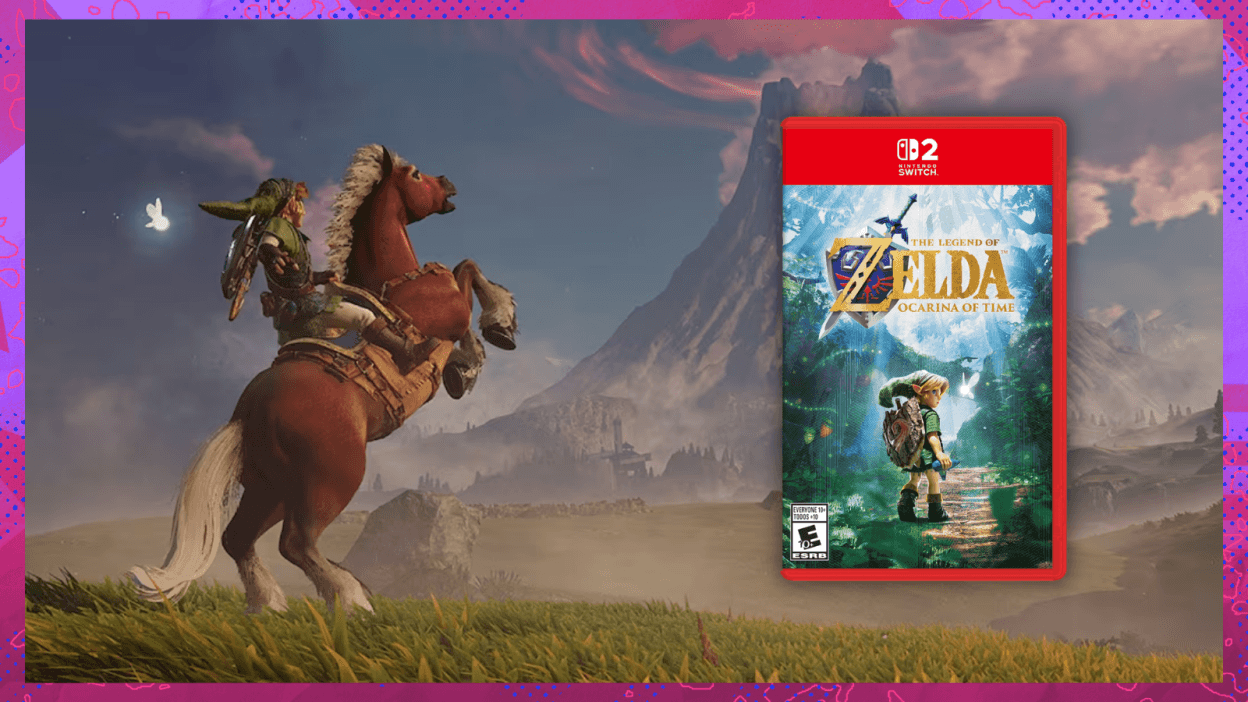
Image: mashable.com
The best Ocarina of Time remake bonuses are already divided by region
The clearest new wrinkle around The Legend of Zelda: Ocarina of Time remake is not a dungeon, boss, or story change. It is the preorder map. According to Polygon, the Nintendo Switch 2 remake is getting a set of region-specific preorder bonuses, with some of the most desirable extras locked to particular countries and retailers. That immediately puts longtime collectors in a familiar Zelda bind: decide whether to secure the version available locally, wait for a better offer, or accept that the nicest physical items may never be offered in their market.
The standout bonus reported so far is in Canada. Polygon says Canadian customers who preorder through EB Games can get a special slip cover that wraps around the game case and makes it resemble the original Nintendo 64 Ocarina of Time box. My Nintendo News also points to an infographic shared by X user eStarland and describes the Canadian bonus as an N64 Ocarina of Time slipcase. For a remake of a game so tied to late-’90s cartridge-era memory, that is the kind of physical extra that understands the assignment. It sells the object as a bridge back to 1998, rather than as simple shelf dressing.
The U.K. offer goes in a different direction. Polygon reports that fans who preorder through Nintendo in the U.K. can get a 3D replica of the Spiritual Stones that Link collects during the adventure. Polygon also cites another regional Nintendo store listing for a small keychain replica of Link’s blue ocarina. GameRant similarly identifies the U.K. Spiritual Stones set as one of the stronger known bonuses, based on images released so far. These are confirmed as regional or retailer-linked offers in the reporting, not universal pack-ins.
For U.S. buyers, the situation is thinner. My Nintendo News says preorder bonuses for customers in the United States had not been announced at the time of its report. GameRant likewise says there do not appear to be major U.S. preorder bonuses revealed yet, while noting that early copies of the remake come with a special foil cover. Polygon reports the U.S. physical version at $69.99, while Canadian buyers are paying what Polygon calculates as the U.S. dollar equivalent of $79.25. That price gap adds a practical sting to the collector envy: the Canadian slipcase may look like the premium nostalgic option, but Polygon notes Canadian game pricing is higher.
The confirmed preorder picture is useful, but incomplete
The safest reading of the Zelda Ocarina of Time Remake preorder bonuses right now is simple: there are real physical incentives in some regions, a foil-cover early-copy promotion, and no announced major U.S. equivalent in the sources provided. Anything beyond that should be treated as unconfirmed until Nintendo or a retailer lists it publicly.
Polygon gives the remake a Nov. 5 release date for Nintendo Switch 2. It also says the Nintendo Switch 2, The Legend of Zelda 40th Anniversary Edition hardware is scheduled for Oct. 29. The remake itself is being discussed across these reports as a Switch 2 release, and GameRant describes it as the second remake of the Nintendo 64 classic after the 3DS version. None of the supplied source material confirms a Switch 1 version, an upgrade path, a digital deluxe edition, or U.S. retailer-exclusive items beyond the foil-cover early-copy detail.
That distinction matters because preorder bonus coverage tends to blur three different things: first-print packaging, retailer exclusives, and regional Nintendo store promotions. Based on the reports, the foil cover appears to be tied to early copies generally. The EB Games slipcase is a Canada-specific retailer bonus. The Spiritual Stones and ocarina keychain are tied to regional Nintendo store offers cited by Polygon. Polygon also notes that some extras were already sold out in certain cases, so availability may change faster than official product pages or news posts can make clear.
There is also a rumor-control lesson here. My Nintendo News links back to an earlier report in which NateTheHate disputed the idea that GameStop had leaked an Ocarina of Time remake preorder date, saying the listing was pulling data from another upcoming game instead. That is not a current bonus confirmation, but it is a useful warning. Until a retailer page or Nintendo listing clearly names The Legend of Zelda: Ocarina of Time remake and its bonus, fans should treat screenshots, placeholder dates, and third-party catalog data with caution.
A remake of a game that already sits on the pedestal
The preorder scramble is happening because Ocarina of Time occupies a strange position in games culture. Siliconera frames the original Nintendo 64 release as one of the most frequently cited answers to the question of the greatest video game of all time, noting that it still sits atop Metacritic’s all-time best-reviewed games and continues to top many fan polls. That makes this remake a commercial layup and a creative trap at the same time.
Nintendo is not reviving a forgotten cult favorite that needs rescue. It is revisiting a game many players already treat as sacred architecture. Every corridor in the Deku Tree, every first step onto Hyrule Field, every cut from child Link to adult Link carries memory weight. That memory is exactly what makes the EB Games N64-style slipcase such a sharp bonus. It does not promise new lore or new mechanics. It says the box itself remembers.
But the same nostalgia sharpens skepticism. Siliconera’s argument is that a truly good game usually remains good, even when its controls or presentation come from another era. The piece points to Ocarina of Time’s automatic jumping, where Link leaps when running off an edge instead of relying on a dedicated jump button, as an example of design that may feel unusual now but was central to how the original was built. In the original, the world rarely asks players to make jumps without clear ledges and direct lines. The friction is real for modern players, but the design had rhythm.
That is the core debate around the Ocarina of Time remake details we have so far. The remake has to make an old adventure legible on modern hardware without sanding away the cadence that made it work. Ocarina was never only about lock-on combat or dungeon puzzles in isolation. It was about the pace between them: the pause before a door opens, the angle of a target camera, the relief of solving a room after hearing the same ambient loop for ten minutes. Change enough small timings and the same map can feel like a different performance.
Modern controls could help new players, if the old design still leads
GameRant reports that the Switch 2 remake features significantly improved graphics, with upgraded characters, textures, animations, and other visual elements. It also says new gameplay mechanics are being added, including a new jump button. That last detail is the one that will divide purists faster than any preorder trinket.
A jump button sounds minor if your Zelda starting point is Breath of the Wild or Tears of the Kingdom. In those games, vertical movement is part of the player’s vocabulary. In Ocarina of Time, movement was more authored. The absence of a jump button helped the original game maintain a particular action-adventure rhythm: line up the approach, trust the ledge, commit to the leap. Siliconera argues that the original was built around auto-jumping and does not generally demand unsupported platforming. That makes the remake’s challenge unusually delicate.
If the jump button is layered in as a convenience, it could reduce the early friction Siliconera identifies for players raised on newer Zelda entries. If it forces level geometry, enemy arenas, or puzzle timing to be redesigned too aggressively, longtime fans may feel the remake is speaking over the original instead of translating it. The strongest version of this remake would understand that combat in Ocarina is a dance of anticipation more than speed. Stalfos duels, Lizalfos exchanges, and Ganon’s final confrontation depend on spacing, waiting, and reading tells. Faster animation and sharper input response are welcome only if they preserve that dramatic tempo.
The same applies to visuals. Updated textures and animation can restore the awe that early 3D graphics once carried, especially on modern displays where Nintendo 64 texture resolution and frame rate can be hard on the eyes, as Siliconera notes. The danger is over-clarifying spaces that once relied on mood, shadow, and implication. Ocarina’s most memorable set pieces, from the Forest Temple’s haunted corridors to the final climb toward Ganondorf, use restraint as much as spectacle. A remake can make them richer, but it has to know when to leave the room breathing.
Switch 2 gives Nintendo a showcase, but also raises expectations
The Ocarina of Time remake Switch 2 positioning changes how the project will be judged. GameRant describes the remake as a visually upgraded recreation of the Nintendo 64 game’s world, and Polygon lists it for release on Nintendo’s newer hardware. My Nintendo News separately references coverage saying the remake will use VRR in docked mode, though the supplied text does not include the underlying technical details. The only responsible takeaway from these sources is that expectations around presentation and performance are high, while the full technical profile still needs clearer public confirmation.
That uncertainty is part of the buying decision. If you are considering a Zelda remake preorder mainly for the game, not the collectibles, the sources here do not answer every practical question. We have reported pricing for the U.S. physical version from Polygon, regional bonus information, and a release date. We do not have a complete performance breakdown, file size, digital pricing, control customization details, or a full list of mechanical changes in the supplied material.
For Nintendo, the business logic is obvious even without overreading it. Ocarina of Time gives Switch 2 a prestige release with a known name, a built-in multigenerational audience, and physical editions that can drive early purchases. Polygon’s note about the Zelda-themed Switch 2 hardware arriving Oct. 29, shortly before the remake on Nov. 5, also places the game inside a hardware moment. Fans looking for the themed console are already dealing with restocks, according to Polygon, which says retailers such as Amazon and Target had restocked multiple times after preorders went live while often showing the console as sold out.
That creates a slightly awkward split. Nintendo can use nostalgia to sell hardware and boxed copies, but the game still has to satisfy players who know every beat and newcomers who may have no tolerance for 1998-era friction. Preorder bonuses can decorate the launch. They cannot answer the deeper question of how this version plays when Link first steps into a remade Hyrule Field and the player expects both memory and momentum.
Who should preorder now, and who should wait
If your priority is a specific physical bonus, the answer depends almost entirely on region. Canadian collectors who want the N64-style slipcase should be looking at EB Games, based on Polygon’s and My Nintendo News’ reporting. U.K. buyers who want the Spiritual Stones replica should check Nintendo’s regional store availability, with the caveat that Polygon says some extras have already sold out in certain cases. Fans interested in the ocarina keychain should likewise verify the relevant Nintendo store listing in their region before assuming it is available locally.
U.S. players have less reason to rush for a retailer exclusive because no major U.S. preorder bonus has been announced in the provided reports. The foil cover for early copies is the known incentive cited by GameRant and Polygon, but that is a different kind of bonus than a slipcase, stones replica, or keychain. If a U.S. retailer announces something later, early buyers may find themselves locked into a less appealing preorder unless they are willing to cancel and reorder.
Players more concerned with the remake itself should wait for fuller Ocarina of Time remake details. The reported graphics overhaul and new jump button are meaningful, but they do not yet tell us how far Nintendo has gone with dungeon tuning, combat feel, camera behavior, accessibility options, or performance targets. For a remake of this particular game, those are not side questions. They are the difference between a respectful modernization and a version that misunderstands the pressure points of the original.
The safest recommendation is split. Collectors in regions with a bonus they genuinely want may need to move quickly, because regional extras can sell out. Everyone else can afford to watch for U.S. preorder updates, technical information, and clearer gameplay breakdowns before committing. Ocarina of Time may not need a remake to prove its greatness, as Siliconera argues, but this Switch 2 version still has something to prove: that revisiting a legend can sharpen the adventure without breaking the spell.