
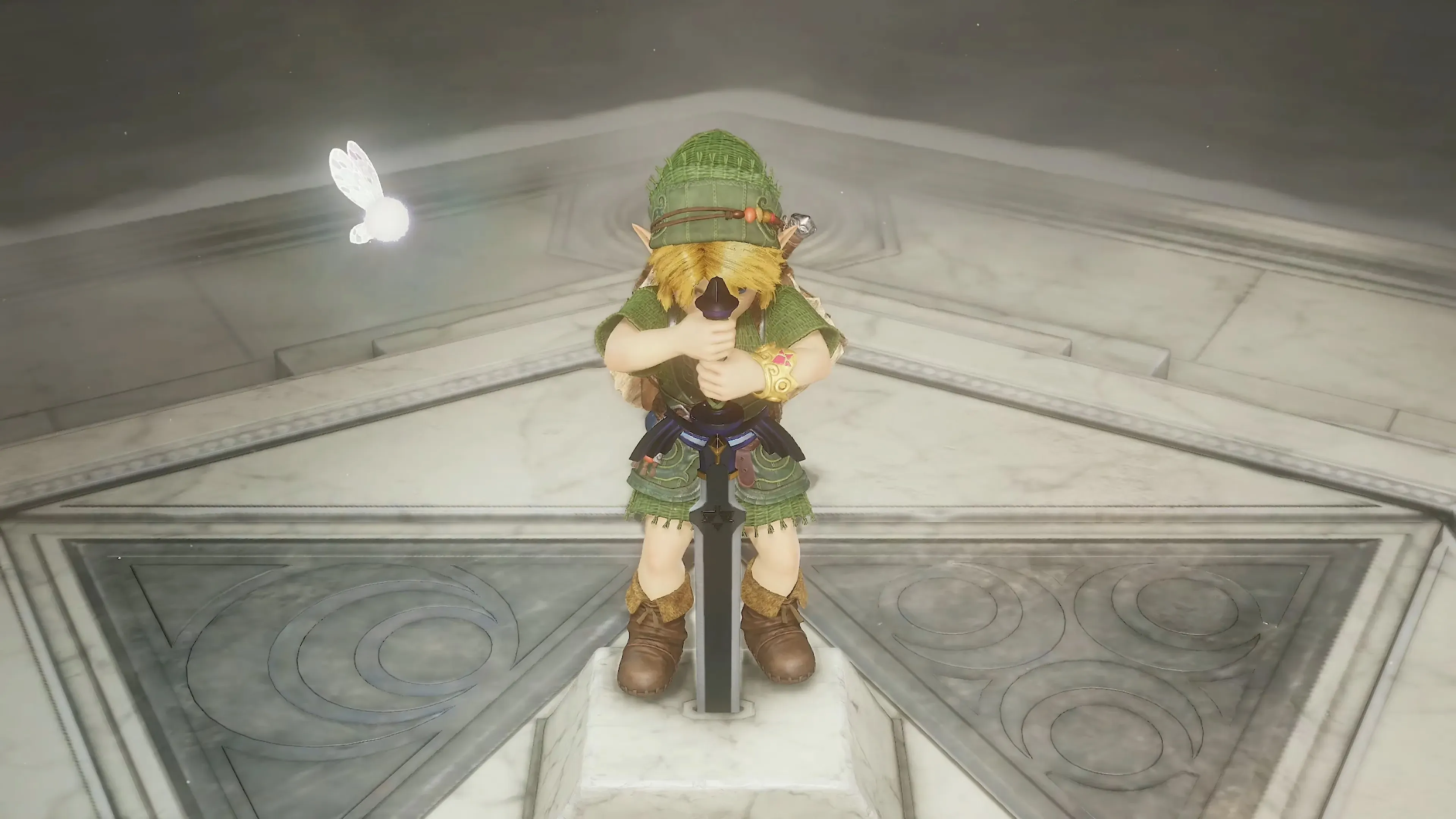

The Switch 2 remake adds voiced cutscenes, improved visuals, better controls, and a reported Monolith Soft credit, but some launch details still need careful attribution.
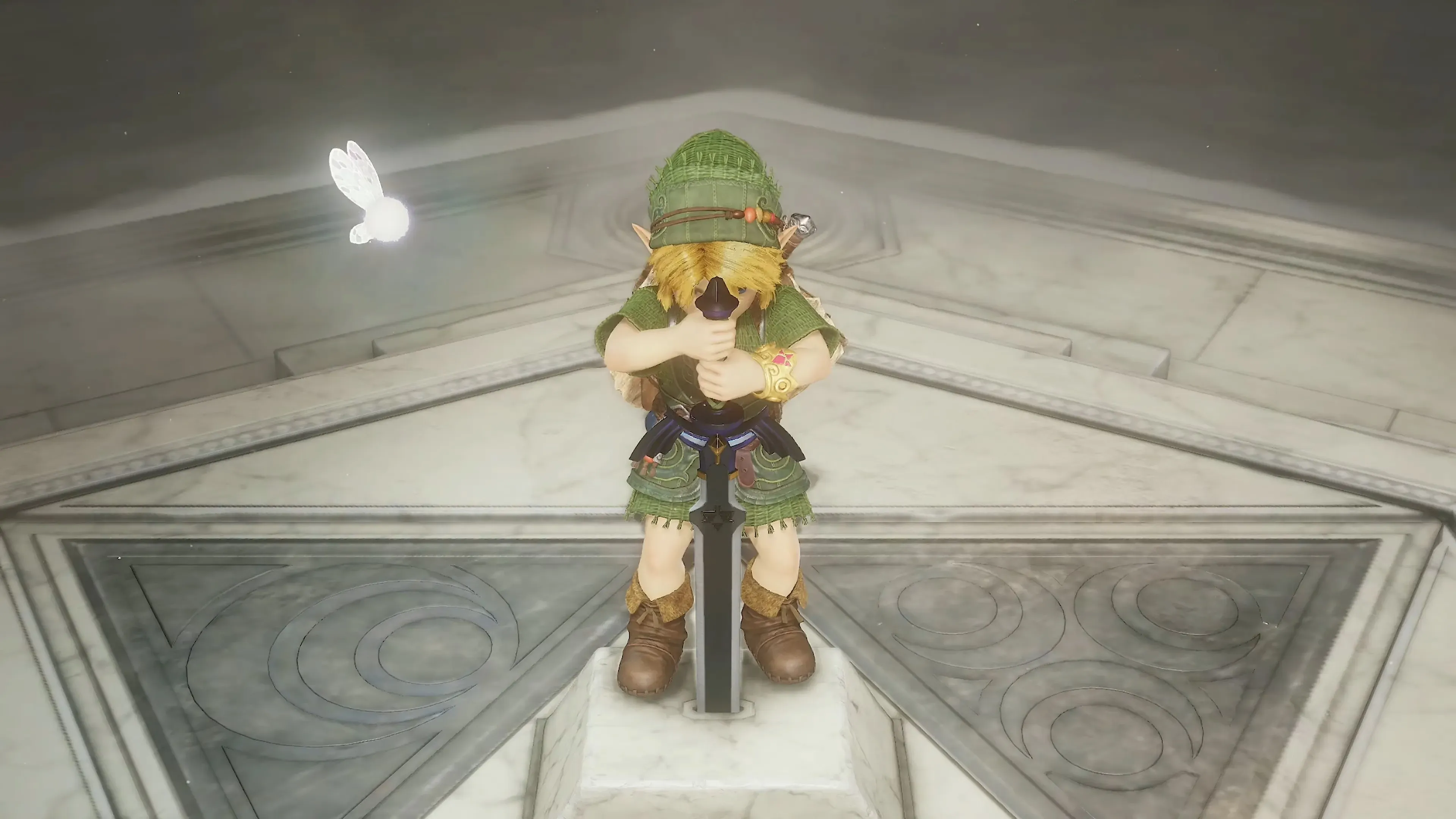
Image: gameinformer.com
The remake is out, and its loudest change is literal
The Legend of Zelda: Ocarina of Time Remake is now out for Nintendo Switch 2, and the launch has confirmed the change that most directly alters the feel of Nintendo’s 1998 classic: story cutscenes now feature English voice acting. IGN reports that the full English cast has been verified through the game’s credits, while Nintendo Everything and Siliconera also published cast lists tied to the remake’s launch and credits.
That addition creates the central tension around this release. Ocarina of Time is one of the most text-driven adventures Nintendo ever made, remembered for pauses, camera cuts, musical cues, and the weight of silence as much as for its dungeons. Giving Zelda, Ganondorf, Navi, Saria, Ruto, Darunia, and the sages spoken performances changes the tempo of scenes many players have replayed for decades. At the same time, IGN notes that Link remains silent, preserving one of the series’ most consistent traditions even as the surrounding cast now speaks.
The remake is also a Switch 2 exclusive, according to MMORPG.com and Behind the Voice Actors. BTVA lists the NA, JP, and EU release date as November 5, 2026, with Nintendo Switch 2 as the exclusive platform. No source material provided here confirms a price, upgrade path, physical-versus-digital availability, or performance targets, so those details should be checked on Nintendo’s own storefront before buying.
The confirmed English cast puts modern Zelda voices into a 1998 story
The Ocarina of Time remake voice actors are now broadly consistent across IGN, Siliconera, Nintendo Everything, Yahoo’s Destructoid syndication, and Zelda Dungeon, with IGN specifically saying it verified the list through the credits. Lisa Reimold voices Navi; Erica Mendez voices both Zelda and Sheik; Matthew Mercer, also listed as Matt Mercer by several outlets, returns as Ganondorf; Richard Epcar voices the Great Deku Tree; Suzie Yeung voices Saria; Frank Todaro voices Kaepora Gaebora and Rauru; Laura Post voices Impa; Josh Petersdorf voices Darunia; Anne Yatco voices Ruto; Deva Marie Gregory voices the Deku Tree Sprout; Cristina Vee voices Nabooru; and Reba Buhr voices Koume and Kotake, with IGN and Siliconera also crediting her for Twinrova. IGN lists Daniel Bushey, Rachel Seeley, Danny Hunt, and Haley Hanna Hunt under voice support.
Mercer’s casting carries the strongest continuity signal. IGN and Nintendo Everything both identify him as reprising Ganondorf after The Legend of Zelda: Tears of the Kingdom, and Siliconera quotes Mercer’s social media post saying he was “grateful and honored” to bring “the OG Ganondorf” to life. Siliconera also cites Erica Mendez’s own post, where she says Ocarina of Time was her favorite N64 game as a child and confirms she is the English voice of Princess Zelda in the remake.
There is a small credit-list wrinkle worth preserving rather than flattening. IGN and Siliconera include Twinrova among Reba Buhr’s roles, while some lists foreground Koume and Kotake and do not always separately name Twinrova. That is less a contradiction about Buhr’s involvement than a difference in how outlets are presenting the witches and their fused form, but players looking for the exact in-game credit should rely on the remake’s own credits screen.
Voice acting changes the scene rhythm, but Link’s silence remains the anchor
The original Nintendo 64 version of Ocarina of Time did not feature voiced dialogue, a point made by IGN and Nintendo Everything. The Switch 2 remake therefore does something different from a simple visual restoration. It assigns vocal performance to moments players previously read at their own pace, which can sharpen dramatic beats but also removes some of the old ambiguity.
The Zelda and Sheik casting is especially important because Mendez covers both identities, according to IGN and the other cast lists. In the original structure of the story, that duality sits at the center of the adult timeline’s emotional reveal. A single English actor across both roles gives the remake a clear performance line through that arc, though the provided sources do not describe the direction, delivery, or any script alterations.
Navi is another pressure point. Siliconera notes that in the remake we hear Navi speak beyond the famous “Hey, listen!” prompt, and Yahoo’s syndicated Destructoid article says the new audio includes voice acting in certain cutscenes from specific characters. That phrasing matters. The launch coverage supports voiced cutscenes and expanded character audio, but it does not establish that every line, hint, gameplay bark, or optional interaction has been fully voiced. For returning players, the practical expectation should be spoken story presentation with Link still silent, not a wholesale conversion into a fully voiced RPG.
The confirmed remake features point to feel, not only fidelity
The Legend of Zelda remake features confirmed across the provided sources include improved visuals, better controls, improved audio, voice acting in cutscenes, and expanded features. MMORPG.com describes the release as blending a remake of the classic with a graphical glow-up and new or expanded features. Yahoo’s Destructoid syndication calls it a full-fledged remake with quality-of-life changes such as better controls, graphics, and audio. The required Game Informer media for this assignment identifies fully voiced cutscenes and a jump button as launch features.
That jump button is the most intriguing mechanical detail because Ocarina of Time’s original movement was built around contextual jumps. Link leapt automatically from ledges, and the game’s combat rhythm leaned on Z-targeting, shield timing, spacing, and animation commitment rather than a manual jump input. A dedicated jump button can make traversal and combat feel more direct, but the provided sources do not specify how it is mapped, whether it changes dungeon layouts, or whether old-style contextual movement remains available.
The safer read is that Nintendo has modernized the remake around player control and presentation while keeping the core identity visible. Better controls and a jump button speak to input feel. Improved audio and voiced cutscenes speak to staging. Improved visuals speak to readability and atmosphere. None of the sources provided confirm new dungeons, altered boss mechanics, added story chapters, or changed item progression, so those should not be assumed from the phrase “expanded features” alone.
The Monolith Soft report is important, but the scope is still unclear
The Monolith Soft Zelda angle needs careful handling. The provided source set includes a Siliconera entry titled “Monolith Soft worked on The Legend of Zelda: Ocarina of Time,” but the accessible source text is a Cloudflare block rather than the article body. That means the provided material supports the existence of a report with that headline, but it does not show the underlying credit text, the department involved, the number of staff, or the specific work Monolith Soft performed.
Even with that limitation, the reported involvement is worth watching because this remake is being judged on feel. Returning players know the cadence of Kokiri Forest, the camera language of the first Ganondorf confrontation, the timing of Stalfos fights, and the way dungeons teach a tool before twisting it. A support studio credit on a remake with improved visuals, better controls, voiced cutscenes, and a jump button raises practical questions about who handled environment rebuilding, animation, systems implementation, technical support, or content integration.
The important distinction is confirmed credit versus inferred responsibility. From the provided sources, we can say Siliconera reported Monolith Soft worked on the game, and we can say the remake contains modernized presentation and control features reported by other outlets. We cannot say Monolith Soft designed the jump button, rebuilt dungeons, directed cutscenes, or handled world production unless a credit, developer statement, or accessible report says so. For now, “Monolith Soft Zelda” is a meaningful credit signal, not a blank check for speculation.
Buying guidance for returning players on Switch 2
If your main question is whether the Zelda Ocarina of Time remake is a conservative restoration or a presentation-forward remake, the launch evidence points to the latter. Voice acting in cutscenes, modern audio, improved visuals, better controls, expanded features, and a jump button all suggest Nintendo wanted the remake to play to Switch 2 expectations rather than preserve the Nintendo 64 texture unchanged.
If you are sensitive to performance, pricing, or upgrade entitlements, the provided sources do not answer those questions. MMORPG.com and IGN say the game is out now, and BTVA lists Switch 2 exclusivity and a November 5, 2026 release date, but none of the supplied material confirms frame rate, resolution, file size, price, edition structure, or whether owners of previous versions receive any discount. Those are storefront-level details, and buyers should verify them directly before purchase.
If your concern is tone, the strongest confirmed reassurance is that Link remains silent, according to IGN. The cast around him now has spoken performances, but the protagonist’s silence keeps the story framed through player projection. For a game whose best set-pieces often hinge on anticipation before action, that choice may be the line Nintendo was unwilling to cross.
The launch still leaves a few useful questions unanswered
The cast is now the clearest part of the release. The features are visible in broad strokes. The remaining unknowns sit in the spaces that matter most to experienced players: how far the jump button reaches into level design, how much dialogue is voiced outside major story scenes, whether accessibility options accompany the control changes, and what Monolith Soft’s reported credit actually covers.
Those questions will shape the remake’s long-term reputation more than the cast list alone. Ocarina of Time’s legacy rests on pacing: childhood opening into adult ruin, calm villages giving way to hostile temples, and combat encounters that teach discipline before spectacle. A remake can brighten the image and give characters voices, but returning players will notice whether the old rhythm still breathes between those upgrades.
For now, the confirmed facts are enough to define the launch pitch. The Legend of Zelda: Ocarina of Time Remake is out on Nintendo Switch 2, it adds voiced cutscenes while keeping Link silent, it features a newly confirmed English cast led by Erica Mendez as Zelda and Sheik and Matthew Mercer as Ganondorf, and its reported Monolith Soft involvement remains significant but not yet fully explained by the accessible source material.