
Netflix’s exclusive streaming rights to the live‑action Legend of Zelda film are more than a licensing footnote. Here’s how the deal fits into Nintendo’s emerging transmedia strategy, and what it suggests about future Zelda game marketing and release timing.
Nintendo’s live action Legend of Zelda film now has a clear home once the cinema lights go down. Thanks to a new global “Pay 1” licensing deal between Sony Pictures Entertainment and Netflix, the movie will stream exclusively on Netflix worldwide after its theatrical and home release windows. On paper that sounds like standard film business, but for Nintendo this is really a games story.
Netflix is not just a place where the Zelda movie will eventually live. It is a predictable, globally synchronized spotlight that Nintendo can build its entire Zelda roadmap around. With the film dated for March 26, 2027 in theaters and then earmarked for Netflix, Nintendo effectively has two major marketing beats to wrap game strategy around instead of one.
The obvious comparison is The Super Mario Bros. Movie. That film’s success pushed Mario into the mainstream in a way Nintendo’s traditional marketing never could, and you could feel Nintendo learning in real time how to treat a game IP as a cross media brand. Mario’s rollout was still relatively conservative, with the movie mostly amplifying an already dominant series. Zelda is different. The live action adaptation is being treated as a tentpole alongside Spider Man and other Sony heavy hitters in Netflix’s promotion of the deal. That framing tells you how Nintendo wants the games to be perceived to a much wider audience.
From a games first perspective, the Netflix arrangement does three important things. First, it locks in a global, algorithm driven discovery engine that Nintendo does not control but can predict. A Zelda banner on a Netflix home page in dozens of territories at once is effectively free advertising for every Zelda title currently on shelves or in an eShop. Second, it strongly hints that Nintendo will want at least one “evergreen” Zelda product ready to catch that wave, whether that is a definitive edition reissue or a new entry. Third, it normalizes the idea that big Nintendo IP will have a streaming home, which will influence how the company spaces out its major releases.
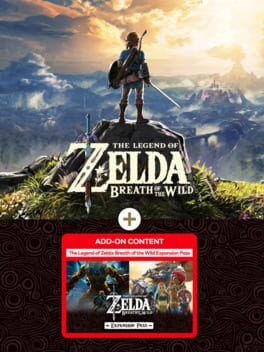
The timing is where this gets interesting for future games. The movie hits theaters in March 2027, which already lines up with Nintendo’s fondness for late March launches that close out its fiscal year. Think of how Breath of the Wild and the Switch both arrived at the start of March, then imagine a world where a new Zelda lands near a movie release instead of a console launch. Even if Nintendo is not ready to drop a fully new mainline title in 2027, it now has strong incentive to put something Zelda shaped onto its next system around that window.
One likely scenario is that Nintendo treats the theatrical release as the “hardcore” moment and the Netflix release as the mass market moment. In that framework, you could see a more traditional marketing push for a complex, core focused Zelda experience around the cinema date, with a second, broader campaign keyed to the Netflix drop. The latter would favor a game that is easy to understand from a trailer thumbnail and does not require decades of series knowledge. That does not mean a simpler game, just one that sells itself quickly, much like how Breath of the Wild’s climbing and gliding sold the fantasy at a glance.
Nintendo also now has a clearer reason to keep at least one Zelda product perpetually “active” during the life of its next machine. That could be through ongoing expansions to an existing title, seasonal content that lines up with film marketing, or even live events inside other games that nod to the movie. The presence of Netflix as a guaranteed partner means tie ins can be planned years in advance rather than scrambled together once the film’s box office trajectory is known.
This is where the broader transmedia strategy comes into view. Nintendo has said it wants a steady cadence of film projects rather than one offs. The Zelda Netflix arrangement sits inside a larger Sony Pictures slate that includes Spider Man and other big theatrical releases, which makes Zelda part of an ecosystem that is already used to long term, cross media planning. That opens the door for Nintendo to think of Hyrule in the same way Marvel thinks about its heroes, not in terms of an always on cinematic universe, but as a constant presence across mediums that always points back to the games.
For players, that likely means a more noticeable feedback loop between what works on the big screen and what shows up in future game design and marketing. If the film version of Link, Zelda, and Ganon resonate with a huge Netflix audience, expect Nintendo to lean on those silhouettes, color palettes, and even musical cues in trailers for the next title. The company does not need to rewrite canon to do this; it can treat the movie as its own timeline while still borrowing its most iconic imagery. That is similar to how different Zelda games borrow each other’s motifs while being separated in the official chronology.
There is also a practical catalog question. Netflix will expose millions of new viewers to the words “The Legend of Zelda” who may never have touched a Nintendo system. Once those credits roll, Nintendo’s job is to convert them into players. That makes backward compatibility, classic game availability, and clear on ramps more important than ever. A new audience that discovers the series through live action is more likely to ask basic questions like where to start and which game feels most like the movie. That puts pressure on Nintendo to have a modern, visually impressive, easy to buy Zelda experience ready to recommend.
The Netflix exclusivity also subtly changes expectations around pacing. With Mario, the notable streaming window arrived after the film had already done its main box office work and after Nintendo had already ridden the wave with theme park openings and game sales bumps. With Zelda tied into a broader Netflix and Sony partnership, the post theatrical window looks less like an afterthought and more like a second premiere. That gives Nintendo a reason to hold some announcements or content back for that moment rather than front loading everything around the first trailer and theatrical debut.
Consider how this might influence DLC timing. If a new mainline Zelda arrives within a year or two of the film, there is a strong incentive to schedule a chunky story expansion or a definitive edition close to the Netflix launch. That way, when interest peaks again as the film lands in people’s queues, there is something new to sell that feels substantial, not just a discount. Nintendo has already shown with games like Splatoon and Mario Kart that it understands how to maintain long tails; the Netflix deal simply gives it a more predictable spotlight to aim those tails at.
On the transmedia front, the Netflix partnership is also a kind of insurance policy. If Nintendo plans additional series or specials built around other IP, having Zelda perform well on the platform gives it leverage in future negotiations. More leverage over streaming terms means more stability for long term game planning, because the company can count on a certain level of exposure and revenue when investing in major cross media pushes. That stability, in turn, makes riskier game projects easier to greenlight, since their marketing does not have to carry all the weight on its own.
Perhaps the most important shift is psychological. For decades, Nintendo operated as if the games were the only real canon and everything else was peripheral. With Mario’s success at the box office and Zelda now positioned as a key part of a global Netflix Sony deal, the center of gravity is inching outward. The games are still the core, but the routes that players take to reach them are multiplying. That will change how Nintendo announces, spaces, and sustains its biggest releases.
When the live action Zelda finally lands on Netflix, the real test will be on the eShop charts and hardware sales graphs, not just in view counters. How many of those viewers will pick up a controller for the first time, and what exactly will Nintendo have waiting for them when they do? If the company gets that part right, the Netflix logo after the end credits could end up being as important to Zelda’s future as any new Sheikah Slate mechanic or open world twist.