
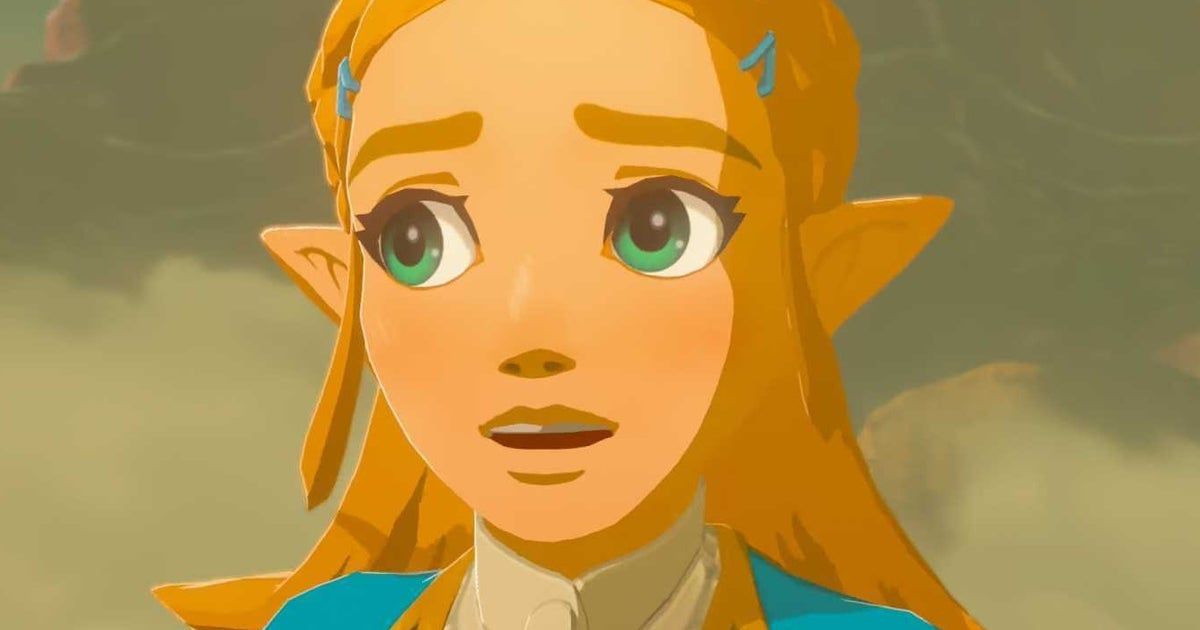
Former Nintendo marketing leads Kit Ellis and Krysta Yang say Zelda was in “dire straits” before Breath of the Wild, framing the open-world pivot as a response to a shrinking audience rather than a break from a thriving formula.
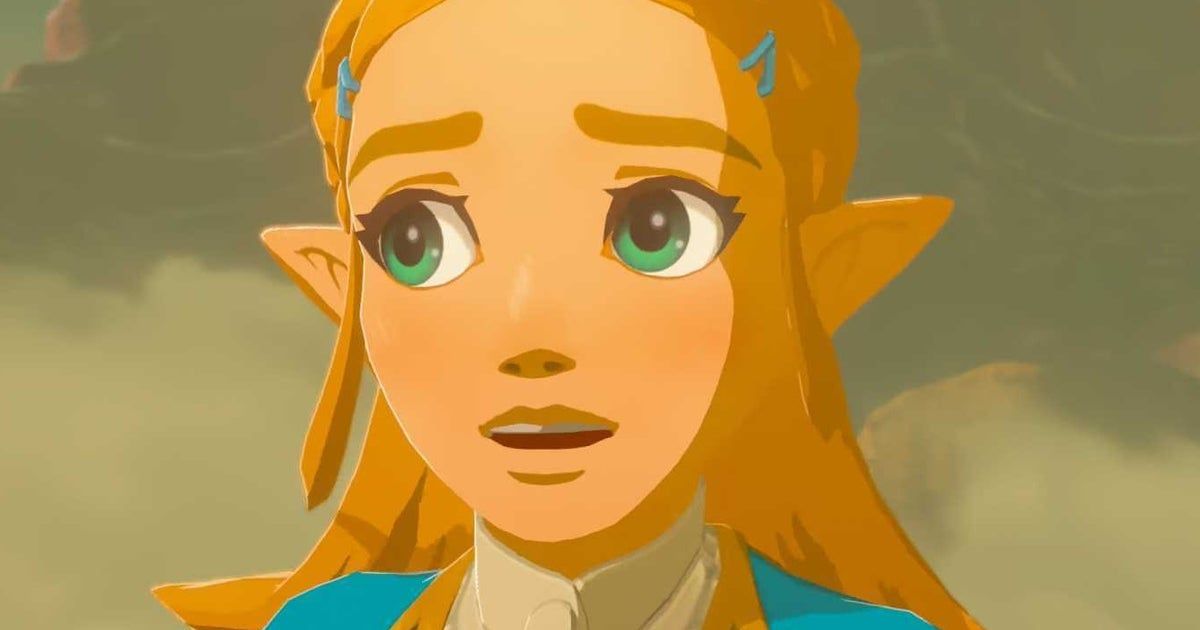
Image: eng.pressbee.net
Former Nintendo leads say Zelda’s old formula was losing its audience
The sharpest claim in the current Zelda debate is not coming from a fan forum or a remake review. It is coming from two former Nintendo of America marketing figures who say The Legend of Zelda was in “dire straits” before Breath of the Wild changed the series’ trajectory.
Kit Ellis, Nintendo of America’s former director of social media marketing, and Krysta Yang, a former Nintendo public relations and creator-relations lead, discussed the state of Zelda on the latest Kit & Krysta podcast, as reported by Nintendo Everything, Eurogamer, IGN, GamesRadar, and Polygon. Their argument cuts directly against a common complaint around modern Zelda: that Nintendo abandoned the traditional dungeon-driven 3D formula while it was still at the height of its popularity.
Ellis said there has been “revisionist history” around that idea, according to the quoted podcast remarks carried by multiple outlets. He recalled attending focus groups where the feedback was that “the fan base is dwindling” and the series was “not bringing in new players.” Yang was blunter, saying the series was in “dire straits” and “selling, like, nothing.”
That language is severe for a franchise as culturally durable as Zelda. The point is not that The Legend of Zelda had become irrelevant before 2017. It is that, according to two people who worked inside Nintendo’s marketing orbit for more than a decade, the company had data and audience feedback suggesting the traditional 3D cadence was no longer expanding the crowd. In that light, Breath of the Wild’s open world was less a stylistic whim than a high-risk correction.
The numbers behind the “dwindling” claim
The sales context supports the broad direction of Ellis and Yang’s comments, even if different outlets cite slightly different totals and qualifiers. Nintendo Everything notes that Twilight Princess sold nearly nine million copies, while the original Wii release of Skyward Sword sold under four million. Polygon cites 8.93 million for Twilight Princess and 4.15 million for Skyward Sword. Eurogamer frames the drop as roughly eight million for Twilight Princess to roughly three million for Skyward Sword.
Those differences appear to come from how each outlet is handling platform versions, rounding, and release-specific comparisons. The shared picture is still clear: the last fully traditional 3D Zelda before Breath of the Wild did not approach the Wii-era peak set by Twilight Princess.
That matters because Zelda’s pre-Breath of the Wild problem was not simply critical fatigue. Skyward Sword was a major Nintendo release on one of the company’s biggest platforms, yet the sources agree it landed far below Twilight Princess commercially. Nintendo also released A Link Between Worlds in 2013 and multiple HD or 3D re-releases in the years before Breath of the Wild, according to IGN, but none of that changed the broader discussion Ellis and Yang describe: the audience for new Zelda entries was not growing enough.
Then Breath of the Wild arrived in 2017 on Switch and Wii U and reset the scale. IGN reports Breath of the Wild has sold 34.28 million copies on Switch. Eurogamer says it sold 34 million, Polygon cites 34.51 million, and Nintendo Everything describes it as almost 35 million. The exact figure varies by outlet and timing, but the leap from the Skyward Sword range to the mid-30 millions is the heart of the story. If “Breath of the Wild saved Zelda” sounds too dramatic as a slogan, the reported sales jump explains why some observers, including IGN’s summary of Ellis and Yang’s position, frame it as rescuing the franchise from a loss of relevance.
Breath of the Wild changed the rhythm of Zelda
From a design perspective, the break was obvious. Traditional 3D Zelda had a dependable tempo: enter a region, find the dungeon, earn the item, read the boss, then use that new tool to unlock the next layer of the world. Its pacing was authored like a sequence of stage cues, with the player learning the script one prop at a time.
Breath of the Wild loosened that structure. Its combat rhythm came from improvisation: weapons breaking mid-fight, weather reshaping traversal, physics turning a hillside into a trap, and shrines acting as small bursts of puzzle pressure instead of long-form dungeon crescendos. The drama shifted from “how do I solve the designer’s lock?” to “what can I make this system do under pressure?”
That shift angered some longtime fans because it softened or removed parts of Zelda’s classic identity. Eurogamer describes the current debate as a split between carefully directed history and the wide-open, spontaneous sandbox introduced by Breath of the Wild. IGN frames it as “new Zelda” versus “old Zelda,” or the dungeon format versus a complete open world.
Ellis and Yang’s comments give that argument a business spine. The open-world pivot did not happen in a vacuum, and it did not arrive after a run of traditional 3D entries that were clearly getting bigger. According to Ellis, Nintendo had “so much data” showing audience interest getting “smaller and smaller,” and he said the company “had to do something dramatic.” That is the key tension: the classic formula remains beloved, but Nintendo’s reported internal read was that love was becoming too concentrated among existing fans.
The Ocarina of Time remake complicates the argument
The current spark for this conversation is the success of The Legend of Zelda: Ocarina of Time on Switch 2. Polygon reports that Nintendo says the remake sold more than 5.2 million copies in its first four days, giving it the highest global sales for any Nintendo-published Switch 2 game over that launch window. Nintendo Everything also reports more than five million copies in four days, while Eurogamer and IGN describe it as the fastest-selling Switch 2 game so far.
That creates a clean counterpoint for classic Zelda supporters. If a remake of Ocarina of Time can launch that strongly, there is plainly demand for dungeon-focused Zelda, lock-and-key progression, and the kind of directed adventure that defined the series for decades.
But the remake’s success does not erase the pre-2017 problem Ellis and Yang describe. A remake of one of the most celebrated games ever made, released into a modern Switch 2 install base and backed by decades of nostalgia, is not the same commercial test as a new traditional 3D Zelda on Wii near the end of that console’s life. Polygon makes a similar distinction by noting that Ocarina of Time’s success shows many fans still want traditional, dungeon-focused games, while also presenting Ellis and Yang’s claim that the series needed a revamp after Skyward Sword.
The practical question for Nintendo is whether classic Zelda can function as a full mainline direction again, or whether its strongest position is as a layer inside a broader open-air structure. Eurogamer’s report lands on that same unresolved desire: bring curated dungeons into whatever the next mainline game becomes. That is an interpretation, not an announcement. None of the provided sources reports Nintendo confirming the structure of the next original Zelda.
Tears of the Kingdom shows Nintendo did not treat Breath of the Wild as a one-off
Nintendo’s follow-through matters. Breath of the Wild did not become a strange detour that Nintendo immediately walked back. It spawned Tears of the Kingdom, which IGN reports has sold 22.90 million copies so far. Eurogamer also notes that Breath of the Wild’s success led to a wildly ambitious sequel and influenced the more recent 2D entry Echoes of Wisdom.
That tells us how Nintendo appears to be reading the market, at least through released games. The company found a Zelda structure that could reach far outside the traditional fan base, then doubled down with a sequel built around even more systemic freedom. Where Breath of the Wild asked players to survive a hostile landscape with physics and stamina, Tears of the Kingdom turned construction, verticality, and player-authored solutions into the central spectacle.
For an action-adventure series, that is a profound shift in set-piece design. Older Zelda games often staged their biggest moments through carefully controlled dungeon rooms and item checks. Modern Zelda lets the player create the set-piece, sometimes elegantly, sometimes chaotically. That freedom is exactly what some players love and exactly what others miss about older Zelda’s tighter composition.
Ellis and Yang’s comments do not settle that taste argument. They explain why Nintendo may have accepted the cost of alienating some classic-format fans. If the fan base was truly shrinking and new players were not arriving, the company had to choose between preserving a familiar rhythm and rebuilding the size of the audience. Breath of the Wild’s sales suggest the rebuild worked.
What is confirmed, and what remains open
The confirmed piece is narrow but important: former Nintendo marketing leads Kit Ellis and Krysta Yang said on their podcast that Zelda was in “dire straits” before Breath of the Wild, with a shrinking audience and sales trouble. Multiple outlets quote Ellis recalling focus groups where the message was that the fan base was dwindling and the games were not bringing in new players. Yang said the series was selling “like, nothing.”
The sales record cited by those reports broadly supports the direction of their claim. Twilight Princess sits near the nine-million range in Nintendo Everything and Polygon’s reporting, while Skyward Sword is cited far lower. Breath of the Wild then climbed into the mid-30-million range, depending on the source and date of the figure. Tears of the Kingdom has also sold tens of millions, according to IGN’s cited 22.90 million figure.
What is not confirmed is Nintendo’s next move. The Ocarina of Time remake is out now exclusively on Switch 2 according to IGN, and its early sales suggest classic Zelda has serious commercial heat again. But the sources do not include an announcement for the next mainline Zelda, its platform plan, release timing, price, upgrade path, or whether it will return to traditional dungeons.
For players trying to read the tea leaves, the safest conclusion is this: Zelda before Breath of the Wild was facing an audience problem by the account of former Nintendo marketers, and Breath of the Wild solved that problem at a scale the old formula had not recently matched. The Ocarina of Time remake proves the older style still has power. The unresolved challenge for Nintendo is whether the next Zelda can restore the authored dungeon drama without giving up the openness that made the series larger than it had ever been.