
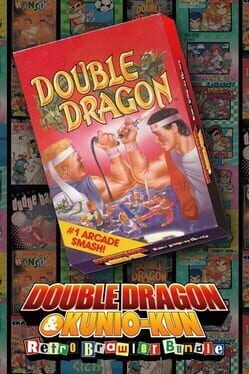
Remembering Yoshihisa Kishimoto through the design legacy of Double Dragon, Kunio-kun, and River City – from alleyway brawls to modern retro revivals.
Yoshihisa Kishimoto’s games always started in the street.
Not the abstract fantasy streets of so many 80s arcade boards, but versions of the roads he actually walked as a delinquent kid in Japan. Out of that lived-in grit came Double Dragon and Kunio-kun, two series that quietly redrew the blueprint for side-scrolling combat, youth drama in games, and the entire modern nostalgia-fueled revival scene. With his passing at 64, the industry loses one of the key architects of how it feels to throw a punch in 2D.
From Renegade to Double Dragon: Codifying the “Belt-Scroll” Brawl
Before Double Dragon, arcade fighting games were mostly about endurance. You stood on a single plane, traded hits and quarter credits, and hoped the game’s timer ran out before your wallet did. Technōs Japan’s 1986 Nekketsu Kōha Kunio-kun, localized as Renegade, began to push outward, letting players move up and down as well as left and right.
Double Dragon in 1987 completed that transformation. Kishimoto’s design turned scrappy playground scraps into a fluent system of spatial control. The belt-scroll format, with enemies converging from depth as well as from the sides, created a new layer of tactical decision-making. Players had to manage positioning, crowd flow, and target priority, not just basic attack strings.
Two-button simplicity hid an array of emergent options. Punch, kick, and jump were the surface; grapples, throws, and contextual reactions were the subtext. Enemies could be knocked into each other, juggled into corner loops, or dumped into bottomless pits. Weapons changed the cadence of fights and the sense of risk. A bat or whip gave you reach and damage, but also made you the center of enemy aggression. The decision to pick one up or throw it across the screen to a co-op partner could flip an encounter.
This is the language modern beat-’em-ups still speak. Streets of Rage, Final Fight, Knights of the Round, Captain Commando, and later titles like Scott Pilgrim vs. The World and Teenage Mutant Ninja Turtles: Shredder’s Revenge all inhabit the belt-scroll space Double Dragon normalized. When players today instinctively move on the diagonal to line up a group, or fish for that perfect throw into a hazard, they are following muscle memories Kishimoto helped author.
Delinquents, Denim, and the Birth of a Street Aesthetic
Kishimoto’s work was not just about how you fought, but who you were when you swung a fist. Raised in a rougher neighborhood and influenced by American action cinema, he translated youth subculture into game form with uncommon specificity.
Kunio-kun’s Japanese release cast you as a hot-blooded high-school brawler sticking up for a bullied classmate. School uniforms, train platforms, alleys behind local shops, and the cadence of Kansai-flavored banter ground the game in a recognizable cultural moment: 80s delinquent manga and film. In the West, much of that texture was swapped out in localization, but the core idea remained. You were not an armored soldier fighting a faceless empire, you were a kid in loafers throwing hands after class.
Double Dragon pushed that lens into grindhouse territory. Billy and Jimmy Lee’s sleeveless gis, boots, and effortless swagger channeled Bruce Lee and 80s American action films. The opening gut-punch of Marian’s kidnapping is pure exploitation framing, but what follows is a road movie of side streets: construction sites, junkyards, forest hideouts, industrial lairs. Chains, knives, crates, and dynamite litters the edges of the playfield.
This very specific urban scrap aesthetic became the visual template for an entire genre. The notion that a beat-’em-up is about walking right through an informal battlefield of parking lots, dance clubs, and neon-blasted streets all flows from Technōs’ work. Later series, from Streets of Rage and Final Fight to lesser-known clones on 8 and 16-bit hardware, absorbed that iconography wholesale.
Even beyond brawlers, Kishimoto’s delinquent chic rippled outward. Persona’s social-club sensibility, Yakuza/Like a Dragon’s mix of crime drama and everyday city life, and the countless indie games that lean on “gang of kids vs. the city” energy all live in a long shadow cast by Kunio-kun and Double Dragon. His games told players that you did not need to be a knight or space marine to be an action protagonist. A tracksuit and bad attitude would do.
Kunio-kun and River City: Comedy, Systems, and Schoolyard Dramas
Where Double Dragon honed the archetypal arcade brawl, the Kunio-kun series became a playground for mixing genres. River City Ransom in particular stands out as a design ahead of its time. On surface level, it is a compact brawler about punching your way through rival gangs. Under the hood, it is an early action RPG, complete with stats, shopping, and character builds.
Beat up enemies, collect coins, and wander into diners, bookstores, and shops to spend your winnings on stat boosts and new techniques. Moves like Stone Hands or Dragon Feet were effectively unlockable skills that could transform your approach to every encounter. The idea that a beat-’em-up could sustain long-form progression, encourage backtracking, and support multiple playstyles quietly anticipated later action RPGs and open-structure action games.
The tone was just as important. River City Ransom is funny in ways that age well. Enemies shout melodramatic threats and dissolve into confession when defeated. Your character scarfing down absurd quantities of food to get marginally stronger plays like a sendup of both training montages and RPG grinding. That comedic framing softened the delinquent edges and made the world feel communal rather than purely hostile.
Modern games that fuse side-scrolling combat with progression, from Castle Crashers to Dragon’s Crown and Streets of Rage 4’s roguelite DLC options, owe a debt to these experiments. The flexibility to wander, shop, and shape your build inside a brawler template is part of Kishimoto’s legacy.
Cooperative Rhythm and the Feel of Fighting Together
Kishimoto’s influence lives not just in systems, but in how co-op feels. Double Dragon was one of the first arcade games where playing side by side had a distinct emotional arc. The moveset encouraged accidental betrayals as much as deliberate synergy. A stray jumpkick that knocked your partner into a pit, or a scramble over who grabbed the dropped bat, created stories that stuck long after the quarter ran out.
Friendly fire was not just an on/off toggle, it was a design choice about tension. You learned positioning, timing, and trust by necessity. When two players found a flow, letting one control space with long-range kicks while the other went for grapples and throws, the game clicked into a loose rhythm that felt collaborative in a way score-chasing shooters did not.
Later co-op beat-’em-ups standardized these dynamics, but Double Dragon popularized them. The idea that a brawler session is part action game, part social ritual, stems from Kishimoto’s work. Modern titles like TMNT: Shredder’s Revenge, River City Girls, and Double Dragon Gaiden still structure their encounters around that same mingling of support and sabotage.
From Forgotten Alleyways to Retro Revivals
As arcades faded and 3D action rose, belt-scroll fighters went through long dormant stretches. Yet Kishimoto’s creations proved unusually durable. Their visual language and mechanical clarity made them ideal candidates for revival once retro became a market, not just a memory.
Kishimoto himself returned to the fold with Double Dragon IV in 2017, a throwback that lifted its art directly from the NES entries. While divisive, it signaled that the original creator still saw value in the pure, chunky feel of old-school combat. Simultaneously, Arc System Works, which had acquired Technōs’ catalog, began stewarding the brands into new hands.
The River City legacy found new voice in WayForward’s River City Girls titles. These games reinterpret the Kunio-kun template with a fresh aesthetic and contemporary pacing, but the skeleton remains familiar. Walkable city hubs, light RPG progression, expressive animations, and school-age protagonists navigating exaggerated urban drama all trace back to Kishimoto’s groundwork.
On the Double Dragon side, recent projects like Double Dragon Gaiden: Rise of the Dragons and the upcoming Double Dragon Revive blend roguelite structure, tag-team mechanics, and modern visual flair with the essential act of clearing a screen through spatial control and crowd management. Even when the presentation shifts to 3D or heavily stylized 2D, the verbs are the same: close distance, control the lane, improvise with what the stage gives you.
Beyond direct revivals, the broader appetite for “neo-retro” action owes him a silent credit. Indie developers building 8 and 16-bit styled brawlers or RPG hybrids are tapping into a nostalgia that Double Dragon and River City Ransom helped define. Those games are not just old. They are reference points, design ideals to riff on and subvert.
A Quiet Giant in Combat Design
Kishimoto never had the household-name recognition of some contemporaries, but his fingerprints are all over how games depict close-quarters violence. The belt-scroll camera perspective, the weighty cadence of punches and throws, the idea that a stage is a physical place to weaponize rather than a background, the notion of youth subculture as heroic lens, all of this traces back to his work at Technōs.
When modern designers talk about readability in action games, they are echoing lessons these titles taught. Clear silhouettes, distinct enemy approaches, and honest hitboxes made Kishimoto’s brawlers easy to pick up in noisy arcades. The games were approachable for newcomers yet deep enough to sustain mastery through positioning and timing.
The fusion of delinquent drama, comedic banter, and mechanical clarity also set a tone for how games could treat everyday life within exaggerated action. In River City, the city is as much a character as any gang leader. In Double Dragon, every alley is a tiny stage for improvised choreography. That sense of place and personality continues to inform series like Yakuza, Persona, and countless school and neighborhood-set action titles.
Remembering the Man Through the Motion
Obituaries often list credits. For Yoshihisa Kishimoto, the more accurate tribute is to list verbs. Walk. Grab. Throw. Dash in, combo, toss a thug into a friend, and keep moving right.
His games captured the feeling of a fight as a series of decisions about distance, risk, and bravado. They turned schoolyard scuffles and late-night city wanderings into something mechanical yet expressive. Decades later, when a new brawler launches to fanfare, it is almost always chasing that same energy.
Kishimoto’s influence lives on every time two players stand side by side in front of a screen, laugh at an accidental team kill, and reload anyway. In the rhythm of their footwork and the shared language of screen-clearing uppercuts, you can still see the outline of the streets he once walked, and the games he built to remember them.