
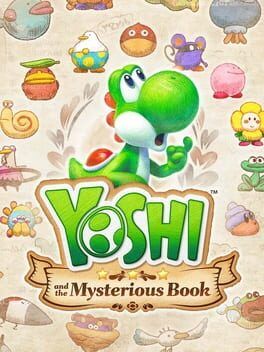

Developers say Yoshi and the Mysterious Book moved from Switch to Switch 2, where extra power helped Good-Feel push creature counts, encyclopedia-style visuals, and bigger surprises.
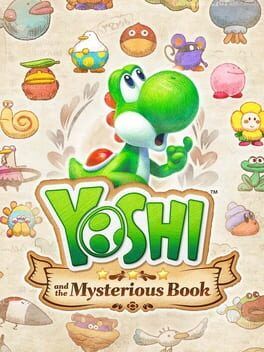
Image: IGDB
Yoshi’s Switch 2 move was about creature ambition, not a new concept
The clearest new detail around Yoshi and the Mysterious Book is that its developers say the move from the original Nintendo Switch to Nintendo Switch 2 helped them deliver ideas they already had, rather than forcing a redesign of the game’s core. In a Nintendo Dream interview translated by Nintendo Everything, director Masahiro Yamamoto said the team’s thinking around creatures did not change much, but the Nintendo Switch 2 power increase made it easier to “realize the things we wanted to do.”
That distinction matters for anyone sizing up this Yoshi Switch 2 release. The developers are not describing a project that became grander because a new console needed a showpiece. They are describing a Yoshi platformer that began with an encyclopedia premise, interactive creatures, and page-like habitats, then ran into the familiar question every systems-driven platformer eventually faces: how much can the hardware keep on screen, animate, and make playful at once?
Nintendo Everything reports that Yoshi and the Mysterious Book started as a Nintendo Switch title before shifting to Nintendo Switch 2. My Nintendo News and GoNintendo also cite the same Nintendo Dream discussion, identifying senior producer Etsunobu Ebisu, director Masahiro Yamamoto, and producer Hisashi Nogami as the developers speaking about the change. The confirmed takeaway is narrow but useful: Good-Feel and Nintendo were already aiming at a creature-heavy, encyclopedia-styled platform game, and the newer hardware reduced some of the limits around that idea.
The creature count is the most concrete design gain
The most specific hardware benefit in the interview is creature density. Producer Hisashi Nogami singled out Scatterpuffs, creatures that “continually increase in numbers,” according to Nintendo Everything’s translation. Nogami said he had wondered whether the original Switch would be okay with them, but on Switch 2 “they could increase over and over again.”
For a family friendly platformer, that is a design clue rather than a dry spec note. Yoshi games often live in the space between toy-box discovery and gentle problem solving, where a stage asks players to poke at a strange object, notice a behavior, then use it to reach a collectible or move forward. Wikipedia’s game summary describes Yoshi and the Mysterious Book as a side-scrolling platform game set in a living encyclopedia called Mr. E, where Yoshi interacts with creatures whose traits help solve puzzles and traverse levels. If creatures can multiply more freely, designers get room for puzzles based on accumulation, crowd movement, chain reactions, and visual comedy without having to aggressively cap the very thing that makes the interaction readable.
That is interpretation, but it follows from the confirmed comments. Yamamoto explicitly said the Switch 2 let the team “largely remove the limit on the numbers of individual creatures,” according to Nintendo Everything. The developers did not provide a number for how many creatures can appear on screen, and none of the supplied sources include frame rate, resolution, or performance targets. The real reported change is about headroom: fewer visible compromises around the game’s living-page concept.
The encyclopedia style seems to be where the extra power shows first
Yamamoto also connected the hardware move to presentation, saying the team could make graphics that felt more in line with an encyclopedia style, per Nintendo Everything’s translation of Nintendo Dream. Nogami added that the team “really worked hard on the graphics” and felt the encyclopedia world came across, calling that one of the “blessings” of Switch 2 in the same translated exchange.
That lines up with how public listings describe the game’s look. The Super Mario Wiki entry describes Yoshi and the Mysterious Book as using a paper-illustration style with low-frame-rate animations, painterly textures on Yoshi and interactive creatures, and pencil-like outlines on distant objects. Wikipedia’s excerpt similarly says the world inside Mr. E’s pages is animated in a style similar to traditional stop-motion animation, with a lower frame rate in certain character actions such as jumping.
The important point is that “power” here does not appear to mean pushing Yoshi toward a glossy realistic look. The sources point in the opposite direction: Switch 2 headroom helped support a handmade encyclopedia illusion, with more creatures and richer illustrative detail inside that framing. For platformer fans, that is a promising use of new hardware because it serves readability as much as spectacle. A good Yoshi stage needs its interactable pieces to look inviting and understandable at a glance, especially for younger players or families playing together.
Big creatures are being treated as mechanics, not scenery
The developers also discussed size as a source of surprise. My Nintendo News’ version of the Nintendo Dream exchange includes Nogami saying Good-Feel jokingly called it a specialty of theirs to make big things appear. Ebisu added that if the team was unsure, they would “just create something big,” while laughing. Yamamoto then clarified that size was not simply about making something look large. He pointed to Thudd, a big creature that can swallow Yoshi and inhale water, and said Switch 2 made it easier to show the kind of surprise possible through sheer size.
That is the sharpest link between hardware and level design in the available material. A large creature in a platformer can be a set piece, but Thudd’s described abilities make it sound like a moving rule in the level. If it can swallow Yoshi, reposition the player, affect water, or alter the environment, then its scale has mechanical consequences. The Switch 2 benefit, as described by Yamamoto, is the ability to stage those consequences more convincingly.
This is also where Good-Feel’s craft background becomes relevant without stretching the sources too far. The supplied listings identify Good-Feel as the developer, and Good-Feel’s Yoshi work has often leaned on tactile, toy-like presentation. In Yoshi and the Mysterious Book, the reported focus is less about raw difficulty and more about physical surprise: a creature grows, a page behaves unexpectedly, a big body changes how Yoshi moves through a space. That is exactly the kind of small mechanical delight that can separate a memorable Switch 2 platformer from a pretty but passive one.
The family-friendly angle depends on clarity, not challenge inflation
Nothing in the supplied sources suggests Yoshi and the Mysterious Book became harder because it moved to Nintendo Switch 2. The confirmed genre details point to an accessible side-scrolling platform game, and the Super Mario Wiki listing includes an ESRB Everyone rating along with family-leaning ratings in other regions. It also lists support for Joy-Con 2 horizontal play, original Joy-Con horizontal play, the Nintendo Switch 2 Pro Controller, and the Nintendo Switch Pro Controller.
For families, the hardware discussion should be read through that lens. More creatures and bigger interactions can make a level livelier, but they also raise a design risk: visual busyness. The developers’ emphasis on encyclopedia-style graphics is reassuring because it suggests the team was thinking about presentation as a guide to play, not merely decoration. If a stage is full of multiplying Scatterpuffs or an oversized Thudd, the art direction has to keep the important behavior legible.
The unanswered question is how consistently the full game balances abundance with clarity. The sources do not include hands-on performance analysis, difficulty settings, accessibility options, co-op details, or late-game challenge structure. They do support one practical expectation: Switch 2 owners should look at this as a softer, discovery-driven platformer whose new-console value is in denser creature interactions and a more expressive storybook world, rather than speed, combat complexity, or technical benchmarking.
Release, platform, and demo context for Switch 2 owners
The platform situation is straightforward in the supplied listings. Wikipedia describes Yoshi and the Mysterious Book as a 2026 platform game developed by Good-Feel and published by Nintendo for Nintendo Switch 2. The Super Mario Wiki listing says it released worldwide for Nintendo Switch 2 on May 21, 2026, in both game card and digital download formats. It also lists the game as part of the Super Mario Bros. 40th Anniversary celebration.
There is no supported information here about a Nintendo Switch version, a cross-gen release, an upgrade path from Switch, or a price. In fact, the reported development history cuts the other way: Nintendo Everything says the game started as a Switch 1 title before shifting to Nintendo Switch 2. If you own only the original Switch, the supplied material does not point to a version for that system. If you own Switch 2, the release is positioned as a native Switch 2 platformer rather than a simple late Switch port.
There is also demo context, though the provided excerpt is partial. The Super Mario Wiki entry says a free demo appeared at select Best Buy, Target, Walmart, and GameStop stores in the United States on May 7, 2026, with Canadian retail demo availability following at Walmart and Best Buy on May 12 and later at EB Games and London Drugs. The same listing says a free demo was released on July 9, 2026, but the supplied text cuts off before full details. That means readers should verify current demo availability on Nintendo’s storefront or their local retail kiosk before treating it as guaranteed.
The useful read: watch the creature systems, not the spec sheet
For Switch 2 owners deciding whether to watch Yoshi and the Mysterious Book, the developer comments give a clearer signal than a generic promise of better graphics. The reported gains are specific: more individual creatures, Scatterpuffs that can keep increasing, visuals that better sell the living encyclopedia concept, and large creatures such as Thudd whose size feeds into interactions like swallowing Yoshi and inhaling water.
That does not answer every buyer question. The sources do not confirm resolution, frame rate, loading performance, price, total length, or whether the game’s lower-frame-rate animation style is purely artistic in all cases. They also do not tell us how much the original Switch version had to compromise before the move. Yamamoto’s phrasing, however, is useful because it frames the Switch 2 transition as an alignment between concept and execution.
In platformer terms, that is the right place to spend power. Yoshi and the Mysterious Book sounds most interesting when the hardware is making the pages feel populated, touchable, and surprising, not when it is chasing scale for its own sake. If you come to Yoshi for friendly pacing, expressive craft, and levels built around noticing odd little behaviors, the reported Switch 2 power gains are worth paying attention to.