
Hands-on impressions of Yoshi and the Mysterious Book for Switch 2, focusing on its storybook presentation, no-damage structure, new mechanics, and whether it is a true evolution for Yoshi or mainly a gentle entry point for younger players.
Nintendo is positioning Yoshi and the Mysterious Book as a tone-setter for Switch 2: a colorful, low-pressure platformer that experiments more with structure than difficulty. Early previews and the first extended gameplay show a game that leans hard into a storybook framing while quietly rethinking what a Yoshi stage even asks of the player.
A platformer inside a storybook
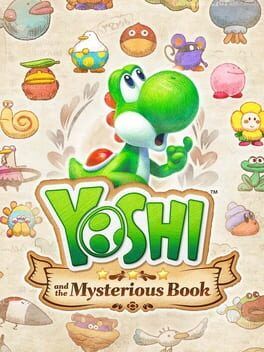
The core pitch is simple. A talking encyclopedia named Mr. E drops onto Yoshi’s island, its pages packed with oddball creatures that have lost their context. Yoshi dives into the book to help catalog and understand them. On paper it is a light setup, but it gives Nintendo an excuse to reimagine levels as literal pages in a field guide rather than traditional courses.
Stages are presented like illustrated spreads from a children’s encyclopedia. Platforms are laid out like diagrams, background elements resemble margin doodles, and UI flourishes look like page tabs and sticky notes. Instead of feeling like discrete worlds connected by a map screen, each area behaves like a themed chapter of the same book. That structure reinforces the idea that you are not just clearing levels; you are conducting a playful survey of the inhabitants that live between the covers.
This framing also changes how you read the environment. Enemies are introduced more like specimens than threats, often getting little visual callouts or on-screen labels when you first encounter them. The book framing pushes the focus toward interaction and observation rather than surviving a gauntlet of hazards.
No damage, no death, new expectations
The boldest design choice is that Yoshi cannot take damage in the usual sense. Fall into a pit and you pop back to a nearby ledge. Collide with a foe and you bounce off instead of losing health. The safety net is not just generous, it is the point. Nintendo is testing what a platformer feels like when failure is reframed away from punishment.
Without the looming risk of a game over, the tension in each level shifts to discovery and mastery. The question becomes less “Can you survive this?” and more “Can you find everything this space is hiding?” Previews describe stages that are dense with optional interactions, secret reactions from creatures, and alternate ways to route through a page. Missing a jump usually costs you a collectible or a shortcut instead of your progress.
Checkpoints are frequent and the pace is relaxed, but that does not mean there is nothing to optimize. The challenge model borrows from modern collectathon design, where the true test is thoroughness and experimentation. Completion goals, time medals, or advanced versions of catalog tasks appear to be what will push more experienced players, rather than brutal platforming sequences.
It is a deliberate swing toward accessibility. Very young players can wander, experiment and still finish stages, while older players are nudged to wring every last secret from a layout that never punishes them with a restart screen.
New mechanics built around curiosity
Yoshi’s fundamental move set is familiar. He can flutter jump, gobble up creatures, and turn them into projectiles. The wrinkle here is that nearly everything you can do with these basics feeds into the encyclopedia concept.
Each creature has multiple reactions based on how you interact with it. Eating one might fill a meter that changes the background, while jumping on another might cause a chain reaction of blooming flowers that exposes new footholds. Carrying a character on Yoshi’s back can imbue his moves with temporary properties, like releasing bubbles that reveal hidden platforms or altering gravity in a small radius.
Levels are designed like little labs. You are frequently dropped into safe sandboxes with a small cast of creatures and asked, implicitly, to see what happens if you mix and match your abilities with theirs. Because there is no damage, experimentation is frictionless. You can treat each page like a toy box, prodding at systems until you stumble upon some tucked-away animation or hidden route.
The Switch 2 hardware also gets a quiet showcase. Previews mention smooth performance, detailed storybook textures, and depth-of-field tricks that make the layered paper dioramas pop without resorting to heavy outlines. There is less emphasis on flashy physics and more on cleanly presenting dozens of small, interactable elements at once, which suits the game’s exploratory focus.
Is this evolution for Yoshi or just an on-ramp for kids?
Framed one way, Yoshi and the Mysterious Book is the most predictable thing Nintendo could launch early in a new system’s life: a gentle showpiece that lets families hand a shiny new console to younger players without worrying about frustration. The no-damage rule and storybook aesthetic make that intent obvious.
Look a little closer, though, and it reads as a quiet evolution of what Yoshi games have been circling for years. Woolly World and Crafted World both flirted with hop-in, low-stress design and collectathon density. The Mysterious Book pushes that ethos to a logical extreme. If previous Yoshi titles were torn between being classic platformers and cozy dioramas to poke at, this one openly commits to the latter and builds its mechanics around it.
Hardcore players hoping for demanding precision stages will likely find this a side dish rather than a main course, but there is a clear design through line. By stripping away damage and lives, Nintendo can double down on layered secrets, systemic creature interactions, and hidden objectives that only reveal themselves when you stop treating enemies as obstacles and start treating them as puzzle pieces.
As a result the game looks poised to function on two tracks. For newcomers, it is a forgiving introduction to 2D movement and basic platforming rhythms. For series fans, it is a test case for a different kind of Yoshi challenge model, one grounded in curiosity and completion rather than survival. That may not be the dramatic reinvention some were hoping for, but as an early Switch 2 exclusive it hints at Nintendo’s willingness to gently reshape its mascots to fit new audiences and new hardware.
If the full game maintains the density and inventiveness suggested by early footage, Yoshi and the Mysterious Book could quietly become one of the more interesting experiments in Nintendo’s modern platformer catalog, even as it doubles as one of the most approachable.