
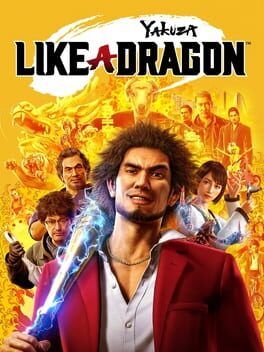
SEGA’s newly subtitled live‑action drama revisits early Kiryu, bridges into Yakuza Kiwami 3 & Dark Ties, and shows how transmedia keeps Like a Dragon in the spotlight between major releases.
SEGA has quietly turned a piece of once‑obscure Yakuza ephemera into one of the most interesting transmedia plays the series has had in years. All three episodes of the live‑action drama Yakuza Powered by Nihon Touitsu are now streaming on SEGA’s official YouTube channel with English subtitles, giving global fans a new way to revisit Kazuma Kiryu’s formative years.
The project originally aired only in Japan as a collaboration between Ryu Ga Gotoku Studio and Nihon Touitsu, a long‑running documentary style video series about real yakuza life. Bringing it back in 2026, subtitled, and tying it directly to Yakuza Kiwami 3 & Dark Ties is not just a bit of fan service. It is a clear signal of how SEGA sees Like a Dragon as an always‑on brand rather than something that only exists when a numbered sequel hits shelves.
Retelling the early Kiryu saga in live action
Yakuza Powered by Nihon Touitsu retreads the same emotional territory as the original Yakuza on PS2 and its remake Yakuza Kiwami, then reaches forward to set up pieces for Yakuza 2 and Kiwami 2. Over three hour‑long episodes, it charts a familiar trajectory for longtime fans: Kiryu taking the blame for a patriarch’s murder to protect Nishikiyama, the loss of his place in the Dojima Family, and the fateful meeting with Haruka that pulls him into a deeper conspiracy.
Kiryu is played by Yasufumi Motomiya rather than series actor Takaya Kuroda, and the rest of the core cast also appears in reinterpreted form. Goro Majima, Akira Nishikiyama and Detective Makoto Date all feature, but their performances lean into the grounded style you would expect from a drama that borrows the visual language of yakuza docudrama instead of straight video game adaptation. The fights are scrappy rather than superhuman, and Kamurocho’s nightlife is shot more like a crime procedural than an arcade brawler.
For fans who know these stories inside and out, the appeal is not plot twists. It is the novelty of seeing iconic beats reframed through a lens that is closer to the real‑world underworld that inspired RGG Studio in the first place. Watching Kiryu hand over his gun, step into a police car and accept a decade of prison time hits differently when the scene is played with the quiet tension of a live‑action thriller.
Why surface it now?
On paper, Yakuza Powered by Nihon Touitsu is an odd artifact to resurrect. It debuted years ago, streamed in the West once via IGN, then largely vanished into fan memory. Yet its return coincides almost perfectly with the launch of Yakuza Kiwami 3 & Dark Ties, now out on modern platforms worldwide. That timing is not accidental.
SEGA’s own description positions the drama as a lead‑in to Kiwami 3 & Dark Ties, pointing out that the events of the series unfold just before the new game. In practice, the show acts like a crash course through the emotional baggage Kiryu carries into Okinawa and beyond. Anyone curious about Kiwami 3 after hearing buzz around Dark Ties can hit YouTube, watch three episodes for free, and step into the game with a refreshed memory of who Haruka, Nishikiyama and Kazama are and why their relationships matter.
It also neatly balances old and new fandoms. The games have shifted focus in recent years toward Ichiban Kasuga and the Like a Dragon branding, but SEGA knows that Kiryu is still the emotional anchor of the series. By centering him in a new release adjacent project, the company reassures long‑time players that the Dragon of Dojima still matters even as the franchise experiments with new protagonists and RPG systems.
A different flavor of Like a Dragon culture
Part of what has made Like a Dragon such a lasting presence in gaming culture is how vividly it depicts Japanese urban life. Side stories, karaoke, hostess clubs, batting cages and real‑world product placement all combine to make Kamurocho feel like a living neighborhood. Yakuza Powered by Nihon Touitsu taps into that same fascination, but it does so from another direction.
Nihon Touitsu as a brand is rooted in documenting yakuza history and rituals. Their collaboration with RGG Studio gives the drama a texture that feels less like a straight adaptation of cutscenes and more like a television series that happens to share a continuity with the games. Locations look like the alleys and offices fans have run through hundreds of times, but the camera lingers on handshake etiquette, body language between lieutenants and the subtle hierarchy within a family meeting.
For Western viewers finally getting easy access with English subtitles, it provides a complementary way to “study” the world behind Like a Dragon. The games exaggerate and stylize, turning life into over‑the‑top heat moves and substories about baby patriarchs and pocket racers. The drama strips away much of that excess to ask what Kiryu’s sacrifice, loyalty and isolation would look like if they played out in something closer to real life.
Transmedia as a bridge between big releases
Like a Dragon has turned into one of SEGA’s most consistent franchises, but even an aggressive release cadence still leaves gaps where there is no new mainline game to sell. Live‑action projects, anime crossovers and web dramas give the publisher tools to fill those gaps while keeping characters present in online conversation.
Yakuza Powered by Nihon Touitsu is a textbook case. Instead of dropping another trailer and disappearing until the next game arrives, SEGA can seed a three‑episode series onto YouTube that fans binge in a weekend. Each episode pushes viewers back toward the games through on‑screen branding and direct story ties to Kiwami 3 & Dark Ties. Players looking up “who is Nishikiyama again” might land on the drama, watch an hour and end up wishlisting the game.
This approach also plays well with how Like a Dragon’s audience actually behaves. The series lives on social platforms through clipped substories, karaoke performances and Majima jump scares. A live‑action drama adds another vein of easily shareable content. Scenes of Kiryu staring down a rival family head or a tense rooftop standoff between former sworn brothers turn into GIFs and short edits that circulate long after launch day.
Crucially, projects like this do not require the same development overhead as a new game or even a large‑scale remake. Once the rights and localization pipeline are sorted, SEGA can localize, subtitle and upload, extending the lifespan of existing material while testing appetite for future experiments like a full‑scale series or film.
Kiryu’s legacy in an Ichiban era
The Like a Dragon series is in a transitional moment. Ichiban now carries the “future” of the franchise, pushing it deeper into RPG territory and new cities. Yet SEGA has repeatedly shown it is not interested in discarding Kiryu. He appears as a co‑protagonist, guest fighter and mythic figure who straddles both the old brawler identity and the new direction.
Yakuza Powered by Nihon Touitsu reinforces that balancing act. By focusing entirely on young Kiryu at a crucible moment in his life, it keeps his mythology fresh just as a new generation of players comes in through recent releases. Someone whose first Like a Dragon game was a turn‑based Ichiban title can watch the drama, understand why older fans speak about Kiryu with such reverence, and then trace that journey back through Kiwami and the earlier games.
If SEGA’s goal is to maintain a multi‑protagonist saga where characters can leave, return and age in real time, then these kinds of side projects become vital connective tissue. They provide space to deepen side characters, revisit old eras and answer questions that might never fit into a sprawling open‑world RPG.
Making Like a Dragon feel continuous
Putting three hour‑long episodes on YouTube with English subtitles may seem modest next to the splash of a new mainline entry, but culturally it matters. It tells fans that the Like a Dragon universe is not confined to disks and downloads. It continues in web dramas, documentaries, stage plays, music videos and whatever comes next.
In that sense, Yakuza Powered by Nihon Touitsu is less a relic of the pre‑Ichiban age and more a blueprint. It shows how SEGA can use transmedia stories to keep Kiryu and Kamurocho alive in the public eye, bridge into new releases like Yakuza Kiwami 3 & Dark Ties, and invite fresh audiences to explore one of gaming’s richest ongoing sagas while the studio quietly builds whatever comes next.