
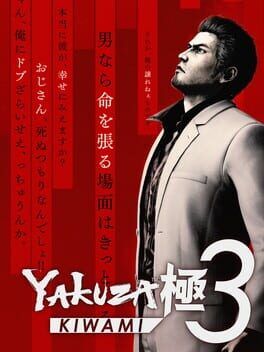
RGG Studio is closing the book on Kiwami remakes with Yakuza Kiwami 3, but its story changes and Dark Ties companion are less a dead end and more a soft pilot for whatever follows Yakuza 4 and 5.
Yakuza Kiwami 3 was always going to be a touchy project. Yakuza 3 is where the series first pivoted into Kiryu-as-orphanage-dad, where Okinawa joined Kamurocho as a second home, and where the plot started stacking plates for everything that followed in Yakuza 4, 5 and even 6.
RGG Studio has now confirmed that Kiwami 3 is also where the Kiwami line stops. No Kiwami 4. No Kiwami 5. In a Ryusta TV stream, studio head Masayoshi Yokoyama put it plainly: “I think Yakuza Kiwami 3 will be the last one, and the Kiwami line will come to an end,” adding that whatever comes next will be a “new series on a different line, with a different meaning.”
Read between those lines, and Kiwami 3 starts to look less like the third remake and more like a controlled explosion in the middle of the timeline.
Why stop at Kiwami 3?
Publicly, Yokoyama’s reasoning is almost playful. He tells fans they will “understand” why the Kiwami line is ending after they play Kiwami 3. That is a coy way of admitting the remake is now pulling too hard on the threads that hold the old continuity together.
This is not Kiwami 1 or 2, where the PS2 games were rebuilt but still broadly pointed at the same story beats. Kiwami 3 is closer to a reinterpretation, and that shift shows up in three areas the reference coverage keeps circling.
First is the structure. The opening stretch in Okinawa has been widened and deepened, with new minigames and “Life at Morning Glory” sequences that the director has called the emotional core of the remake. Critics note that this slows the pacing compared to the PS3 version, but the intent is clear. RGG wants Kiryu’s life as a caretaker to feel like more than just downtime between clan meetings. It is being elevated from context to cornerstone.
Second is the story surgery. Datamining, reviews and interviews all point to substantial cuts and reworks. Side stories are missing or rewritten. Antagonists like Hamazaki and Kanda get extra scenes and expanded roles. The game is doing a lot of retroactive character work, smoothing some villain arcs while planting hooks for later.
Most disruptive are the reported changes to the ending. Leakers describe a finale that no longer lines up cleanly with the PS3 Yakuza 3, and critics who have finished it talk around “iffy retcons” and a knock-on effect for the rest of the franchise. XboxEra even singles out a long, late-game sequence focused on justifying the new conclusion.
Once you alter the exit ramp of Yakuza 3, you are no longer on the same road that leads directly into Yakuza 4 and 5 as they exist today. At that point, a straight Kiwami 4 stops making sense. You either contort the remakes to meet the old canon or accept that you have started something new.
RGG is choosing the latter.
What that means for Yakuza 4 and 5
The immediate, practical answer is simple. If you are waiting for Kiwami-branded remakes of 4 and 5, you can stop. The studio has said as much, and the level of rewiring in Kiwami 3 makes it easy to see why.
The more interesting answer is what this decision frees them to do.
Yakuza 4 and 5 already sit in a different design space to the early games. They split the spotlight across multiple protagonists, escalate the politics, and spread their stories across several cities. Trying to fold all of that into a Kiwami-style remake template designed for one main hero and a single urban hub was always going to be awkward.
By declaring the Kiwami line finished, RGG no longer has to solve that problem. Instead, the studio can treat everything after Kiwami 3 as a fork. One branch is the existing “remastered” 4 and 5 that fans can still play. The other is a new line that can remix those events, or skip them entirely, without being advertised as a one-to-one replacement.
The language Yokoyama uses backs this up. He does not talk about Like a Dragon 9 as the destination. He talks about a parallel “new series” with its own meaning. That is how you describe something like Judgment in relation to mainline Yakuza, or Gaiden in relation to Like a Dragon 8. It is also how you describe a project that might revisit familiar time periods and characters without being shackled to specific plot points from 2010 PS3 releases.
In other words, Kiwami 3 probably is the last time RGG tries to sit directly on top of an old numbered entry and rebuild it from the inside. Going forward, if the team wants to return to the Yakuza 4 and 5 era, it can do so as fiction adjacent to those games rather than as their replacement.
Dark Ties and the quiet backdoor pilot
If Kiwami 3 is the explosive device lodged in the timeline, Dark Ties is the fuse that runs out into the future.
Bundled alongside the remake is Yakuza Kiwami 3 Gaiden: Dark Ties, a standalone story that follows Yoshitaka Mine before and around the events of the main game. On paper it is a character piece for one of Yakuza 3’s strongest antagonists. In practice, both interviews and reviews suggest it is operating as a testbed for something larger.
Pre-release commentary from RGG already billed Dark Ties as containing big hints about where Like a Dragon is headed. The spin-off leans heavily on the corporate and PR side of the Tojo and Ryudo conflicts, putting Mine in a position to work with and against figures who either did not get much spotlight in the original Yakuza 3 or would not have crossed paths with him at all.
This is exactly the sort of scenario that can form the spine of a new series. Not a clean rewrite of Yakuza 4, but a different window into the same era: more boardrooms than back alleys, more fixers and string-pullers than frontline bruisers. The fact that Dark Ties survives the end of the Kiwami label is important. Its very existence shows RGG is comfortable building full, self-contained games that orbit a mainline entry without being numbered sequels.
Tie that to the expanded roles Kiwami 3 grants to secondary antagonists like Kanda and Hamazaki and you start to see a pattern. The remake is rebalancing its cast so that more people have enough definition and motivation to carry their own stories later. Dark Ties then proves you can spin one of them off and still get something fans will invest in, even if the critical response has been heated.
The lesson for RGG is not “stop doing this.” It is “do this under a label that does not promise a faithful remake.” Ending Kiwami is how you make that clean.
Seeds of a new spin-off line
So what could this theoretical new line actually look like, if it grows out of what Kiwami 3 is doing to the story?
The first and most obvious direction is a Mine-led or Mine-adjacent series that runs parallel to the late Kiryu era. Dark Ties already frames him as a man navigating between ruthless corporate interests and the messy morality of the underworld. That is fertile ground for a crime-drama offshoot that can cross in and out of events you half-recognise from Yakuza 4 and 5 without being beholden to their specific outcomes.
Another angle sits back in Okinawa. By over-investing in Morning Glory, Kiwami 3 effectively marks the orphanage as more than a backdrop. The new sequences about everyday life there are the kind of material you would usually expect to see saved for a smaller, experimental project or a story DLC. Building them into the remake’s spine suggests RGG is interested in a future where the series can support quieter, more domestic stakes alongside its usual power struggles.
A spin-off line anchored in that contrast would make a lot of sense. Think of a game that checks in on the kids across time, or follows one of them into their own brushes with the underworld while Kiryu’s legend becomes something that hangs over them rather than a role he actively plays. Kiwami 3’s changes give those characters more screen time and interiority, which is exactly what you do if you want them to matter later.
Then there is the broader structural experiment. Reviews complain that Kiwami 3 & Dark Ties can feel overstuffed and uneven, but buried in that criticism is the acknowledgment that RGG is trying to treat a remake and a brand-new story as equal partners in a single package. That is not a one-off gimmick. It is a format you can imagine returning as a “new series” hook: one mainline-adjacent story, one gaiden-style companion, both talking to each other across a shared timeframe.
None of this requires a Kiwami 4 logo. In fact, slapping that name on the box would only raise expectations for fidelity that these ideas cannot satisfy.
Where this leaves the timeline
The uncomfortable part for long-time fans is that Kiwami 3’s ending reportedly “massively” retcons the original to the point where it reverberates down the rest of the chronology. That has already sparked arguments about which version is “canon,” especially with remastered 3, 4 and 5 going in and out of availability on storefronts.
RGG’s own messaging quietly sidesteps that fight. By acknowledging that Kiwami is over as a line, the studio is essentially codifying two tracks. One is the original PS3-to-PS4 remaster run of Yakuza 3, 4 and 5, which still leads cleanly into 6. The other is the Kiwami 0–2–3 corridor that bends off into Ichiban’s Like a Dragon era and whatever this unnamed “new series” turns out to be.
Yokoyama does not need to say “we have two timelines” out loud for that to be true in practice. Future games will make it obvious which track they are following based on which version of events they treat as history. The real point of Kiwami 3, then, is not to overwrite the PS3 story. It is to create enough distance that RGG can commit to a bolder path without closing the door on the old one.
The last Kiwami, not the last rewrite
Strip away the branding conversation and what is left is a studio trying to protect its ability to reinvent itself.
Kiwami 1 and 2 were valuable in how they brought foundational stories up to modern standards. Kiwami 3 stretches that mission to the breaking point. It uses the excuse of a remake to linger longer in Okinawa, rehabilitate and expand its antagonists, hand a villain his own spin-off, and push an ending hard enough that it deforms the canon around it.
That is exactly the sort of behavior you want from a team that has to keep a decades-old crime saga feeling alive. It just does not fit cleanly under a label that has come to mean “extreme but faithful remake.”
So Kiwami ends here, on a messy but fascinating note, and RGG walks away with a clearer runway. Yakuza 4 and 5 are no longer obligations to be rebuilt one to one. They are history to be raided for ideas, characters and eras as this hinted “new series” finds its shape.
Yakuza Kiwami 3 is not just the last of its name. It is the moment the studio stopped looking back and started treating its own past as raw material for whatever comes next.