
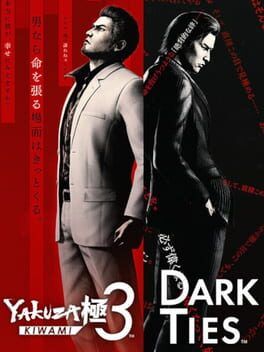

Hands-on with Yakuza Kiwami 3 & Dark Ties on PS5/PS4, focusing on the new mini-games, SEGA arcade oddities, Game Gear lineup, and how the upcoming demo helps modernize a PS3 classic for its 2026 launch.
If you remember Yakuza 3 on PS3, you probably remember two things: a fantastic Kiryu story wrapped around an awkward combat system, and side content that felt like a series still learning what it wanted to be. Yakuza Kiwami 3 & Dark Ties on PS5 and PS4 is very clearly Ryu Ga Gotoku Studio’s attempt to rewrite that legacy. After several hours with the new build, the most striking changes are not only in the fights, but in how the game treats downtime. The new and expanded mini-games, arcade cabinets, and retro Game Gear lineup feel like a conscious effort to bring this entry in line with modern Like a Dragon standards without losing its early-series charm.
What ties all of this together is a free demo arriving before launch. SEGA clearly expects the side content and combat tune-ups to sell returning fans and first-timers, and for once, it feels like the right bet.
Homework, Sewing, And The Orphanage Reborn
The heart of Yakuza 3 was always Morning Glory orphanage, but on PS3 it could feel more like a backdrop than a playable space. Kiwami 3 fixes that by turning Kiryu’s dad duties into full systems.
The new homework mini-game sounds simple on paper. One of the kids needs help, you sit down, and a series of multiple-choice questions pop up about basic science or general knowledge: which animal is not a reptile, which planet comes next in the solar system, that sort of thing. Mechanically it is hardly complex, but in practice it does something important. It slows the game down, frames Kiryu as a patient guardian, and gives the orphanage chapters the grounded texture Yakuza 3 always aimed for but rarely reached during gameplay.
More surprising is how good the sewing mini-game is. Kiryu is tasked with sewing a dust cloth, and you guide the needle along a marked line within a time limit. You can push the speed, ease off on tight corners, and feel a real risk-reward tug as you decide whether to rush the final stretch or play it safe. It is structured almost like a tiny racing game track drawn across a piece of fabric. It is tactile and tense in a way the original side activities never achieved, and it is exactly the sort of small yet clever idea that helps a remake feel genuinely new instead of merely upgraded.
These activities do less to pad out the run time and more to define Kiryu’s life outside of street brawls. They are also smartly tuned for short sessions, which matters a lot more in 2026 than it did in 2009. Yakuza veterans are used to snackable side content now, and Kiwami 3 finally lets its orphanage slice-of-life material sit comfortably next to the series’ more recent work.
Bad Boy Dragon And Okinawa’s Turf Wars
Once you step away from Morning Glory, Okinawa itself feels busier thanks to new gang-focused content built around the Haisai Girls and the Tokyo Night Terrors. Kiryu can ally with the Haisai Girls, a mostly female gang, and dive into a pair of combat-focused modes that sit somewhere between substories and a lightweight strategy layer.
Turf Wars has you divide your crew across different routes on a map and push through enemy bases. Capture enough turf and the mode culminates in an all-out brawl, with squads crashing together in a way that highlights the revamped combat. It is less about granular tactical depth and more about giving structure to a series of escalating street fights, which makes it a great playground for the tightened PS5/PS4 combat.
Total Annihilation strips away the territory management entirely and throws you straight into massive gang battles. It is almost like a curated arena of chaos, letting you test new Heat actions and crowd control tools without waiting on story pacing. What elevates these modes beyond simple repeatable fights, though, is the enemy roster. Tokyo Night Terrors bring a set of distinct commanders, including Hiromu and officers like Peacock, Beast, and Skink. Their designs lean hard into the stylish delinquent energy that Yakuza fans tend to latch onto, and the preview build hints at subplots and characterizations that could turn this whole side suite into a highlight rather than a novelty.
For a PS3-era story that originally struggled to keep its Okinawan detours feeling as compelling as Kamurocho, this added structure is important. It gives you a reason to roam, a clear feedback loop for powering up, and a space to appreciate the remade combat beyond main story encounters.
Club SEGA, Emergency Call Ambulance, And A Real Arcade History Lesson
One of the biggest gaps between original Yakuza 3 and later entries was the quality of the in-game arcades. On PS3, your main digital distraction was Boxcelios, an original shoot-’em-up that fit the tone but never felt like a true SEGA museum piece. Kiwami 3 & Dark Ties finally corrects that, and if you have kept up with the Like a Dragon series since 5, the new lineup will feel much more familiar.
Club SEGA in Kiwami 3 now carries a rotating stack of actual emulated arcade titles. Virtua Fighter 2 and Fighting Vipers return as full-featured fighters, while Motor Raid shows up to scratch that futuristic racing itch with a level of accuracy that would have sounded like fantasy back in 2009. On top of those, SEGA is leaning into quirkier picks for this remake. Emergency Call Ambulance has been confirmed as one of the new cabinets, bringing loud, time-attack emergency driving to the mix. It is an oddball cut from the classic arcade era and exactly the sort of deep pull long-time SEGA fans hope to see.
These additions do more than check a nostalgia box. They are part of the broader effort to align Yakuza 3 with the rest of the modern Like a Dragon catalog, where the arcades are essentially playable museums. Having real SEGA history at your fingertips makes Kamurocho and Okinawa feel like they exist within the same universe as later games, and it helps the remake escape the sense that you are visiting an early, half-formed version of the series.
Pocket SEGA: The Game Gear Lineup
If the arcade cabinets are a love letter to SEGA’s coin-op days, the Game Gear lineup is a handheld-sized encore. Kiwami 3 & Dark Ties packs twelve playable Game Gear titles as part of its emulation suite, accessible through in-game machines. Rather than relying solely on the usual suspects, SEGA has gone wide here, filling in gaps across genres and eras.
The payoff is twofold. First, it reinforces that feeling of Kiwami 3 as a time capsule you can actually toy with. Wandering away from a main story beat to fire up a Game Gear classic in a dingy corner of Kamurocho sells the fantasy of the setting in a way that simple background decoration never could. Second, it gives this remake something that is uniquely its own. Previous Like a Dragon titles have had strong retro lineups, but the specific curation here reflects the 2000s-era fan who might still have had a Game Gear stashed in a drawer while owning a PS3.
For players coming in on PS5 or PS4, often with no memory of the original hardware, this works as a playable SEGA history course tucked inside a crime drama. For returning fans, it is a rare chance to see a sometimes overlooked part of SEGA’s library treated with the same respect as its marquee arcades.
Dark Ties, Damage Control, And A Sharper Combat Identity
Dark Ties, the new Mine-focused game bundled with Kiwami 3, is not just a story add-on. It brings its own set of systems that echo the main game’s modernization efforts, even when they are still rough around the edges.
The most clearly defined structure in the preview build was Kanda Damage Control. Playing as Mine, you roam the city performing small favors and acts of goodwill to smooth over the reputation of his loose-cannon partner Kanda. Tasks range from bowling a strike for a nervous NPC to buying someone a drink from a vending machine, to straight-up beating down harassers. They pay out money and reputation in a loop that is clearly designed for bite-sized sessions.
At this stage, it is also the part that feels most likely to lean too hard on fetch-quest repetition if SEGA does not layer in more substantial substories. On the other hand, it fits Mine’s character arc surprisingly well, framing his attempt to claw some order out of chaos through very mundane, grounded acts. If the final game builds on this with stronger narrative payoffs, Kanda Damage Control could function as a thematic anchor more than a checklist.
Where Dark Ties already feels unmistakably modern is in combat. Mine fights with a sharper, more acrobatic style than Kiryu. His toolkit in the underground fight club has him sliding into knee strikes, bouncing off walls, and weaving through crowds with a smoothness the PS3 original could never approach. Under his health bar sit three heart-shaped icons that represent his inner darkness. Spend them and Mine enters a powered-up state, cloaked in a dark aura that boosts his offense and gives his combos a nastier edge. It is his spin on Heat, distinct in flavor but immediately readable to anyone who has played a Like a Dragon game before.
Taken together with the refreshed Kiryu combat in Kiwami 3, Dark Ties makes this bundle feel less like a historical artifact and more like a current entry that happens to revisit a 2009 story.
Why The Demo Matters This Time
SEGA has confirmed that Yakuza Kiwami 3 & Dark Ties will receive a playable demo ahead of launch on PS5 and PS4. That could sound like a routine marketing move, but in context it is a smart way to address long-standing skepticism around Yakuza 3.
The original game’s rough combat and uneven pacing have given it a reputation as one of the harder entries to recommend, especially to new fans coming off the tight design of Yakuza 0 or Like a Dragon. Letting players feel the overhauled combat, sample a slice of the new Okinawa or Dark Ties content, and maybe even get lost in an arcade or Game Gear menu before committing money goes a long way toward reframing that perception.
For veterans, the demo is a chance to answer the quiet question hanging over every remaster and remake in this series: is this really different enough to warrant another run through Kamurocho and Okinawa. Between the orphanage mini-games, Bad Boy Dragon-style turf battles, full arcade lineup, and Mine’s bespoke fighting style, the answer already leans heavily toward yes. A hands-on trial might be all it takes to tip the undecided.
Modernizing A PS3 Classic Without Erasing It
What makes Yakuza Kiwami 3 & Dark Ties stand out in 2026 is not just that it is prettier or smoother on PS5 and PS4. It is that Ryu Ga Gotoku Studio is carefully backfilling the elements that were missing from Yakuza 3 the first time. The expanded mini-games give Morning Glory and Okinawa a real mechanical identity. The SEGA arcade cabinets and Game Gear lineup finally place this entry on the same retro-loving footing as its successors. Dark Ties rewrites your relationship with Mine, while the demo gives the most hesitant players a way to test all of it before buying.
This is still unmistakably the Yakuza 3 you remember, with all the melodrama and heartfelt dad energy intact. The difference is that, for the first time, its downtime is as thoughtfully designed as its story. If SEGA sticks the landing on the full side content suite, Yakuza Kiwami 3 & Dark Ties could easily become the definitive way to experience one of the series’ most important but historically uneven chapters when it hits PS5 and PS4 in February 2026.