
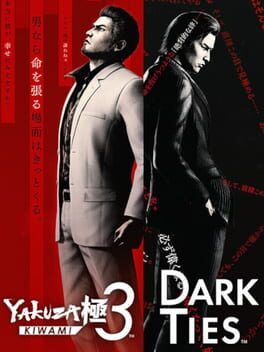
Breaking down every new feature from the Yakuza Kiwami 3 & Dark Ties Direct, and how this remake-expansion modernizes Yakuza 3 while setting the tone for future Kiwami projects ahead of its February 2026 launch.
The Yakuza Kiwami 3 & Dark Ties Direct finally answered the big question hanging over this remake: would RGG Studio simply remaster a divisive entry, or fully rework it to stand alongside modern Like a Dragon? With Bad Boy Dragon, Kanda Damage Control, Hell’s Arena, and an overhauled Morning Glory orphanage, the answer leans firmly toward the latter.
Below is a breakdown of every major addition, what it actually changes compared to the original Yakuza 3, and what it suggests about future Kiwami projects.
Morning Glory Orphanage: From Slow Start to Emotional Hub
The original Yakuza 3 opens with a long stretch at Morning Glory in Okinawa. It was heartfelt but famously pacing-heavy, locking players into basic errands and light drama before Kamurocho ever came into view. Kiwami 3 reframes that entire opening by turning Morning Glory into a proper gameplay hub.
The Direct shows Kiryu and Haruka taking part in expanded “Life at Morning Glory” content. Instead of one-off cutscenes and simple tasks, the orphanage now supports a network of “Family Time Events” that function more like fully fledged side stories. Kiryu cooks proper meals, tends small farming plots, helps kids with science homework, does sewing jobs, goes fishing, and plays games with the children.
The key shift is that these activities are not just flavor. They are structured episodes with their own setups, resolutions, and rewards, closer to substories in recent games. Each child at Morning Glory has a clearer emotional arc tied to the new events, and progress is now something you actively chase, not passively stumble into.
This approach tackles two long standing problems with Yakuza 3. First, it makes the early hours mechanically engaging instead of feeling like a slow burn you must endure to reach the city. Second, by treating the kids as recurring substory chains rather than background NPCs, it brings the orphanage up to the emotional standard set by later titles in the series.
It also suggests a template for future Kiwami projects. Rather than trimming a controversial section, RGG appears more interested in rebuilding it so that story intent and modern pacing can coexist.
Bad Boy Dragon: A New Okinawa Power Fantasy
Bad Boy Dragon is the most overtly modern addition for Kiryu. In the Direct, Kiryu teams up with the Haisai Girls to protect Okinawa from rival groups like Tokyo Nightmare. What begins as a narrative hook becomes a full side mode that looks much closer to recent Yakuza spin systems than anything that existed in 3.
You recruit fighters, rank them up, equip them, and send squads into battles that play out as compact confrontations around Okinawa. Structurally, Bad Boy Dragon feels like a spiritual cousin to systems such as clan battles and management modes from later Like a Dragon entries. It adds a layer of progression that runs alongside Kiryu’s core level ups and Heat Actions.
Where the original game’s Okinawa sections often felt sparse compared with Kamurocho, this mode gives the island a new identity. It turns random turf disputes into something you directly manage, with persistent units and an evolving map of threats. The Haisai Girls and their enemies form a cast that can grow independently of the main plot, which helps fill the world between story beats.
It also highlights RGG’s broader Kiwami philosophy. Instead of only cleaning up combat and visuals, the team is willing to retrofit older entries with modern side systems that match what players now expect from a mainline release. Bad Boy Dragon would not have fit 2009’s Yakuza 3, but it feels right at home in a post Like a Dragon 0, 6, and Gaiden landscape.
Dark Ties and Yoshitaka Mine: Villain as Playable Protagonist
The Direct then shifts to Dark Ties, a parallel game centered on Yoshitaka Mine. Yakuza 3’s original release made Mine an immediate standout, but he disappeared just as quickly once the story ended. Dark Ties addresses that by letting players step into his shoes rather than only watching him as an antagonist.
This is more than a short bonus chapter. The new Mine content introduces its own progression hooks and modes that reinterpret Kamurocho through his eyes. Two pillars anchor this expansion: Kanda Damage Control and Hell’s Arena.
Kanda Damage Control: Reputation As Redemption Arc
Kanda Damage Control frames Mine’s role in the city through reputation. He takes on Good Deeds, Helping the Little People, and Damage Control challenges scattered around town. Completing them raises his Kanda Rep, which feeds into money rewards and unlocks Bro Time scenes.
On the surface it looks like a familiar reputation system. Underneath, it gives RGG room to rewrite how we understand Mine. Each task is an excuse to explore his conflicted loyalties and sense of responsibility for the chaos left in Kanda’s wake. The more you clean up, the more you see Mine outside the narrow lens of the main story.
Bro Time scenes exist to cash that in. These are quieter bonding events that expand on relationships which barely had space to breathe before. By tying them to Kanda Rep, the game encourages you to engage fully with the city rather than treat the Mine campaign as a short, linear brawler.
The interesting signal here is philosophical. Previous Kiwami projects focused on amplifying or clarifying the protagonist’s journey, particularly Kiryu and Majima. Dark Ties shows the studio is now willing to give major antagonists full playable arcs that stand beside the original plot instead of behind it.
Hell’s Arena: Combat Laboratory for Mine
Hell’s Arena answers a long standing fan wish to simply fight more with Mine. The mode is split into Hellish Brawl and Survival Hell. Hellish Brawl is a series of direct one versus one clashes, while Survival Hell throws Mine into areas packed with enemies that escalate in difficulty and reward.
For Mine, who fights with a distinct, controlled brutality compared with Kiryu’s broader brawling style, this is effectively a combat lab. It gives room to explore his moveset, test upgrades, and experiment with styles outside of story constraints.
From a modernization standpoint, Hell’s Arena acknowledges how central combat challenges and arenas have become in the series since Yakuza 3. Later games embraced coliseums, gauntlets, and wave based challenges. Folding something similar into Kiwami 3 makes the package feel far closer to Like a Dragon’s contemporary offerings.
It also hints that future Kiwami remakes may bring full side modes for secondary characters, complete with dedicated challenge content, rather than limiting them to short playable cameos.
A Smarter Second Chance for Yakuza 3
When fans talk about the early part of the series, Yakuza 3 is often described as the awkward middle child. Its emotion and characters landed, but pacing, side content density, and mechanical depth lag behind what came later. The Direct suggests Kiwami 3 is less about sanding off rough edges and more about rebalancing the entire experience.
Morning Glory is reframed into a hub of active side stories instead of a slow on ramp. Okinawa gains a new identity through Bad Boy Dragon, which ties street conflicts into a persistent progression system. Kamurocho is given fresh life via Dark Ties, where Mine explores the city through a lens of reputation and responsibility. Hell’s Arena then stands in for the kind of repeatable, challenge driven combat content that fans now expect.
The resulting package is positioned to sit comfortably beside Yakuza Kiwami 1 and 2, rather than being an archival update. It is not just the preservation of a PS3 era game, but a reinterpretation aimed at players who discovered the series through Yakuza 0, Like a Dragon, or Gaiden.
What It Signals for Future Kiwami Projects
Beyond Kiwami 3 itself, the Direct sends some clear signals about how RGG may tackle the rest of the back catalog.
First, it confirms that contentious story sections will be rebuilt instead of quietly shortened. If Morning Glory can be turned into a robust activity hub without losing its emotional weight, there is little reason to expect that future remakes of 4 or 5 will simply cut their slower stretches rather than rework them into something more engaging.
Second, it shows that modern side modes are now a baseline. Bad Boy Dragon, Kanda Damage Control, and Hell’s Arena collectively bring systems that echo later titles in the franchise. Kiwami projects are no longer about matching the original’s feature list. They now aim to match the expectations of current Like a Dragon fans.
Third, and perhaps most important, Dark Ties sets a precedent for antagonist focused expansions. If Mine can carry a parallel story with bespoke progression and modes, other fan favorite characters could receive similar treatment in future remakes. It opens the door for deeper dives into figures who originally existed mostly as obstacles for Kiryu.
Finally, the platform list and timing matter. Launching on Switch 2, PS4, PS5, Xbox Series, and PC in February 2026 gives Kiwami 3 a broad reach and situates it as a cornerstone entry for new fans picking up the series on next gen hardware. RGG is clearly treating this less as a nostalgia product and more as a current pillar release.
Taken together, the Kiwami 3 & Dark Ties Direct frames the project as a second debut for Yakuza 3. With new systems that connect it to the modern Like a Dragon identity and an antagonist campaign that finally gives Mine his due, this remake looks poised to rewrite how players talk about one of the series’ most divisive games and to shape how future Kiwami projects are built.