
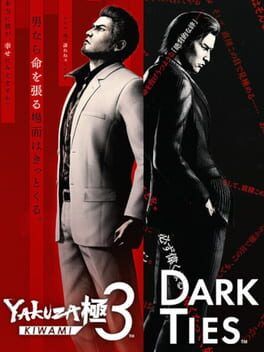

Hands-on impressions of the Yakuza Kiwami 3 & Dark Ties demo on PS5 and PC, digging into Dragon Engine combat and visual upgrades, how Dark Ties slots into the story, what the demo includes, and whether this two-game package works as a fresh starting point for newcomers.
The original Yakuza 3 has a reputation even among diehard fans as the awkward middle child. Coming off Kiwami 2 today, going back to PS3-era Kamurocho means flatter lighting, stiff combat, and a jarring tonal jump. The new Yakuza Kiwami 3 & Dark Ties demo feels like Ryu Ga Gotoku Studio finally acknowledging all of that and taking a real swing at giving this chapter a second life.
Across both the Kiryu and Mine slices included on PS5 and PC, the Dragon Engine work is immediately obvious. Fights flow closer to Kiwami 2 and Yakuza 6, Okinawa finally looks like somewhere people actually live, and even small touches like facial animation and camera work go a long way toward making this feel like a modern entry instead of a slightly polished remaster.
Dragon Engine combat: from clunky to flexible
If you bounced off the original Yakuza 3’s combat, the demo is almost a shock. Kiryu now leans on two styles: Dragon of Dojima: Kiwami and the new Ryukyu style that emphasizes weapons and crowd control. Swapping between them mid-combo is smooth, with cancel windows that feel much closer to Kiwami 2 than to the original game’s stiff strings.
The Dragon style hits hard and direct, with familiar shoulder checks, launchers, and brutal finishing blows. In the PS3 version it often felt like you were fighting the lock-on and the camera as much as thugs. Here, hit-stop and enemy reactions are clearer, and the camera tracks better in tight alleys, so you can actually read what is happening instead of relying on muscle memory. Heat Actions now benefit from modern Dragon Engine staging, with quick cut-ins, better camera angles and more environmental variety.
Ryukyu style exists to solve another PS3-era pain point: crowd fights where Kiryu felt oddly underpowered. By leaning into disarms, weapon tosses, and sweeps that catch multiple goons at once, the style finally lets you control a mob without spamming the same safe combo. There is still a deliberate weight to Kiryu’s movement, but the recovery on whiffed attacks is much less punishing, which makes experimenting with new Heat Actions less of a risk.
On the Dark Ties side, Yoshitaka Mine’s shootbox-inspired style is the clear star. The demo’s Kamurocho brawls highlight just how different he feels from Kiryu. Mine relies on tight footwork, quick jabs, and counter windows rather than raw power. Dodges are snappier, guard cancels are generous, and many of his Heat Actions grow out of well-timed counters. If Kiwami 3’s combat is a rehabilitation of a rough game, Dark Ties feels closer to a fresh spin-off that has learned from Like a Dragon Gaiden’s quicker, more technical brawling.
Across both characters, what stands out is responsiveness. Inputs register cleanly, combo transitions do not hitch, and there is a sense that the Dragon Engine, now several games deep, is being used with real confidence. None of this is the massive leap that Kiwami 2 was over the original Yakuza 2, but compared to base Yakuza 3 it is transformative.
Visuals and performance: PS3 ghosts exorcised
Visually, Kiwami 3 is almost unrecognizable next to the 2009 original. Downtown Ryukyu, the Okinawan district that often felt like a ghost town on PS3, now has proper density in both geometry and population. Neon signs cast colored light onto wet asphalt, shop interiors are more detailed, and distant high-rises sit against a proper skyline rather than a flat backdrop. The same is true for Kamurocho in the Dark Ties slice, which borrows from the mature Dragon Engine version of the district but re-dresses key streets to better reflect Yakuza 3’s time period.
Faces in particular benefit from the remake. Kiryu has the more grounded, slightly older look used in later Dragon Engine titles, and supporting characters from the orphanage sequence finally emote with something resembling nuance instead of the plastic grin of the PS3 days. Mine, who was already one of the most expressive antagonists in the series, looks sharper and more intense, which helps sell his internal conflict during Dark Ties.
On PS5, the demo targets 60 frames per second, and in both the Okinawa and Kamurocho sections it holds that number well. Brawls that would have chugged in the original now run smoothly, even when you start slamming dudes into shop windows and pulling off multi-enemy Heat Actions. Camera pans across the city are clean, and loading transitions between street and interior locations are short enough that the series’ classic flow, popping into a shop or minigame whenever something catches your eye, finally feels frictionless.
On PC, the demo exposes resolution and frame rate options along with basic graphics toggles for shadows, reflections, and population density. The Dragon Engine’s age shows a bit here in how CPU-bound dense crowds can be, but in return the game scales nicely. Mid-range hardware can hit 60 fps in 1440p with some tweaks, which is a world away from the original’s locked 30 on PS3.
What the demo actually lets you do
The Kiwami 3 portion of the demo drops you into a chunk of the main story in Okinawa, with Kiryu running the Morning Glory orphanage. You can roam a slice of downtown Ryukyu, pick a fight or three, and sample a handful of substories that lean into the series’ mix of melodrama and absurdity. Side activities like karaoke and a taste of the new outfit customization system are present in limited form, just long enough to show that the team has gone beyond a one-to-one remake of the PS3 content.
Combat encounters are curated but varied. You get to try both of Kiryu’s styles in small street fights, more structured setpiece brawls, and at least one encounter that leans heavily on environmental Heat Actions to sell the Dragon Engine’s physics. It is enough time to understand how Kiwami 3 intends to modernize the original’s pacing without letting you lose yourself in substories for an entire evening.
Dark Ties, by contrast, is pitched more like a vertical slice of a separate game. You control Mine in Kamurocho, moving through a story segment that sets up his descent deeper into the Tojo Clan and his complicated relationship with power and loyalty. There are a couple of exploratory sequences that let you feel out the city from his perspective, a few combat encounters that center on his boxing-based kit, and at least one minigame, including mahjong, to underline that Dark Ties is not just a short prologue but a side story with its own texture.
In both cases, Sega has confirmed that demo progress does not carry into the full game, and there are no completion bonuses tied to your save. It is a pure try-before-you-buy slice, though the breadth of activities included makes it feel closer to an early hours sampler than a 20-minute teaser.
How Dark Ties fits alongside the main story
Dark Ties is positioned as a narrative companion to Yakuza 3 rather than a disconnected spin-off. Where Kiwami 2’s Majima Saga operated parallel to the main story and occasionally filled in gaps, Dark Ties appears more tightly woven into the events of Yakuza 3. It follows Mine in the period leading up to and overlapping with the main game, tracing how a man who chose the yakuza life after losing everything came to value “bonds” so fiercely.
In practice, that means you are seeing key moments from the other side. Conversations that felt one-sided in the original get added context, and plot beats that once came out of nowhere now have emotional scaffolding. Early previews have compared its scope to Like a Dragon Gaiden rather than a short bonus episode, and the demo supports that idea. Even this brief Kamurocho section establishes new characters around Mine, hints at shifting allegiances inside the Tojo Clan, and seeds threads that will clearly pay off in the main game.
It is important to note that Dark Ties is not a prequel you should play first. It is designed as a counterpart to Kiwami 3, and the demo makes it clear that you will appreciate it more with at least some awareness of who Mine is in the broader story. In the package, though, the pairing works: Kiryu’s paternal, often peaceful life in Okinawa sits in sharp contrast to Mine’s ruthless climb through Kamurocho’s power structure. That tension looks like it will give this remake more thematic bite than a straight graphical upgrade ever could.
A good jumping-in point for new players?
For newcomers, the question is whether this two-game bundle makes sense as the door into a long-running series. In terms of pure mechanics, the answer is yes. The Dragon Engine combat in Kiwami 3 and Dark Ties is modern, responsive, and broadly in line with the other remakes and recent entries. Visuals, performance, and quality-of-life upgrades bring Yakuza 3 up to a current standard, so you are not fighting outdated tech on top of learning the brawling systems.
Narratively, however, Yakuza 3 was always meant as a continuation rather than a beginning. Kiwami 3 assumes you care about Kiryu’s journey, his relationship with Haruka, and the Tojo Clan’s history. The demo’s orphanage scenes land harder if you have already seen the chaos of Yakuza 0 through 2. Dark Ties doubles down on this by centering Mine, a character whose impact rests heavily on what he does in Yakuza 3 proper.
That does not mean new players should avoid it, but it does shift what this package is best at. For someone who started with Yakuza: Like a Dragon or jumped in with Gaiden and wants to go back to the Kiryu saga, Kiwami 3 & Dark Ties looks like a far more approachable route than tracking down the PS3 original or working through the older remaster. The demo shows a game that respects its place in the chronology while sanding down enough rough edges that catching up no longer feels like homework.
If you somehow have no Yakuza experience at all, this is still playable as a first contact, and the demo serves as a gentle test drive of the tone, combat, and structure that define the series. You will miss callbacks and some emotional weight, but you will get a fully modern action adventure and a focused character study bundled together. At worst, it might convince you to go back to Kiwami 1 and 2 later.
Early verdict
Taken as a whole, the Yakuza Kiwami 3 & Dark Ties demo does exactly what it needs to. It proves that Yakuza 3 can stand shoulder to shoulder with the other Dragon Engine entries, it introduces Dark Ties as more than a throwaway bonus mode, and it gives both new and returning players a substantial taste of what the full package will offer on PS5 and PC.
Combat is sharper, visuals are modern, performance is solid, and the structural choice to pair Kiryu’s Okinawan life with Mine’s brutal Kamurocho ascent gives this remake a stronger identity than “the one with the orphanage.” If RGG Studio can keep this level of quality across the full release, Yakuza Kiwami 3 & Dark Ties will not just rescue a divisive favorite from PS3 exile; it will turn one of the series’ roughest entries into a chapter worth revisiting and, for some, a surprisingly strong place to start.