
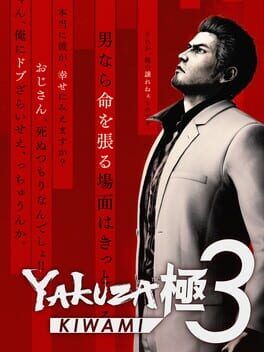

Hands-on preview of the Yakuza Kiwami 3 & Dark Ties demo, covering Dragon Engine combat refinements, performance across PS5 and Switch 2, how Okinawa and Kamurocho have been rebuilt, what the Dark Ties side-game adds, and whether this bundle works as a modern on-ramp for newcomers.
The Yakuza Kiwami 3 & Dark Ties demo is a statement of intent from Ryu Ga Gotoku Studio. This is not a quick touch-up of a famously rough sequel. It is a full Dragon Engine remake of Yakuza 3 paired with a substantial new game about antagonist Yoshitaka Mine, and the demo wastes no time showing how far both combat and structure have come.
You can jump into a slice of Kiryu’s story in Okinawa or head straight to Mine’s Dark Ties campaign in Kamurocho. Between the two, the demo provides a clear sense of how this package plays, runs and fits into the modern Like a Dragon era.
Dragon Engine combat finally fits Yakuza 3
Veterans remember the original Yakuza 3 as the clunkiest mainline entry, with stiff movement, floaty hits and bosses that felt like brick walls. The Dragon Engine rebuild brings it in line with Kiwami 2 and Yakuza 6, and the difference is immediate the first time Kiryu squares up in a back alley.
Kiryu fights using the Dragon of Dojima: Kiwami style that RGG has been promoting since the game’s reveal. In practice, this means a broad move list, responsive dodges and a much snappier flow between light strings, heavy finishers and Heat Actions. Hit-stop and enemy reactions are meatier than in the PS3 original, and positioning finally matters, letting you dance around groups instead of mashing through them.
Heat builds quickly, and the demo encourages liberal use of new Heat Actions that take advantage of the Dragon Engine’s ragdolls and environmental props. Walls, bikes and signboards all become tools for crowd control, with seamless transitions between regular combos and cinematic finishers. Encounters that were once slow slogs now feel like expressive brawls that reward spacing and timing.
The big test is how all of this holds up in the Mine-focused Dark Ties content, and this is where the combat feels genuinely new. Mine’s boxing-based style trades Kiryu’s broad brawler toolkit for tight footwork, fast jabs and punishing counter windows. His strings are more rhythmic, with natural openings into evasive steps and rush punches, almost like a character from a fighting game rather than a traditional Yakuza bruiser.
That contrast gives the bundle a fresh angle even if you have played every Dragon Engine entry so far. The underlying systems are familiar, but the weight, recovery timings and Heat options have clearly been tuned so that Yakuza 3 no longer feels like a relic propped up by nostalgia.
Okinawa and Kamurocho rebuilt for modern hardware
The demo splits its time between Ryukyu (Okinawa) in the Kiryu section and Kamurocho in Dark Ties, and both locations benefit from the move to Dragon Engine.
Okinawa’s seaside town finally looks like the relaxed, sun-bleached contrast to Tokyo that the original aimed for. Neon reflections on wet streets at night, denser pedestrian traffic and more interactive storefronts make the area feel closer to the likes of Onomichi from Yakuza 6 than a simple remaster. Loading is largely masked behind short transitions in and out of interiors, and the higher NPC density helps the orphanage storyline feel embedded in a real neighborhood instead of a sparse hub.
Kamurocho in Dark Ties is closer to what recent Like a Dragon fans will expect, but RGG has not just dropped Mine into the same old map. Sightlines have been cleaned up, signage reworked and lighting adjusted to emphasize Mine’s more upscale, corporate-adjacent world. The familiar streets still act as the backbone, yet the combination of new side-activities and remade interiors gives this Kamurocho a sharper, more dangerous tone that aligns with the character’s colder outlook.
Structurally, both slices feel modern. Substories hook in cleanly from the map and phone UI, navigation markers are clearer than in the 2009 original, and quality-of-life tweaks like more generous save spots and faster recovery between fights bring Yakuza 3 up to contemporary expectations.
Performance on PS5 and Switch 2
The demo is available across platforms, and the console builds give a telling look at how Dragon Engine scales in 2026.
On PS5, Kiwami 3 targets a sharp image with stable performance during street exploration and most combat scenarios. Crowded brawls in Kamurocho show off impactful particle effects and dense crowds without obvious hitching. The Dragon Engine’s penchant for occasional physics wobble is still here when bodies pile up or props explode across the pavement, but it is cosmetic rather than disruptive.
Switch 2 is the bigger surprise. Dragon Engine games historically demanded strong hardware, but this iteration runs comfortably in the demo. Resolution and texture detail are dialed back compared to PS5, and shadows are noticeably softer, yet the core experience remains intact. Combat maintains a respectable frame rate, traversal through Okinawa’s main strip feels smooth enough, and loading times are short enough that hopping between streets and interiors does not feel like a compromise.
The takeaway is not technical parity, because that is not what the handheld is going for. It is more that RGG has learned how to scale the engine without stripping away the density and chaos that define Like a Dragon cities. If you want pristine image quality and the most stable performance, PS5 and other high-end hardware are clearly the way to go, but the demo suggests that Switch 2 players are getting a faithful portable experience rather than a token port.
What Dark Ties adds structurally
Dark Ties is not just an extra mode bolted on to justify a higher price. Even in demo form, it plays like a focused side-game that sits somewhere between Judgment’s side cases and a smaller-scale mainline campaign.
The story slice leans into Mine’s perspective as a former startup success who willingly dove into the underworld. Cutscenes are fully produced with fresh voice work and cinematography that makes careful use of the Dragon Engine’s close-up facial capture. Where Kiryu’s Okinawa chapter wants to reframe him as a reluctant father figure, Dark Ties examines the other side of Yakuza 3’s conflict through a character driven by ambition and an almost self-destructive need for connection.
Structurally, Dark Ties alternates between narrative beats in Kamurocho, free exploration with optional side content and a combat-focused arena component. That arena, clearly echoing the coliseum-style modes from past entries, lets Mine fight alongside recruited allies in escalating battle scenarios that highlight his combo-heavy kit. You get a more contained, replayable structure here, something that supplements Kiryu’s sprawling adventure rather than competing with it.
All of this makes Dark Ties feel more like a second pillar of the package than a bonus chapter. It deepens Yakuza 3’s themes by giving its antagonist room to breathe while also offering a different flavor of Dragon Engine combat and progression.
A modern on-ramp for newcomers
One of Sega’s stated goals with the Kiwami line has been to keep older entries approachable for players who discovered the series with Yakuza 0, Like a Dragon or the more recent spin offs. Yakuza 3 has always been the sticking point, structurally important but mechanically dated. The demo goes a long way toward fixing that problem.
From the opening in Okinawa, it is clear that RGG has treated Kiwami 3 less like a museum piece and more like an opportunity to reframe a divisive chapter. Combat feels closer to Kiwami 2 and Yakuza 6, side content is surfaced through modern UI conventions, and pacing is tightened by faster movement and more deliberate encounter design. Paired with Dark Ties, which assumes you understand the broad strokes of the story but still works as a self-contained character study, the bundle offers multiple entry points into this era of the saga.
New players who started with the turn-based Like a Dragon entries will still need to adjust to the series’ brawler roots, yet the Dragon Engine refinements here make that transition far easier than jumping back to the Remastered Collection version of Yakuza 3. At the same time, long-time fans get a version of the game that feels more in line with how the story has grown in their heads over the past decade and a half.
Early verdict on the demo
As a hands-on slice, the Yakuza Kiwami 3 & Dark Ties demo does what it needs to do. It proves that the Dragon Engine can still deliver impressive remakes when handled thoughtfully, it demonstrates that RGG is serious about addressing the original’s rough edges, and it outlines Dark Ties as a meaningful expansion rather than a marketing bullet point.
On PS5, the combat refinements and rebuilt cities shine with the kind of polish you expect from a flagship Like a Dragon release. On Switch 2, the fact that this density and system complexity survive the trip in playable form is encouraging for anyone who wants the full saga on a handheld.
Most importantly, the bundle feels like a legitimate on-ramp into the modern Yakuza era. If the full game maintains the quality bar suggested by this demo, Yakuza Kiwami 3 & Dark Ties could finally turn one of the series’ most divisive entries into a highlight instead of a hurdle.