
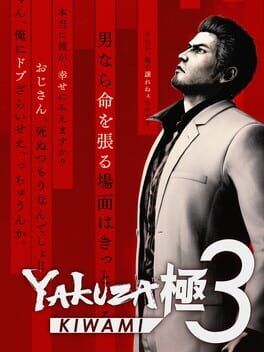
Breaking down Bad Boy Dragon, Life at Morning Glory Orphanage, and Mine’s new Hell’s Arena and Kanda Damage Control content, and what they mean for returning and new players ahead of the 2026 release.
Sega’s latest Yakuza Kiwami 3 & Dark Ties Direct finally answered the big question hanging over this remake: how do you modernize one of the series’ most divisive entries without losing what made it special?
Instead of just polishing up Kamurocho and Ryukyu with higher-res textures and faster combat, RGG Studio is rebuilding Yakuza 3 around three pillars. Life at Morning Glory Orphanage, the new Bad Boy Dragon system, and Yoshitaka Mine’s Dark Ties story with its Kanda Damage Control and Hell’s Arena content. Together, they do more than pad out playtime. They reframe Yakuza 3 as a dual-character character study for both Kiryu and Mine.
For returning players, this looks like the do-over Yakuza 3 has needed since its cut-content PS3 localization. For new players coming in through Like a Dragon’s recent boom, it turns what used to be an awkward middle chapter into a rich entry point.
Life at Morning Glory Orphanage: The “Dad Game” Finally Gets Its Due
In the original Yakuza 3, Morning Glory in Okinawa was thematically vital but mechanically thin. You spent a few heartfelt scenes with Haruka and the kids before the plot hurried you back to street brawls and clan politics. Kiwami 3 leans in the opposite direction.
The Direct put Life at Morning Glory front and center, treating it as a full-blown slice-of-life layer that sits alongside the usual substory web. Kiryu’s day-to-day routine now includes cooking with the kids, tending a small field, sewing, fishing off the local pier, and even helping with science homework. Each system is small on its own, but stitched together they transform the orphanage from a static backdrop into a place you actually live in.
RGG has framed these sequences as “Family Time Events,” bespoke scenes for each child that play almost like individual substories. Instead of helping yet another stranger in Kamurocho, you are confronting bullying at school, nurturing a shy talent, or dealing with a kid acting out because they miss their old life. For a series built on melodrama, grounding side content in intimate, recurring relationships gives the Okinawa half of the game an emotional weight the PS3 version could only imply.
For returning players, this is the biggest philosophical shift. Yakuza 3 has always been the game where Kiryu tries to retire and be a dad, but that theme never had enough mechanics beneath it. With Kiwami 3, Morning Glory is no longer just the prologue zone before the “real” game starts. It is a second core track of progression where your investment in chores and bonding scenes feeds directly into rewards and character beats.
New players, especially those coming from Like a Dragon: Infinite Wealth’s heavy emphasis on found family and side-life simulation, are likely to feel at home here. Life at Morning Glory feels like a deliberate bridge between classic brawler Yakuza and the more life-sim oriented, mini-game dense modern entries. It makes Kiryu’s choice to step away from the Tojo feel interactive instead of just narrated.
Bad Boy Dragon: Okinawa’s Gang War As A Full System
The Direct also pulled the curtain back on Bad Boy Dragon, a new system that expands Okinawa’s street conflicts into something closer to a strategic side game.
Kiryu teams up with the Haisai Girls, a local crew, to protect Okinawa from invading gangs like Tokyo Nightmare. Instead of just triggering random encounters, you are effectively managing a small gang ecosystem. You recruit allies, rank them up, equip them, and then deploy squads into clashes across Ryukyu.
Structurally, Bad Boy Dragon inherits some DNA from earlier spin-off systems like Clan Creator while being much more rooted in the setting. The Haisai Girls and their rivals are not faceless minions but stylized characters with their own dialogue and presence in the world. Battles themselves blend brawler action with light tactical planning as you choose who rides with Kiryu into each confrontation.
For veterans of the original Yakuza 3, this directly addresses one of the game’s old criticisms. Okinawa used to feel undercooked compared to Kamurocho, with fewer reasons to wander its streets between story beats. Bad Boy Dragon plugs that hole by giving Ryukyu its own drama and progression separate from the Tojo clan plot up north.
For newcomers discovering this arc after Yakuza 0 and Kiwami 2, it also makes Kiryu’s role as a reluctant local protector clearer. You are not just punching random thugs again. You are defending a community with visible stakes and allies who grow with you. That makes the eventual clashes between Kiryu’s quiet life and the wider yakuza world hit harder.
Mine Takes The Lead: Dark Ties Rewrites Yakuza 3’s Antagonist
The most dramatic addition in this package sits outside Kiryu’s campaign entirely. Dark Ties is a separate storyline starring Yoshitaka Mine, Yakuza 3’s final antagonist. Where the original game gave Mine a late surge of sympathy without much groundwork, Dark Ties sets out to build him up into a fully fleshed lead.
Central to that goal are two key systems highlighted in the Direct: Kanda Damage Control and Hell’s Arena. Both are explicitly about putting Mine in situations that clash with his image as a cold, ruthless executive.
Kanda Damage Control: A Villain Learns To “Help The Little People”
Kanda Damage Control is presented as Mine taking on “Good Deeds” and “Helping the Little People” around town to manage the fallout of Kanda’s messes. In practical terms, this functions like an antagonist-flavored substory framework. Mine responds to problems Kanda has caused, resolves them with a mix of intimidation, negotiation, and violence, and in the process raises his Kanda Rep rank.
From a systems perspective, that rank translates into money, unlocks, and “Bro Time” scenes that deepen the relationship between Mine and Kanda. Thematically, though, it might be the most important piece of Dark Ties. By forcing Mine to directly confront the human cost of Tojo infighting, it turns his aloofness into a mask rather than a default state.
For players who already know how Yakuza 3 ends, this is retroactive character repair in the best way. Kanda, once a relatively shallow side villain, now functions as a foil who drags Mine into street-level drama. You are still playing a dangerous man in a violent world, but that violence is now framed by the damage he has to clean up after others.
For new players who might tackle Dark Ties before or alongside Kiryu’s story, Kanda Damage Control helps demystify Tojo internal politics. Instead of dumping exposition about rival factions, the game shows you how power struggles play out in back alleys and hostess clubs and how someone like Mine learns to control the narrative.
Hell’s Arena: A Brutal Mirror To Kiryu’s Fight Clubs
If Kanda Damage Control is about Mine’s public image, Hell’s Arena is where he strips it away. The Direct showed off an underground fight club mode for Dark Ties that leans hard into his reputation as a lethal combatant.
Hell’s Arena is divided into at least two main challenge types. Hellish Brawl, which focuses on intense one-on-one duels against named opponents, and Survival Hell, where Mine takes on waves of enemies in crowded arenas for escalating rewards.
In terms of pure mechanics, this is the mode that seems most tailored to series veterans who want to push the new combat system. Mine’s move set is more surgical than Kiryu’s, borrowing from his composed, calculating demeanor and channeling it into precision strikes and brutal counters. The arena structure gives RGG license to throw gimmick enemy types, unusual arenas, and endurance tests at players without worrying about story balance.
Conceptually, Hell’s Arena also serves as a thematic echo. Classic Yakuza entries love underground fight clubs as a way to show how far characters will go when the usual rules fall away. Giving Mine his own bespoke arena lets Kiwami 3 contrast his approach to violence with Kiryu’s. Where Kiryu often fights as a last resort to protect someone, Mine steps into these bouts as part of a rising spiral of ambition and self-destruction.
For returning fans, this could do for Mine what Yakuza 0’s Cabaret Club Czar and Clan Creator did for Majima and Kiryu. It turns him from a memorable boss into a character you inhabit, with mechanics that reflect his worldview.
What It All Means For 2026: A New Entry Point, Not Just A Fix
Taken together, these three pillars change what Yakuza 3 represents in the larger Like a Dragon timeline.
For returning players, Kiwami 3 & Dark Ties is a chance to revisit a story that has always mattered more than its gameplay reputation suggested. Life at Morning Glory finally lets the “Kiryu the dad” fantasy breathe. Bad Boy Dragon gives Okinawa the side content density of Kamurocho while making its local color central instead of optional. Dark Ties reframes Mine from a late-game twist into a tragic parallel protagonist with agency and history.
For new players, this package can function as a surprisingly strong on-ramp. The Direct made it clear that Dark Ties is packaged as a distinct, complete story. Someone fascinated by Mine from trailers could start there, then roll into Kiryu’s tale with a deeper understanding of Tojo power structures and the forces aligned against him. Conversely, those who fall for Morning Glory’s warmth might be curious to see how the “villain route” in Dark Ties plays out the same conflicts from the other side.
More broadly, Yakuza Kiwami 3 & Dark Ties suggests a confident RGG Studio that is no longer just patching holes in old games, but actively rebuilding them to match the tone and expectations of the modern series. With the February 12, 2026 release locked in, the Direct makes a compelling case that this is not just a remaster with a bonus episode. It is a full reframing of one of the most important turning points in Kiryu’s life and the moment where Mine finally gets to stand alongside him as a fully realized lead.