
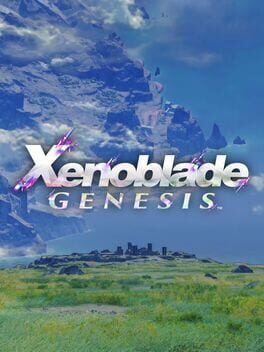

Monolith Soft’s 2027 RPG moves Xenoblade into a new world, a new lore framework built on Anima, and a Switch 2 focused roadmap that resets the series for the next decade.
Nintendo and Monolith Soft are positioning Xenoblade Genesis as more than just “Xenoblade 4.” The reveal trailer that headlined the latest Nintendo Direct repeatedly calls it “a new beginning for the Xenoblade series,” and everything about the announcement backs that up, from the setting and cast to the timing of its 2027 launch on Nintendo Switch 2.
A six‑sun world built on Anima
Instead of returning to the Bionis and Mechonis of Xenoblade Chronicles, the cloud seas of Xenoblade Chronicles 2, or the interlinked worlds of Xenoblade Chronicles 3, Genesis shifts to an entirely new realm structured around a metaphysical power called Anima.
The trailer opens with narration describing Anima as “the source of all things,” explicitly tying it to classical elements like water, fire and wind. Where previous games revolved around ether or the rules of Origin, Genesis reframes the series’ cosmology around a single, unified energy that both sustains the world and fuels conflict.
Visually, that world is striking. The new setting is said to be illuminated by six suns, which gives the outdoor vistas an almost perpetual twilight glow rather than the strong day‑night contrast of earlier games. The brief glimpses of the overworld show layered landmasses and towering structures in the distance, with Monolith Soft clearly leaning on Switch 2’s extra power to push long draw distances and dense foliage that recall the studio’s best work on Xenoblade X and Xenoblade 3.
An important pillar of this world is the Anima crystone, a gem embedded in weapons and technology. In Genesis, these crystones do more than function as magical batteries. The reveal explains that they amplify the abilities of their wielders and literally record their bearer’s thoughts and actions. That duality hints at a story where memory, surveillance and inherited will are all mechanically encoded into your weapons.
Leukos and the Vesselai: a new kind of protagonist
The central hub of the trailer is Leukos, an academy‑like city where the protagonist lives as a student. Rather than throwing players straight into a frontier war, Genesis seems to begin in a structured, almost scholarly setting that studies Anima and trains elite fighters called Vesselai.
The lead character, a young woman in a student uniform, is shown swearing an oath to uphold the honor of her blade. She is framed less as a chosen savior and more as one member of an institution that has formalized the use of Anima. It is a sharp tonal departure from the scrappy adventurer beginnings of Shulk or Noah and underlines the “new beginning” messaging with a more grounded, character‑focused starting point.
Vesselai themselves look to be this game’s answer to Drivers, Blades and Ouroboros. They are elite combatants who channel Anima through their crystones. The fact that each crystone logs its user’s deeds suggests that social status, military rank and even personal guilt could all be tied to what your weapon has witnessed, which is fertile ground for the kinds of philosophical conflicts Xenoblade loves.
The trailer ends on a line about “the vengeance of a fallen god,” a familiar concept for the series but now detached from the very specific pantheon of Zanza, Logos and Pneuma. Genesis seems to be keeping the franchise’s fascination with deicide and cosmic rebellion while rebuilding the lore scaffolding around brand new names and myths.
How Genesis breaks from the Xenoblade Chronicles trilogy
Monolith Soft has been clear that Xenoblade Chronicles 3 was the culmination of the trilogy that began on Wii and continued across 3DS and Switch. Its Future Redeemed DLC literally braided the disparate threads of Xenoblade 1, 2 and 3 into a single meta‑timeline. Genesis is the first major announcement since that knot was tied, and it looks designed to untangle things for new players.
The clearest break is structural. There is no “Chronicles” in the title, only Xenoblade Genesis, echoing the shorter Japanese naming convention and signaling a soft reset. Where the trilogy leaned heavily on prior knowledge, references and returning faces, Genesis’ trailer shows no direct callbacks, no familiar titans on the horizon, no sight of the City or any mention of Origin.
Thematically, the earlier games were obsessed with cycles and continuity: endless worlds, reset universes and reincarnating wills. Genesis instead speaks of origins, of a world built on the study of Anima and the recorded histories inside crystones. The feeling is less about breaking fate and more about questioning who writes history and who controls access to power.
Even the cast composition appears different. The first three Xenoblade titles favored ragtag bands drawn from clashing nations. Genesis begins with classmates and mentors inside Leukos, hinting at party dynamics shaped by academic hierarchies, institutional secrets and generational expectations rather than by open warfare between species.
The combat system is still a mystery, but the focus on individual blades and crystones implies a closer tie between narrative and equipment. It would not be surprising to see Monolith Soft lean into weapon history and recorded memories as a progression layer, instead of simply slotting in gems or accessories like earlier entries.
A familiar creative core with room for new faces
While Nintendo has not released a full staff roll yet, the way it is talking about Genesis suggests that the core Xenoblade team at Monolith Soft is back for another large scale project.
Tetsuya Takahashi is almost certain to be guiding the scenario, just as he did on the prior trilogy and on Xenosaga before that. The premise of a world whose power source also archives human consciousness is very much in line with his long running fascination with gods, data and memory. Longtime composer Yasunori Mitsuda has been heavily associated with Xenoblade’s soundscape, and the sweeping orchestral track in the reveal trailer strongly suggests his fingerprints are here again, potentially alongside the ACE+ team that helped define the series’ battle themes.
At the same time, Genesis looks like a chance for newer creative leads within Monolith Soft to step forward. The character designs are cleaner and slightly more grounded than Xenoblade 2’s flamboyant anime aesthetic but more stylized than Xenoblade 3’s relatively subdued look. That middle ground hints at a younger art director putting their own spin on the franchise while respecting its identity.
Monolith Soft has also grown substantially since Xenoblade 1, with dedicated internal groups that support other Nintendo projects and experimental teams that prototype new technology. Genesis will likely be the flagship project that pulls all of that experience together for Switch 2, the way Xenoblade X quietly served as a tech showcase for Wii U.
What a 2027 Switch 2 launch means for Monolith Soft’s roadmap
Genesis is targeting 2027 and is confirmed exclusively for Nintendo Switch 2. That timing matters. By the time Genesis ships, Xenoblade Chronicles, Xenoblade Chronicles 2 and Xenoblade Chronicles 3 will all have Switch 2 “Edition” upgrades, which Nintendo is rolling out through 2026. In other words, Monolith Soft and Nintendo are spending the first years of the new hardware establishing the trilogy as a coherent, remastered library before moving the series forward.
That staggered approach suggests a very deliberate roadmap. 2025 and 2026 belong to bringing the back catalog up to modern standards with higher resolutions, performance improvements and bundled DLC. 2027 becomes the pivot year, when Monolith Soft can fully leave the original Switch behind and make Xenoblade Genesis the first entry built for Switch 2 from the ground up.
For the studio internally, a 2027 window also hints at a long pre‑production tail. Xenoblade 3 launched in 2022, and even accounting for post‑launch DLC, that gives Monolith Soft roughly a five year span to prototype, build and polish Genesis. That is a healthier schedule than the jump from Xenoblade 2 to 3 and lines up with reports that parts of the team have been contributing to other Nintendo titles in parallel.
It would not be surprising if Monolith Soft’s schedule for the back half of the decade looks something like this: Genesis as the tentpole in 2027, followed by at least one large scale expansion or epilogue in 2028, mirroring Future Connected and Future Redeemed. Alongside that, the studio’s support divisions can continue assisting on the next 3D Zelda or open world Nintendo projects, while a smaller internal team quietly experiments with something outside Xenoblade.
For players, the message is clear. If the first Xenoblade trilogy was about building and then resolving a dense multi game mythos, Xenoblade Genesis is Monolith Soft planting a new flag for the Switch 2 era. A world of six suns, a power that stores your every thought in the blade you carry, and a studio with a full five year runway sets the stage for the next decade of the series.
Xenoblade Genesis launches in 2027 for Nintendo Switch 2.