
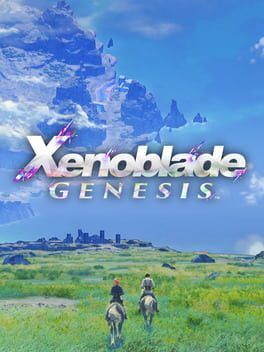
Xenoblade Genesis has entered Famitsu’s most wanted chart after its Switch 2 reveal, while Zelda’s climb shows how quickly Nintendo’s 2027 RPG slate is gathering attention.
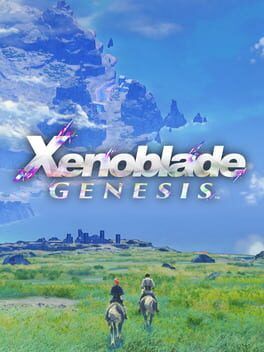
Image: IGDB
Xenoblade Genesis reaches Famitsu’s reader chart before Nintendo has shown its systems
Xenoblade Genesis has made its first appearance on Famitsu’s most wanted games chart, according to Nintendo Everything’s July 5, 2026 report on the magazine’s reader-voted rankings. The votes were cast between June 17 and June 23, shortly after Nintendo’s June 9 Direct reveal window, and the entry gives the new Xenoblade Switch 2 project an early signal of demand despite Nintendo still keeping the game mostly under wraps.
That gap is the useful part of the story. Nintendo’s official page for Xenoblade Genesis says only that “a new beginning for the Xenoblade series is coming to Nintendo Switch 2 in 2027” and that more details will be shared later. The listing names the platform version as Nintendo Switch 2 and the edition as digital, shows American English under supported languages, and includes a standard ESRB notice that the game may contain content inappropriate for children. It does not provide a specific release date in the release date field, a price, a rating, or a detailed gameplay description in the provided listing text.
For a series built on layered combat, party construction, affinity systems, huge zone traversal, and late-game quest routing, that is a very thin public sheet. Famitsu readers are responding anyway. Nintendo Everything’s July 5 chart text says the debut comes as more titles from summer showcases begin to appear, and Xenoblade Genesis is one of the clearest examples of a Switch 2 audience voting on franchise trust and platform appetite before the usual RPG particulars have been shown.
The Zelda climb makes the Xenoblade debut look less isolated
The same Famitsu update gives Xenoblade Genesis a useful point of comparison without turning the story into another full ranking recap. Zelda: Ocarina of Time, listed for Nintendo Switch 2 in Nintendo Everything’s Famitsu coverage, first appeared on the June 28 chart at No. 20 with 119 votes. In the July 5 chart, Nintendo Everything reports that it had already moved up to No. 12 with 186 votes.
That Zelda Famitsu ranking movement matters as context because it shows how quickly a major Nintendo-associated name can climb once it enters the reader pool. Xenoblade Genesis is beginning from an even less explained position. Zelda: Ocarina of Time carries one of the most recognizable titles in the medium, and Nintendo Everything’s June 28 headline described its Switch 2 appearance as a remake. Xenoblade Genesis, by contrast, is a new name attached to an RPG series whose audience tends to care deeply about mechanical identity, world structure, and narrative continuity.
The tension is that both games are benefiting from recognition, but in different ways. Zelda’s climb reflects the gravitational pull of a famous title. Xenoblade’s debut reflects confidence that Monolith Soft’s next large RPG will be worth tracking even before Nintendo explains whether Genesis is a clean break, a thematic reset, or a continuation with a new naming scheme.
Switch 2’s most wanted list is already crowded with RPG and progression games
Nintendo Everything’s July 5 chart still has Pokémon Winds and Waves at No. 1 with 837 votes, with Splatoon Raiders at No. 2. My Nintendo News also reported Pokémon Winds and Waves at 837 votes, while its top-ten summary gives Splatoon Raiders 716 votes compared with Nintendo Everything’s 717. That one-vote discrepancy does not change the shape of the list, but it is worth noting rather than sanding away. Both reports agree that Pokémon retains a sizable lead at the top.
Below those two, the chart is thick with games that appeal to players who plan builds, party roles, long quest chains, or collection routes. Nintendo Everything lists Persona 4 Revival at No. 3 with 594 votes, Fire Emblem: Fortune’s Weave for Switch 2 at No. 4 with 403 votes, Final Fantasy 7 Revelation at No. 7 with 260 votes, Kingdom Hearts 4 at No. 9 with 228 votes, Trails in the Sky 2nd Chapter at No. 11 with 191 votes, Dragon Quest Monsters: The Withered World for Switch 2 at No. 14 with 159 votes, and Culdcept Revolt: Nintendo Switch 2 Edition at No. 19 with 122 votes.
That does not prove a mass-market Switch 2 RPG boom by itself. Famitsu’s most wanted chart is a reader poll, not a sales forecast, and it reflects a particular Japanese magazine audience. Still, it is a meaningful enthusiast indicator. Switch 2 RPGs are not waiting for one flagship to define the calendar. Pokémon, Fire Emblem, Dragon Quest Monsters, Culdcept, and now Xenoblade are all visible in the same reader-voted ecosystem. Xenoblade Genesis entering that environment with so little disclosed suggests the series has become part of Nintendo’s high-expectation RPG bench rather than a niche afterthought.
Nintendo has prepared the runway with Switch 2 editions of the earlier Xenoblade games
The Famitsu debut lands after Nintendo started repositioning the existing Xenoblade library for Switch 2. Nintendo Everything reported on June 9 that Xenoblade Chronicles 1, 2, and 3 Nintendo Switch 2 Editions were announced, with the first game available that day, Xenoblade Chronicles 2 planned for July 30, 2026, and Xenoblade Chronicles 3 planned for December 3, 2026. The same report says physical versions are coming with a staggered rollout: July 30 for the first game, October 1 for Xenoblade Chronicles 2, and December 3 for Xenoblade Chronicles 3.
Nintendo’s blurb, as quoted by Nintendo Everything, gives the first Switch 2 Edition a clear technical and content pitch: 4K resolution on compatible TVs, full HD in handheld mode, and 60 fps. It also lists a high-speed vehicle for traversing the game’s large areas, racing modes with in-game rewards, new equipment designs, and newly added voiceover for Heart-to-Heart scenes. An upgrade pack is available for players who already own Xenoblade Chronicles: Definitive Edition on Nintendo Switch, according to that same Nintendo blurb.
For a completionist-minded RPG audience, that rollout changes how to read the Genesis debut. Nintendo is not asking players to hold a 2027 title in a vacuum. It is giving newcomers and returning players a path through the prior numbered games before Genesis arrives. That is especially relevant for Xenoblade, where side systems, affinity structures, named monsters, area exploration, and narrative callbacks can determine whether a player feels invited or overwhelmed. Even if Genesis is presented as a “new beginning,” the platform strategy around it encourages a year of reacquaintance.
The official listing confirms the window, but leaves the practical questions open
Nintendo’s official Xenoblade Genesis page provides the safest set of confirmed details: the game is coming to Nintendo Switch 2 in 2027, the page presents a digital edition, and the copyright line reads “© Nintendo / MONOLITHSOFT.” GameRant reported that Nintendo and Monolith Soft revealed the game during the June 9 Nintendo Direct, and described it as a brand-new Switch 2 exclusive with no specific release date announced.
Several buyer-facing questions remain unanswered in the supplied source material. Nintendo has not provided a firm date within 2027 in the official listing text. The official page excerpt does not show a price. It does not describe combat, party size, world structure, quest design, online features, save transfer support from older Xenoblade games, or any upgrade path tied to the Switch 2 editions. The ESRB section is also not a final rating in the provided page text, only the standard warning that the title may contain content inappropriate for children and that players should visit ESRB for rating information.
That uncertainty is especially important for Xenoblade players because the first real look at systems will likely decide whether Genesis feels like a fresh entry point or a reconfigured evolution for veterans. A title can be a “new beginning” in marketing while still carrying dense mechanical DNA. Until Nintendo shows combat loops, exploration tools, character progression, and quest structure, Famitsu interest should be read as anticipation, not evidence of what the game will actually play like.
For RPG players, the smart move is to watch the 2026 library before committing to Genesis expectations
The most practical takeaway is simple: Xenoblade Genesis is now on the Famitsu most wanted games radar, but the game itself remains a 2027 project with core details unannounced. If you already own Xenoblade Chronicles: Definitive Edition on Switch, Nintendo’s quoted blurb confirms an upgrade pack for the Switch 2 Edition of that first game. If you are starting fresh, Nintendo Everything’s reporting gives dates for all three Switch 2 Editions across 2026, creating a clear catch-up route before Genesis.
Players deciding whether to wait for Genesis or play the older games first should treat the Famitsu debut as a demand signal, not a buying guide. The earlier Xenoblade titles are known quantities, and the Switch 2 Edition information for the first game includes specific performance targets and additions. Genesis currently has a year, a platform, a title, and a promise of more details later. That is enough to explain why it entered Famitsu’s chart, but not enough to judge its combat, pacing, accessibility, or endgame depth.
The Zelda movement helps frame the moment. Switch 2 readers are rewarding recognizable, system-selling names quickly, and the RPG side of the platform is already competitive. Xenoblade Genesis arriving on the chart this early suggests Monolith Soft’s next project has room to become one of the console’s defining long-form RPGs, provided Nintendo can eventually show the progression systems, traversal tools, and party-building hooks that make that confidence feel earned.