
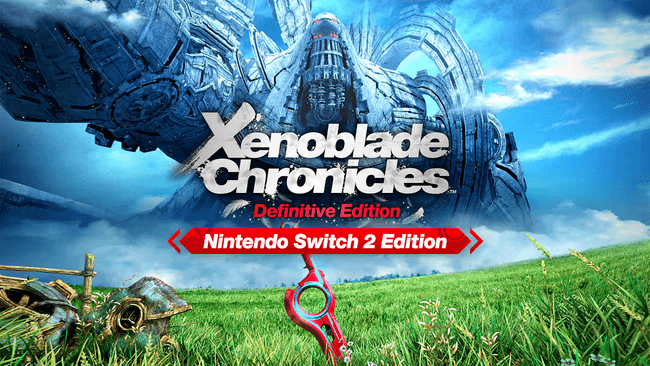

Logicalbeat, the Baten Kaitos remaster developer, worked on 4K and 60fps support for Xenoblade Chronicles Definitive Edition Switch 2, raising useful questions about performance, presentation, and long-term preservation.
Image: rpgsite.net
Logicalbeat’s role is now on the record
The developer behind the Baten Kaitos: I & II HD Remaster has been confirmed as a contributor to Xenoblade Chronicles: Definitive Edition – Nintendo Switch 2 Edition, specifically on its 4K and 60fps support.
RPG Site reports that Japanese developer Logicalbeat updated its website to disclose its work on the Switch 2 version’s 4K 60fps support. Yoshiki Domae, Logicalbeat’s representative director, also posted about the project on X, with RPG Site translating his statement as: “We were involved in cooperating with the support of 4K & 60fps for Xenoblade Chronicles Definitive Edition’s Nintendo Switch 2 Edition.” Nintendo Everything and My Nintendo News both picked up the same translated statement, identifying Logicalbeat as the Baten Kaitos remaster developer now attached to the Xenoblade Switch 2 Edition.
That confirmation adds a useful name to a release that otherwise sits in a complicated space: a major Monolith Soft RPG, upgraded for new Nintendo hardware, with external technical support now publicly acknowledged. Nintendo Everything notes that Monolith Soft, the team behind the original game, was also involved. What has not been laid out in the provided reporting is the full division of labor between Monolith Soft, Nintendo, and Logicalbeat. Logicalbeat’s own publicly translated wording is careful, saying the studio cooperated on support for 4K and 60fps rather than claiming full development ownership of the port.
A 4K 60fps target tells only part of the performance story
The most important practical detail for returning players is the Switch 2 Edition’s technical target. RPG Site says Xenoblade Chronicles: Definitive Edition – Nintendo Switch 2 Edition upscales to 4K at 60fps while docked. The same report cites Digital Foundry for a crucial qualifier: the image is reportedly upscaled to 4K from an internal resolution of 720p.
That distinction matters for a sprawling RPG like Xenoblade. A frame-rate upgrade can make menu flow, exploration, combat reads, and camera movement feel much cleaner, especially in a game where positioning, cooldown timing, and aggro awareness are constant parts of play. But a 4K output label does not automatically mean a native 4K image. If RPG Site’s Digital Foundry citation is accurate, the Switch 2 Edition is presenting a 4K output through upscaling rather than rendering every pixel at 4K internally.
RPG Site also says the end result “isn’t perfect” regarding performance, while adding that it is “a lot better” than Xenoblade Chronicles X: Definitive Edition Nintendo Switch 2 Edition. My Nintendo News similarly says the Switch 2 Edition “wasn’t without its flaws,” citing social media discussion, though it does not document those issues in detail in the provided text. Those are reported assessments, not a full technical breakdown from Nintendo or Monolith Soft. For players deciding whether to replay a hundred-hour RPG, the safe takeaway is narrower: the Switch 2 version aims higher, especially with 60fps support, but the available reporting still leaves room to scrutinize consistency, image quality, and edge-case performance.
Logicalbeat’s Baten Kaitos history makes this a remaster story, not only a port credit
Logicalbeat’s name will register with JRPG players because of Baten Kaitos: I & II HD Remaster, a Switch release that revived two GameCube-era role-playing games. RPG Site, Nintendo Everything, and My Nintendo News all frame Logicalbeat through that prior remaster work. That does not prove that Xenoblade Chronicles: Definitive Edition – Nintendo Switch 2 Edition was approached in the same way, but it does explain why the credit is worth watching.
A remaster studio’s job is often less glamorous than creating new characters, quests, or systems, yet it can determine whether an older RPG remains comfortable to play on modern hardware. In Xenoblade’s case, the pressure points are obvious. The game’s value is tied to vast landscapes, long quest chains, readable combat feedback, and the rhythm of moving from colony errands to field exploration to party tuning. Raising the frame-rate ceiling is helpful only if the presentation stays coherent during busy combat encounters and dense environments.
The Baten Kaitos connection also places Logicalbeat within a very specific corner of JRPG preservation: modernizing older console RPGs for a Nintendo ecosystem. The source material does not say Logicalbeat is handling Nintendo’s broader Switch 2 RPG upgrade strategy, and it does not confirm Logicalbeat’s involvement with any other Xenoblade Switch 2 release. Still, the confirmed Logicalbeat Xenoblade credit suggests Nintendo and Monolith Soft were willing to bring in outside support with prior remaster experience for a high-profile RPG upgrade.
Monolith Soft’s public listing creates a small but telling gap
One of the more interesting details comes from RPG Site’s note that Monolith Soft had not updated its website to include Xenoblade Chronicles: Definitive Edition Nintendo Switch 2 Edition at the time of its report, even though the studio’s site did include Xenoblade Chronicles X: Definitive Edition Nintendo Switch 2 Edition. That does not mean Monolith Soft was absent. Nintendo Everything explicitly reports that Monolith Soft was involved as well. It does mean the public record is uneven.
For readers, this is the kind of crediting gap that matters because Switch 2 Editions can blur categories. Is a release a straightforward compatibility upgrade, a technical remaster, a content update, a new SKU, or some mixture of those things? The answer affects expectations. A named external technical partner on 4K and 60fps support points toward a focused modernization effort, while Monolith Soft’s involvement keeps the release connected to the original steward of the series. But without a full official production breakdown, the exact responsibility for engineering, quality assurance, content additions, and post-launch support remains unannounced in the provided sources.
That ambiguity is not a scandal by itself. It is a reminder that credits and listings are part of how games are preserved and understood. RPG fans often return to these releases years later, comparing versions, patches, visual modes, and content differences. Knowing who touched a version, and in what capacity, helps separate a platform upgrade from a deeper revision.
The upgrade sits beside a larger Xenoblade Switch 2 rollout
Xenoblade Chronicles: Definitive Edition – Nintendo Switch 2 Edition is available now on Switch 2, according to RPG Site. RPG Site also says the original Xenoblade Chronicles: Definitive Edition remains available on Switch. The Switch 2 Edition released last month with new content, visual enhancements, and performance upgrades over the Switch original, per RPG Site’s report.
Nintendo Everything adds another important piece of context: Xenoblade Chronicles 2 – Nintendo Switch 2 Edition and Xenoblade Chronicles 3 – Nintendo Switch 2 Edition are also on the way. The outlet notes that it is not currently clear whether Logicalbeat worked on those titles as well, calling it a possibility rather than a confirmed fact. That distinction is important. Logicalbeat is confirmed for Xenoblade Chronicles: Definitive Edition Switch 2 support, but no provided source confirms the studio’s role on Xenoblade 2 or Xenoblade 3 Switch 2 Editions.
This broader rollout changes how fans should watch the first upgrade. If Nintendo is moving the mainline Xenoblade catalog onto Switch 2 with enhanced versions, then performance consistency, resolution strategy, and content handling become series-wide concerns. Xenoblade Chronicles 2 and 3 have their own systems, combat pacing, field complexity, and presentation demands. The Definitive Edition upgrade is therefore a useful early test case, but it should not be treated as proof of how the later Switch 2 Editions will perform.
What JRPG players should check before committing to a replay
For a completion-focused Xenoblade player, the decision to revisit the Bionis is rarely casual. This is a long game built around affinity, exploration, sidequests, equipment, art management, and party composition. A smoother frame-rate can make that time investment more comfortable, but the best version of a JRPG is also about stability, legibility, and whether the release respects the original work while making it easier to live with today.
Based on the available reporting, the confirmed strengths to watch are the 60fps support and docked 4K upscaled output. The confirmed caveat is that, according to RPG Site’s citation of Digital Foundry, the docked image upscales from an internal 720p resolution rather than native 4K. The reported concern is that performance and presentation are improved but not flawless. The unconfirmed items include the exact production responsibilities across studios, any role Logicalbeat may or may not have on Xenoblade Chronicles 2 or 3 Switch 2 Editions, and the full long-term patch plan.
If you already own the Switch version and are sensitive to image reconstruction, frame pacing, or visual artifacts, waiting for deeper technical analysis and patch notes is reasonable. If your priority is a smoother replay on Switch 2 and you are comfortable with an upscaled presentation, the Logicalbeat confirmation at least clarifies that the 4K and 60fps work had a named external specialist attached. For JRPG preservation, that transparency is useful. It gives players a better trail to follow as Nintendo’s Switch 2 Editions begin defining which versions of these long RPGs will be easiest to recommend in the years ahead.